





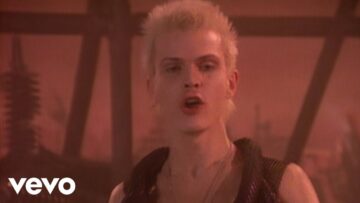
Tina Turner – I Can’t Stand The Rain (Live)
John Lennon’s Favorite Song Transformed Into Rock Power
Released in February 1985 in the UK and March in Germany as the final European single from Private Dancer, “I Can’t Stand The Rain” gave Tina Turner another Continental hit, reaching number nine in Germany, number six in Austria, number fifteen in Switzerland, and number twenty in Ireland, though it stalled at number fifty-seven in the UK. The track appeared on Turner’s comeback album Private Dancer released in May 1984, the record that transformed her from Ike Turner’s ex-wife into a global solo superstar at age forty-four. What made Turner’s version particularly powerful was how producer Terry Britten stripped away the lush soul orchestration of Ann Peebles’ 1973 original, replacing it with raw rock instrumentation and Turner’s gritty, emotionally charged vocals that turned heartache into defiance. The song John Lennon once called the best song ever became Turner’s vehicle for demonstrating that she could inhabit any musical terrain and make it completely her own.
The single sold particularly well in Germany, where it became a top ten hit and received extensive airplay throughout spring 1985. In Austria, it peaked at number six, becoming one of her strongest showings there. The track was not released as a single in the United States, though it appeared on Private Dancer, which peaked at number three on the Billboard 200 and sold over ten million copies in America alone, eventually achieving twelve-times platinum certification. Turner was competing against Madonna’s “Material Girl,” Wham!’s “Everything She Wants,” and USA for Africa’s “We Are the World” for European airplay in early 1985, yet managed to carve out significant chart success with sophisticated production that showcased her versatility. The Private Dancer album had already spawned massive hits including “What’s Love Got to Do with It,” her first US number one, along with “Better Be Good to Me” and “Private Dancer,” establishing Turner as one of the decade’s most formidable commercial forces.
Ann Peebles originally wrote “I Can’t Stand The Rain” in 1973 with her partner and later husband Don Bryant and DJ Bernard Miller after snapping I can’t stand the rain one evening when a downpour threatened to cancel their concert plans. Bryant, a professional songwriter constantly hunting for material, immediately recognized the phrase’s potential and they spent the night writing instead of attending the show. Producer Willie Mitchell used a brand new electric timbale to create the song’s distinctive raindrop effect, with the intro featuring those timbales before anything else came in. Peebles’ original reached number thirty-eight on the Billboard Hot 100 and number six on the R&B chart, becoming her biggest hit and earning a spot at number 197 on Rolling Stone’s 500 Greatest Songs of All Time. The lyrics depicted a woman haunted by rain against her window because it brought back sweet memories of a departed lover, asking the window pane if it remembered how grand everything was when they were together.
Turner recorded her version at Mayfair Studios in London during 1984 sessions for Private Dancer, with Terry Britten producing, engineering, and mixing alongside John Hudson. The track featured a completely reimagined arrangement with Britten himself on guitar, Graham Broad on drums, and Nick Glennie-Smith on keyboards. Where Peebles’ version emphasized the song’s melancholy through Willie Mitchell’s orchestral Memphis soul production, Turner’s interpretation channeled raw rock energy, building from a sparse opening into a guitar-driven powerhouse. Turner sang with the raspy, lived-in voice that had become her trademark, delivering lines like I can’t stand the rain against my window with such fierce conviction that the song transformed from lament into declaration. The production eliminated the famous timbale intro entirely, instead opening with Turner’s vocal and simple accompaniment before erupting into the full band arrangement, making the track feel immediate and urgent rather than atmospheric.
Private Dancer was Tina Turner’s fifth solo studio album, released on May 29, 1984 by Capitol Records, marking her commercial breakthrough after years of struggle following her 1976 divorce from Ike Turner. The album was recorded quickly with multiple producers including Terry Britten, Rupert Hine, and Martyn Ware, featuring material from diverse songwriters including Mark Knopfler, David Bowie, and Ann Peebles. Turner had spent the late seventies and early eighties rebuilding her career through constant touring, cabaret performances, and occasional guest appearances, earning a devoted following in Europe even as American audiences remained indifferent. Capitol Records executive John Carter provided the budget for Private Dancer after seeing Turner’s European success, gambling on her crossover potential. The album spawned seven singles worldwide and won three Grammy Awards in 1985 including Record of the Year for “What’s Love Got to Do with It,” proving that Turner at middle age could not only compete with younger artists but dominate them.
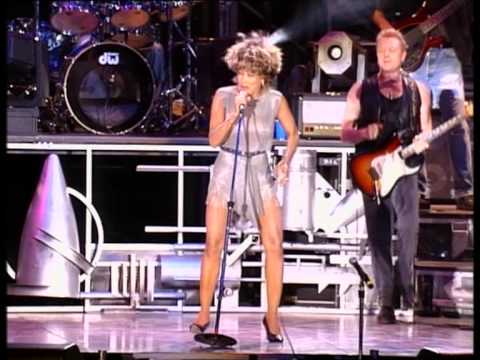
Turner performed “I Can’t Stand The Rain” throughout her subsequent tours, making it a regular part of her setlist through the nineties and beyond. The song appeared on her 1988 live album Tina Live in Europe, showcasing how she extended and embellished it in concert. The most famous filmed performance came from the Blockbuster Pavilion in San Bernardino, California on September 15, 1993 during Turner’s What’s Love? Tour supporting the soundtrack to her biographical film What’s Love Got to Do With It. That concert was released in September 1994 as the home video What’s Love? Live, later reissued in 2018 as the album Live In ’93. The San Bernardino performance captured Turner at her absolute peak, commanding the stage with legendary energy before an audience of thousands. The featured video showcases Turner’s electrifying live presence, her powerful vocals soaring over the rock arrangement while she worked the stage with the physical dynamism that made her one of the greatest live performers in rock history. Director David Mallet filmed the complete concert, preserving Turner’s interpretation of the Ann Peebles classic in all its raw, uninhibited glory.
The song has been covered across remarkably diverse territories since Peebles’ original. Eruption, a British-based American R&B act produced by Frank Farian of Boney M fame, released a disco version in 1978 that reached number five in the UK and number eighteen in the US, becoming the group’s biggest hit. Their sped-up disco beat made it a dancefloor staple throughout Europe. Lowell George of Little Feat recorded it, as did Humble Pie on their 1980 album On to Victory. Seal covered it for his 1991 debut album, bringing a contemporary soul sensibility to the track. Missy Elliott’s 1997 debut single “The Rain (Supa Dupa Fly)” sampled the chorus, introducing the song to the hip-hop generation. Graham Central Station delivered a funk interpretation, while numerous artists from jazz to rock continued recording versions through subsequent decades, testament to the song’s enduring appeal across genres.
The music video for Turner’s version was filmed live at Birmingham’s National Exhibition Centre in England during her Private Dancer Tour, showcasing her commanding stage presence and the elaborate production values that defined her mid-eighties concerts. The promotional clip received airplay on MTV and European music television, though the song’s commercial performance never matched the massive success of “What’s Love Got to Do with It” or “Better Be Good to Me.” Looking back, producer Terry Britten’s instinct to strip the song down to its rock and roll essentials proved inspired, allowing Turner to inhabit the material without competing with Peebles’ definitive original. Turner transformed heartbreak into power, sadness into strength, creating a version that stands alongside Peebles’ not as a copy but as a completely distinct interpretation by an artist who’d survived her own storms and emerged stronger. The song that John Lennon loved became yet another showcase for Turner’s remarkable ability to take classic material and reinvent it through sheer force of personality, proving once again that the Queen of Rock and Roll could make any song her own.