



![David Lee Roth – California Girls (Official Video) [HD]](https://musicvideosclub.com/wp-content/uploads/2026/10/david-lee-roth-california-girls-360x203.jpg)

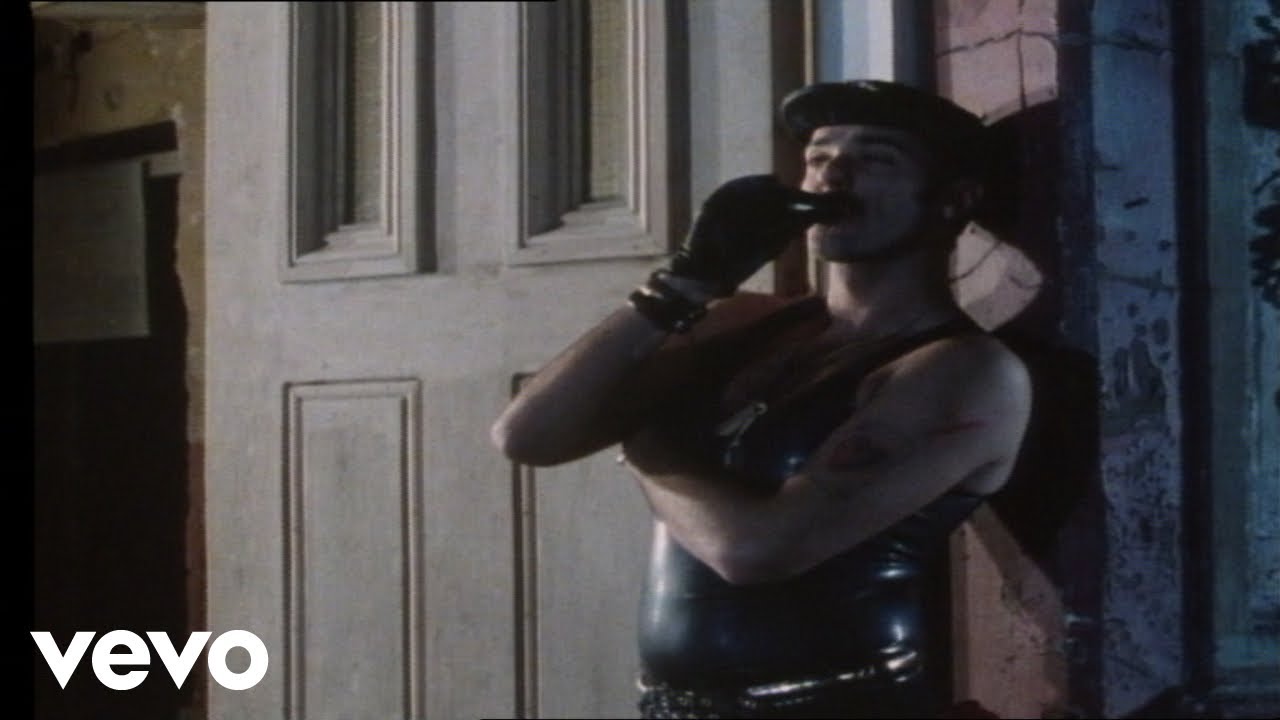
Frankie Goes To Hollywood – Relax (Official Video)
The BBC Played It 71 Times Before Someone Actually Listened To The Lyrics
Released in October 1983, Frankie Goes To Hollywood’s “Relax” climbed to number 67 on the UK chart before appearing on Top of the Pops’ twentieth anniversary show on 5 January 1984, where Holly Johnson’s charismatic performance sent it soaring to number six the following week. Six days later, BBC Radio 1 DJ Mike Read declared the lyrics obscene during his mid-morning show and refused to play it, not realizing the BBC had already decided to ban it. The corporation had broadcast the song seventy-one times before someone actually paid attention to the words. The single reached number one on 24 January, displacing Paul McCartney’s “Pipes of Peace,” and spent five weeks at the top. It remained on the UK chart for forty-eight consecutive weeks, eventually selling over two million copies, making it the sixth best-selling single in UK history.
The ban became the BBC’s most spectacular own goal in chart history. While Radio 1 displayed still photographs of the band during the number one announcement instead of showing them perform, commercial radio and television stations continued playing the record without hesitation. The single re-entered the top ten in July 1984 when follow-up “Two Tribes” held number one for nine weeks, giving Frankie simultaneous occupancy of the top two positions. Their third single “The Power of Love” reached number one in December, making them only the second act after Gerry and the Pacemakers in 1963 to top the chart with their first three releases. The ban was quietly lifted for Christmas Day Top of the Pops. “Relax” won Best British Single at the 1985 Brit Awards, and journalist Paul Lester later wrote that no band had dominated a twelve-month period like Frankie ruled 1984.
Johnson wrote the song while walking down Princes Avenue in Liverpool, laughing to himself as the lyrics formed in his head. The band claimed publicly it addressed motivation, but bassist Mark O’Toole admitted in the Welcome to the Pleasuredome liner notes that everything they said was complete lies, and the song was really about shagging. The lyrics provided a guide to delaying orgasm, with lines referencing sucking and coming that somehow escaped BBC censors for months. ZTT Records co-founder Paul Morley designed a provocative advertising campaign featuring images of Paul Rutherford in a sailor cap and Johnson with a shaved head and rubber gloves, accompanied by the phrase “ALL THE NICE BOYS LOVE SEA MEN,” a pun on the music hall song “Ship Ahoy!” The ads promised nineteen inches that must be taken always, theories of bliss, and a guide to Amsterdam bars. Morley intentionally courted scandal, emphasizing Johnson and Rutherford’s open homosexuality at a time when few pop stars dared.
Trevor Horn saw the band perform on Channel 4’s The Tube in February 1983, signed them to his new ZTT label in May, and immediately began the torturous process of recording “Relax.” Horn scrapped the initial Manor Studio sessions, where the only surviving element was the sound of the band jumping into the swimming pool, sampled on a Fairlight synthesizer. He recorded a second version with Ian Dury’s backing band The Blockheads, featuring bassist Norman Watt-Roy on Alembic bass, but disliked that too. A third attempt with engineer Steve Lipson, keyboard player Andy Richards, and Fairlight programmer JJ Jeczalik went nowhere for three weeks. Then, during a dinner break, Horn returned to find Lipson playing guitar and decided to start completely fresh using a beat he’d programmed on a Linn LM-2 drum machine. They recorded the final version in one take after hours of preparation, with Lipson on guitar, Richards on keyboards, and Jeczalik making funny noises on the Fairlight. Horn spent seventy thousand pounds in studio time before completing it.
“Relax” launched ZTT Records and became the flagship track for Welcome to the Pleasuredome, released in October 1984 with advance sales exceeding one million copies. The single existed in multiple versions, including the sixteen-minute Sex Mix featuring Johnson jamming and samples of disgusting noises Horn made, and the seven-minute New York Mix created after Horn visited Paradise Garage club and understood how twelve-inch remixes should sound on big systems. The song appeared in Brian De Palma’s erotic thriller Body Double, where Frankie performed on the set of a porn film. It featured in Miami Vice’s “Little Prince” episode and later in Zoolander and The Proposal. The “Frankie Say Relax” T-shirts, inspired by Katharine Hamnett’s protest shirts, outsold the singles in some stores during July 1984, becoming as culturally significant as the music itself.
The American reception told a completely different story. Released in early 1984, it peaked at number sixty-seven on the Billboard Hot 100, barely registering. The sexual innuendo that scandalized Britain got little attention in America. When the band toured America in October 1984 and performed “Two Tribes” on Saturday Night Live, they couldn’t replicate their homeland success, with that single stalling at number forty-three. Only when “Relax” was re-released in early 1985 with renewed radio and MTV attention did it climb to number ten in March. Horn achieved a unique milestone when “Relax” hit number one in the UK the same week his production of Yes’s “Owner of a Lonely Heart” topped the US chart, making him the only producer to score simultaneous number ones in both countries with different artists. By 1993, when “Relax” was reissued, it debuted at number six and peaked at number five, extending its combined chart run to fifty-nine weeks.
Controversies about whether Frankie actually played on the record dogged them throughout 1984. Only Johnson performed vocals on the studio version, leading to accusations they were a manufactured group, a modern-day Monkees. Horn defended them years later, noting they were better musicians than credited, citing “The Power of Love,” “Born to Run,” and “Krisco Kisses” as examples of their playing. The band’s second album Liverpool sold fewer copies when released in 1986, and they disbanded acrimoniously in 1987. Yet “Relax” endured, its combination of hi-NRG dance-synth-pop breaking new sonic ground while epitomizing eighties excess in all its garish glory. As Mike Read reflected decades later about his producer discovering his young daughters rewinding the graphic video, he never had the power to ban anything—he was just a BBC employee who got cast as the face of opposition while Paul Morley capitalized brilliantly. The song that Britain’s most powerful broadcaster tried to suppress became one of the defining hits of the decade, proving that sometimes the best publicity is someone telling you that you absolutely cannot, under any circumstances, listen to something.
SONG INFORMATION
Enjoyed this one? New forgotten gems every day — tap Music Videos Club below to visit and follow us on Facebook:
Related videos
 Watch LaterAdded
04:41
Watch LaterAdded
04:41  Watch LaterAdded
04:50
Watch LaterAdded
04:50  Watch LaterAdded
04:30
Watch LaterAdded
04:30