



Free – Ride On A Pony
Chris Blackwell of Island Records Was Convinced This Was the Song That Should Follow “All Right Now” to the Top of the Chart. Free Overruled Him. They Were Twenty Years Old and Younger. The Beat-Club Footage Captured Four Musicians at the Top of Their Working Life, Five Months Before the Album Failed and Five and a Half Years Before Paul Kossoff Was Dead.
Chris Blackwell had been wrong before, but not often. The Jamaica-born founder of Island Records had built the label by signing Bob Marley, Cat Stevens, Traffic, John Martyn, and Nick Drake on instincts that the rest of the British music industry was still catching up with. By September 1970, Free were the band Island had wagered some of its biggest commercial expectations on. All Right Now, written in ten minutes after the band died a death at a Durham concert that May, had reached number two on the UK Singles Chart and number four on the Billboard Hot 100 over the summer. Their third album, Fire and Water, had been a massive commercial success. Free had played Isle of Wight in front of six hundred thousand people in August. They had recorded their fourth album, Highway, that September at Island Studios in London. The album was finished. Blackwell heard the masters. He had a strong opinion about which song should be the follow-up single. He wanted Ride on a Pony. The band had a different opinion. They wanted The Stealer. Blackwell, in one of the rare moments of giving an Island act the last word against his own commercial instincts, agreed. The Stealer was released in October 1970. It failed to chart on either side of the Atlantic. Ride on a Pony was released as the second single. It also failed to chart. Highway, when it arrived in December 1970, peaked at number forty-one on the UK album chart and number one hundred and ninety on the Billboard 200 — a catastrophic commercial disappointment after the band had spent the summer being the biggest blues-rock act in Britain. Blackwell had been right.
The four musicians in Free were extraordinarily young when they recorded the album. Paul Rodgers, the lead vocalist, was twenty years old. Paul Kossoff, the lead guitarist, was nineteen — the son of the British TV and film actor David Kossoff, a young man who had been playing professional gigs in London blues clubs since he was sixteen and who had been a Mandrax user since he was fifteen. Andy Fraser, the bassist and pianist who had co-written All Right Now with Rodgers in those ten minutes in Durham, was seventeen years old — having already been a member of John Mayall’s Bluesbreakers at fifteen on Alexis Korner’s recommendation. Simon Kirke, the drummer, was twenty. The band had been together for less than three years. Ride on a Pony was, by the testimony of Free’s hardest-core fans across the half-century since, one of the best riffs Paul Kossoff ever wrote — a dirty, stuttering blues-rock figure that leaped out of the speakers and gave Paul Rodgers a vehicle for the swaggering vocal style he had spent the previous two years developing. The song’s lyric was written by Rodgers and Fraser. The structure was a straight-up four-on-the-floor blues-rock workout with a Kossoff guitar solo that one reviewer of the Angel Air reissue would later describe, in a phrase that has stuck, as “four flat tyres on a muddy road” — the band’s own self-description of their sound made literal in the slow-grinding stomp of the song’s rhythm section.
The Beat-Club Footage and What It Caught
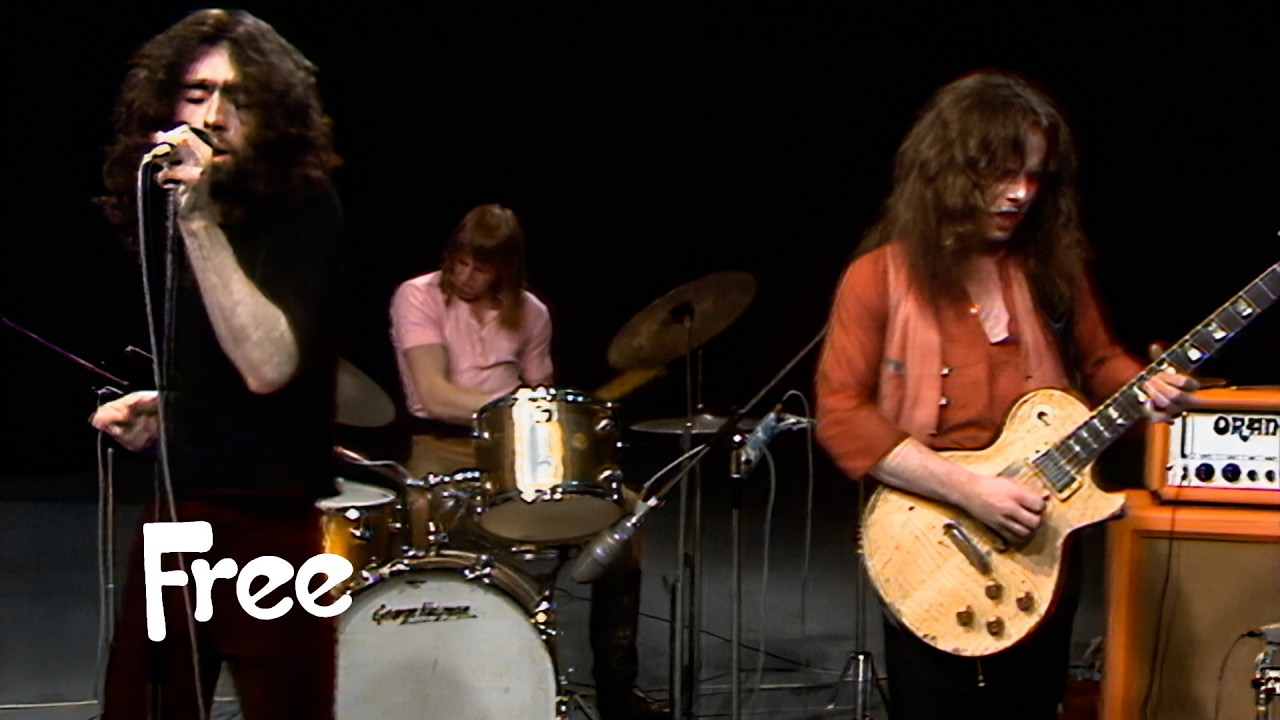
The German television programme Beat-Club had become, by 1970, the most important music broadcast platform in continental Europe for British rock acts seeking to expand their audience beyond the United Kingdom. Produced by Studio Hamburg out of Radio Bremen, Beat-Club had hosted virtually every significant British and American rock act of the era — Jethro Tull, Black Sabbath, Status Quo, Santana, Brinsley Schwarz, Third Ear Band — across more than two hundred episodes between 1965 and 1972. Free’s appearance was broadcast on September 5, 1970. The band performed in the Beat-Club studio with the programme’s signature psychedelic visual treatment — colour-tinted lighting, multi-camera coverage, the audience seated close around the stage. Paul Kossoff stood to Rodgers’ right with his Gibson Les Paul. Andy Fraser, the seventeen-year-old, anchored the rhythm section on bass alongside Simon Kirke. Rodgers held the microphone in the way he had developed for the larger British festival circuit. The footage of Ride on a Pony from that broadcast is, by some considerable distance, the most fully realised filmed performance of the song that exists.
What the camera caught was a band at the peak of its working life, performing material from an album that had not yet been released. Highway would not arrive until December 1970, three months after the broadcast. Beat-Club audiences in West Germany heard Ride on a Pony for the first time as part of Free’s set. By the time the album reached stores, the song had been on European television for a season already. The commercial collapse of the album surprised everyone involved. Engineer Andy Johns later blamed the album cover, which did not display the band’s name anywhere on the front and which he felt cost the band crucial point-of-sale recognition. Other observers blamed the speed of the follow-up — Free had spent September recording an album barely two months after Fire and Water‘s commercial peak, and audiences had not yet absorbed the previous record. Whatever the cause, the trajectory the band’s first three albums had built was, with Highway‘s failure in December 1970, broken. The internal dynamics of the band followed.
What Came Next
Paul Rodgers and Andy Fraser, the songwriting partnership that had given Free both All Right Now and the entire Fire and Water album, were no longer speaking productively by the end of 1970. Their working relationship had reached, in the journalist Derek Walker’s later phrasing, an all-time low. Paul Kossoff’s Mandrax addiction had begun to interfere with his ability to play. Free broke up in April 1971. They reunited briefly in 1972, recorded two more studio albums — Free at Last in 1972 and Heartbreaker in 1973 — and dissolved permanently in summer 1973. Paul Rodgers and Simon Kirke went on to form Bad Company with Boz Burrell of King Crimson and Mick Ralphs of Mott the Hoople; Bad Company’s self-titled debut album in 1974 sold five million copies. Andy Fraser formed Sharks with Chris Spedding before moving to Los Angeles and writing for Robert Palmer and other artists. Paul Kossoff joined Back Street Crawler. He died on March 19, 1976, on a flight from Los Angeles to New York, of a drug-related heart attack. He was twenty-five years old. The Beat-Club performance of Ride on a Pony had been recorded five and a half years earlier. He had been nineteen.
Andy Fraser died of cancer in Florida on March 16, 2015, aged sixty-two. Paul Rodgers and Simon Kirke have continued to perform — Rodgers with Bad Company, with Queen on occasional collaborations, and as a solo artist. Paul Kossoff’s playing has been studied, transcribed, and emulated by generations of guitarists who have come up since his death. He is widely cited as one of the most distinctive blues-rock lead voices of his generation — the player whose vibrato, restraint, and economy on Free’s recordings made the band’s blues-rock sit closer to the foundational American blues recordings than most of their British contemporaries managed. The Beat-Club footage of Ride on a Pony from September 1970 — uploaded officially to Free’s channel from licensed Studio Hamburg masters — captures him at full power, on a song the label boss had thought should be a hit, at a moment when the band’s commercial trajectory had not yet broken. Chris Blackwell had been right about which song should follow All Right Now. The band had been right about the song that meant the most to them. Both calls turned out to be defensible. Neither of them could prevent what was about to happen.
SONG INFORMATION
Related videos
 Watch LaterAdded
04:48
Watch LaterAdded
04:48  Watch LaterAdded
05:28
Watch LaterAdded
05:28  Watch LaterAdded
02:46
Watch LaterAdded
02:46