




Roxy Music – Dance Away
Bryan Ferry Wrote “Dance Away” in 1977. He Tried Twice to Get It Onto a Solo Album and Twice Failed. Two Years Later, Roxy Music’s First Studio Album in Four Years Carried the Finished Version to UK #2 — Held Off the Top for Three Weeks by Blondie’s “Sunday Girl” — Where It Became the Ninth Best-Selling British Single of 1979 and the Longest-Charting Roxy Music Record Ever Made.
The song existed on tape, in some unfinished form, for at least two years before anyone heard it. Bryan Ferry had written Dance Away in 1977 and had earmarked it for In Your Mind, his fourth solo studio album, but it did not make the final track listing. He carried it forward to the sessions for his fifth, The Bride Stripped Bare, in 1978, and it failed to make that one either. By the autumn of 1978, with no solo home for the song and Roxy Music reconvening for their first studio album in four years, Ferry pulled the unfinished track out of his locker and brought it to the band. Roxy had last released a studio record in 1975 — Siren, with Love Is the Drug as its single — and the four-year gap had been filled, on Ferry’s side, by three solo albums of increasingly polished cover-version and original material, and on the band’s side, by Phil Manzanera’s solo project 801, Andy Mackay’s television soundtrack work for Rock Follies, and the continued waiting of drummer Paul Thompson. They had announced the reunion to the British music press in November 1978. The sessions for the album that would become Manifesto began at Ridge Farm Studios in Redhill, Surrey, with additional work at Basing Street Studios in London, in January 1979. Dance Away was among the songs finished there.
What the band cut at those sessions was unmistakably new for them. Roxy Music had spent most of the seventies as an art-rock concern — glam-tinged, fashion-conscious, intellectually ambitious — and the singles that had broken them commercially (Virginia Plain, Pyjamarama, Street Life) had been pop records that retained a certain edge of strangeness. Dance Away traded that strangeness for something else. The arrangement is built around a soft mid-tempo disco shuffle — kick drum, claves (played by session percussionist Steve Ferrone), castanets punctuating each phrase of the verse, Manzanera’s electric guitar reduced to a thoughtful single-string rhythm pattern rather than the textural force he was capable of, and Mackay’s oboe and saxophone laid over the top as colour rather than statement. Ferry’s vocal, multi-tracked into the kind of creamy harmony bed he had been working toward for several records, sits in front of a polished and deliberately commercial pop production. The track ran 4:20 on the album. A shorter single mix of 3:48 was prepared for radio. A six-and-a-half-minute extended 12-inch version was issued in Canada — Roxy’s first record in the disco format that was, in early 1979, just beginning to establish itself as a viable commercial form. The album was self-produced by Roxy Music with Rhett Davies engineering and mixing. Davies would go on to become the band’s regular producer through Flesh + Blood (1980) and Avalon (1982).
The Hall, the Jagger, and the Lyric
The lyric is, on the surface, a heartbreak inventory. The narrator walks his lover home, kisses her goodnight, tells her he loves her, hears her tell him it’s alright, and then sees her, on a later evening, walking past on the arm of another man. He gives the song its closing image: she is dressed to kill, and he is the one dying. The line lands as a sad pun, the kind of phrase Ferry could deliver in the suspended-mid-air drawl that was already, by 1979, his most distinctive vocal trick. The biographical reading has followed the song since release. Ferry’s two-year relationship with the American model Jerry Hall — who had appeared on the cover of Siren in 1975 and lived with him for the period that followed — had ended in late 1977, when Hall left Ferry for Mick Jagger. The chronology lines up: Ferry wrote Dance Away in 1977, attempted to record it during both solo album cycles between then and 1978, and finally finished it for Manifesto in early 1979. Ferry has never made a categorical statement about the autobiographical content. The lyric does not require him to. The dance-floor framing — let the strobe light up them all, dance away the heartache, dance till dawn — turns the private grief into a public crowd-room scene, the kind of distance the writer specialised in throughout his career.
The single was released on April 13, 1979, on E.G. Records and Polydor in the United Kingdom and on Atco in the United States, with Cry, Cry, Cry on the UK and European B-side and Trash 2 — a slower remake of the album’s first single — on the American and Japanese B-side. It entered the UK Singles Chart on April 28, 1979 at number forty-one, which was a relatively modest debut. It climbed steadily through May. On the chart dated May 26, 1979, it reached number two, where it stayed for three consecutive weeks. The song that kept it off the top spot for all three of those weeks was Blondie’s Sunday Girl, which had entered the chart two weeks before Dance Away did and had reached number one on May 19. The two records, sitting at one and two respectively through the end of May and the beginning of June, captured something specific about where British pop was at the turn of that summer — a mid-Atlantic disco-pop sound, polished and emotionally rich, in which English bands were now competing on the same terms as American producers. Dance Away spent fourteen weeks on the UK chart in total, which remains the longest chart residency of any Roxy Music single. It finished as the ninth best-selling single in the United Kingdom in 1979. It reached number one for a single week on the Irish Singles Chart. In the United States, where Roxy Music had only ever made the Hot 100 once before (Love Is the Drug at number thirty in 1975), Dance Away peaked at number forty-four — modest by domestic American standards, but Roxy’s second-best US chart performance to that point.
The Drummer Who Walked, the Album That Became the Template
The success of the single pulled Manifesto itself back up the UK Albums Chart. The album had debuted at number nine in late March 1979 and had subsequently slipped down the top thirty. The release of Dance Away revived it. By mid-June it had climbed back to number seven, where it peaked, returning the band to the upper reaches of the British album market for the first time since Siren four years earlier. Manifesto also reached number twenty-three on the US Billboard 200, which made it Roxy Music’s highest-charting album in the United States — a position the band would not better. The line-up, however, had not survived the sessions intact. Paul Thompson, the drummer who had been Roxy’s rhythmic foundation since their 1972 debut, quit during the Manifesto recording. Thompson — by multiple accounts of the sessions — was unable to muster enthusiasm for the kind of smooth balladry that Dance Away typified. He was a rock drummer. The direction the band was moving in did not require what he did. Steve Ferrone and Rick Marotta were brought in as session players to handle much of the drum and percussion work on the record. Thompson played on the parts of the album he could play on and then left. He would return for the 1980 follow-up Flesh + Blood and stay through the band’s final 1983 studio output before retiring from rock drumming entirely.
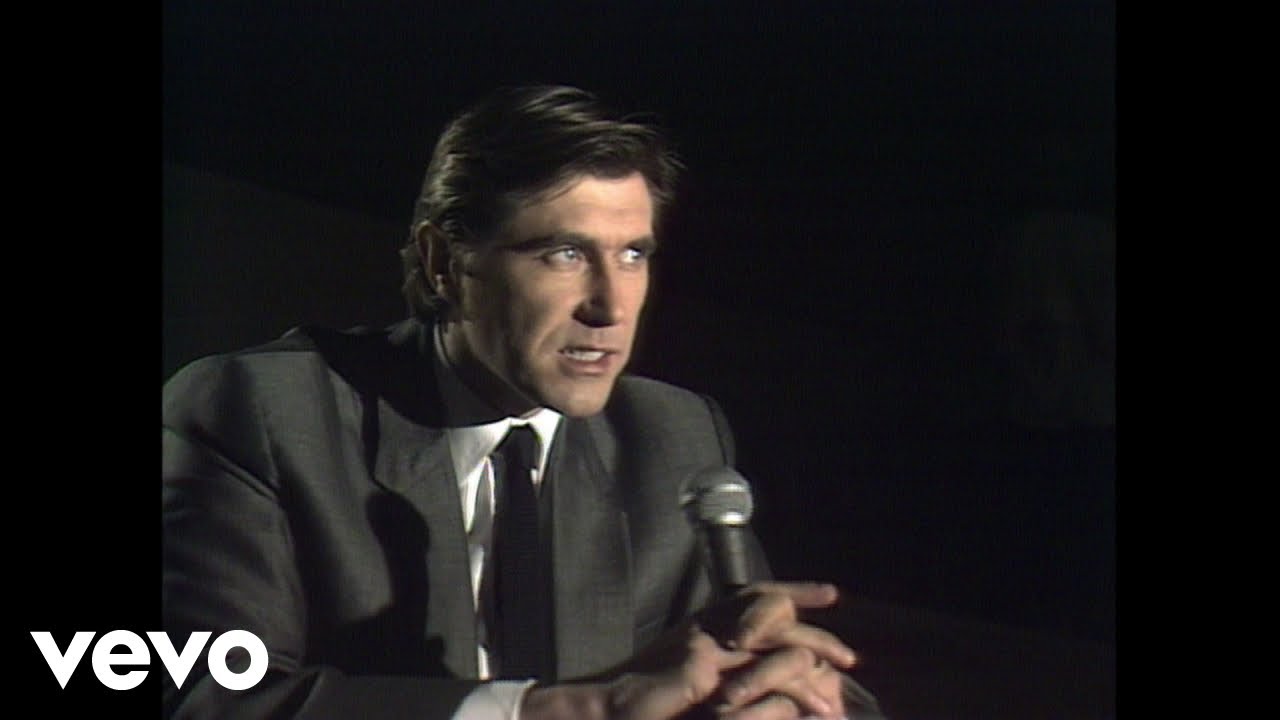
The video for Dance Away was directed by Michael Lindsay-Hogg — the filmmaker who had cut his teeth shooting promotional clips for the Rolling Stones and the Beatles in the late sixties, who had directed the Beatles’ Let It Be film, and who would later make the 1981 television adaptation of Evelyn Waugh’s Brideshead Revisited. The clip places Ferry alone in the darkened seating section of an unidentified auditorium, isolated in spotlight, with the rest of the band appearing only in brief intercut shots toward the back of the stage. It is a video about a singer alone in a venue after the audience has left, performing to the empty seats, which fits the song’s emotional architecture exactly. The band’s official YouTube channel hosts the clip today, where it has accumulated millions of views in the streaming era. Dance Away remains, with Love Is the Drug and More Than This, one of the three Roxy Music recordings that defines the band’s commercial profile for the listening public. Roxy Music were inducted into the Rock and Roll Hall of Fame in 2019. Manifesto opened the second phase of their career — the polished disco-pop period that would culminate in Avalon three years later — and Dance Away, the song that nobody had been able to find a home for, was the record that established the template.
SONG INFORMATION
Related videos
 Watch LaterAdded
03:30
Watch LaterAdded
03:30  Watch LaterAdded
06:49
Watch LaterAdded
06:49  Watch LaterAdded
04:05
Watch LaterAdded
04:05