








Sweet – Blockbuster
Sweet didn’t keep Bowie off No.1 with his own riff. Somebody else did, and the riff wasn’t Bowie’s either.
Two RCA singles built on the same four-note blues figure were in the British Top 10 in January 1973, and the story everyone tells is that the cheaper-looking one won. Sweet’s Block Buster! at No.1, David Bowie’s The Jean Genie stuck at No.2 beneath it, glam’s teen act beating its resident artist with his own riff. The first half is true: on January 25, 1973, Sweet walked onto Top of the Pops as the new No.1 act in Britain. The second half never happened.
Keep watching: Sweet – The Ballroom Blitz · explore more →
The chart is plain about it. RCA released Bowie’s single on November 24, 1972, and it peaked at No.2 in the first weeks of January, held there by Little Jimmy Osmond’s Long Haired Lover from Liverpool, which had sat on top since before Christmas. When the chart dated January 27 put Sweet at No.1 and ended Osmond’s five-week run, The Jean Genie was still in the Top 10 but already past its peak. Sweet did not block Bowie. They removed the record that had.
The band had expected the opposite result. Mike Chapman first played the idea to them on an acoustic guitar backstage at Top of the Pops in 1972, by bassist Steve Priest’s account, while they waited to perform Wig-Wam Bam. They cut it late that year with producer Phil Wainman and an air-raid siren over the intro. Then, before the release, their contact at RCA played them the label’s new Bowie single, and guitarist Andy Scott heard his own riff coming out of the speakers. He phoned Nicky Chinn, Chapman’s writing partner, and said the record could not come out. Chinn told him the two singles were different kinds of records and that Sweet’s would go to No.1. “Good luck with that,” Scott remembered thinking. RCA released Block Buster! on January 5, 1973.
Nobody’s Riff
Neither side had copied the other, and the calendar barely allowed it. Bowie’s band worked up their song on a tour bus in the United States in September 1972 and recorded it on October 6; Chapman was strumming his version in a BBC dressing room in London at about the same time. Both camps have always called it coincidence. Bowie’s bassist, Trevor Bolder, later gave Scott the simpler explanation by asking whether he remembered I’m a Man. The figure comes from Bo Diddley’s 1955 record, by way of the Yardbirds’ 1965 hit version, and it had been common property in British rock for years. Chinn has told his own postscript: when he next met Bowie, he got a one-word insult, then a hug and congratulations.
The Night at No.1
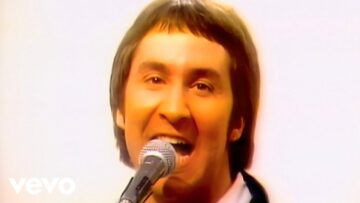
The performance on this page is the moment Scott’s phone call was proved wrong. The January 25, 1973 edition of Top of the Pops went out on BBC One in the early evening, in the week the new chart had Sweet on top for the first time. Elton John was on the same show with Daniel, along with Gary Glitter and the Strawbs, and the running order built toward the No.1. What the cameras found was the lineup that made every Sweet hit that mattered: Brian Connolly out front, Scott on guitar, Priest on bass, Mick Tucker on drums. It is not the song’s most notorious television outing. That was the Christmas Day 1973 edition, where Priest’s German-officer costume caused a row that still follows the song, and it is a separate broadcast.
The record stayed at No.1 for five weeks, and reached the top in Germany, the Netherlands, Austria and Ireland as well. America was less interested: Billboard’s Hot 100 took it no higher than No.73. And in Britain it turned out to be the only one. Sweet’s next three big singles, Hell Raiser, The Ballroom Blitz and Teenage Rampage, each stopped at No.2. The band remembered for leaving Bowie in second place spent the rest of that run finishing second themselves.
Connolly, born October 5, 1945, is the reason the clip holds up. He was raised in Scotland by a foster family, the McManuses, and went by their name until he learned as a young man that he had never been adopted; he took his birth mother’s surname instead. He replaced Ian Gillan in a London band called Wainwright’s Gentlemen, met Tucker there, and the two of them left to start Sweet. He played his last British show with the classic lineup at the Hammersmith Odeon on February 24, 1978, left the band the following year, and died in Slough on February 9, 1997, at 51. The legend hands Sweet a victory over Bowie that the chart never recorded, and they did not need it. For five weeks in early 1973 a borrowed blues riff, a siren and Connolly’s voice were the most popular sound in Britain, and that part is on film.
SONG INFORMATION
Enjoyed this one? New forgotten gems every day — tap Music Videos Club below to visit and follow us on Facebook: