


![Atomic Rooster – The Devils Answer [totp2]](https://musicvideosclub.com/wp-content/uploads/2026/03/atomic-rooster-the-devils-answer-360x203.jpg)
![Van Halen – Jump (Official Music Video) [HD]](https://musicvideosclub.com/wp-content/uploads/2025/05/van-halen-jump-official-music-vi-360x203.jpg)
![Eagles – One of These Nights (Live 1977) (Official Video) [4K]](https://musicvideosclub.com/wp-content/uploads/2025/07/eagles-one-of-these-nights-live-360x203.jpg)
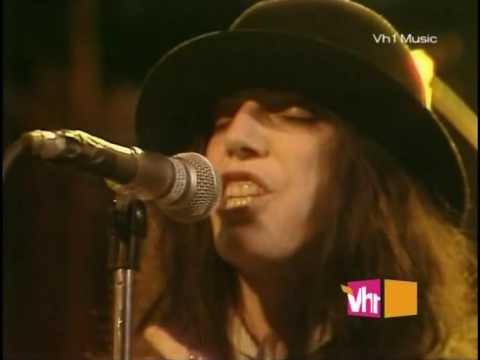
Patti Smith – Because The Night
She Wrote The Verses Waiting For A Phone Call That Never Came
Released on March 2, 1978, “Because the Night” climbed to number 13 on the Billboard Hot 100 on June 18, spending two weeks at that position and remaining on the chart for 18 weeks total. The song reached number five in the UK for one week on May 21, becoming Patti Smith’s highest-charting single in both countries and her only Top 40 hit in America. The track appeared on Smith’s third album Easter, released March 3, 1978, which peaked at number 20 on the Billboard 200 and became her first gold-certified album, marking her commercial breakthrough after years of cult success. Rolling Stone ranked the song number 358 on their 500 Greatest Songs of All Time list in 2021, while NME placed it at number 116 on their Top 150 Singles of All Time in 1987. What nobody outside the studio knew was that Bruce Springsteen had written and recorded the song first but abandoned it, convinced it was just another love song that didn’t fit Darkness on the Edge of Town. Engineer Jimmy Iovine gave Smith a cassette tape Springsteen had scrawled the title across, and she wrote all the verses in one night while anxiously waiting for a phone call from her boyfriend Fred that never came on time.
While “Because the Night” peaked at number 13 in America, it propelled Easter to mainstream success and earned Smith her first Rolling Stone cover. The album spent weeks on the Billboard 200 and introduced Smith to audiences beyond the underground punk scene that had embraced her 1975 debut Horses. The single entered the Hot 100 at number 82 on April 2, 1978, and took eleven weeks to reach its peak. In the UK, the song performed even better, spending multiple weeks in the Top 10 and establishing Smith as an international artist. Smith performed the song on NBC’s The Midnight Special on June 23, 1978, during its first of two weeks at number 13. The track became Smith’s signature song despite being the only hit of her career, making her one of rock’s most unusual one-hit wonders given her Rock and Roll Hall of Fame legacy based on influential albums aimed at far narrower audiences than mainstream pop radio.
Bruce Springsteen began writing the song in 1976 during a legal battle with manager Mike Appel that prevented him from recording for nearly a year. On June 1, 1977—the first day of sessions for Darkness on the Edge of Town at Atlantic Studios in New York—Springsteen and the E Street Band recorded a version that consisted primarily of the chorus and some mumbling where verses should be. Springsteen struggled with the song for almost four months, never finding lyrics that satisfied him. He later admitted he knew he wasn’t going to finish it because it was just another love song, and he wanted Darkness to explore darker themes about people trapped without freedom from dread. Engineer and producer Jimmy Iovine, who was simultaneously producing Smith’s Easter at the Record Plant, saw an opportunity. One night at the Hotel Navarro in New York, Iovine told Springsteen he desperately wanted a hit for Smith, that she deserved one. Springsteen agreed. When Iovine suggested giving Smith the unfinished song, Springsteen replied simply, “If she can do it, she can have it.”
Smith resisted listening to the tape for weeks despite Iovine’s persistent calls asking if she’d heard it yet. She was deep into writing mode and didn’t want outside influences disrupting her creative flow. Then one night in late 1977, Smith was sitting in her sixth-floor walk-up apartment in the East Village waiting for her weekly phone call from Fred “Sonic” Smith, founding member of the MC5 who lived in Detroit. They were both poor, and long-distance calls were expensive, so they limited their conversations to once a week at night when rates were cheaper, always at a set time. The call was supposed to come at 7:30 that evening, but it didn’t. Smith paced anxiously, checking the phone repeatedly. Around 8 PM, she remembered the cassette from Iovine and finally pressed play. The moment she heard Springsteen’s chorus, she knew it was transformative. She played it over and over, writing feverishly about yearning love and desperate longing. The lyrics poured out in phrases that captured her exact emotional state—love is a ring, the telephone. By the time Fred finally called around midnight, apologizing for the delay, the song was complete. This was extraordinarily unusual for Smith, who typically labored over lyrics for weeks or months.
Recording sessions for Easter took place primarily at the Record Plant in New York City with producer Jimmy Iovine, marking his first major break as a producer after working as an engineer on albums by John Lennon, Bruce Springsteen, and others. The Patti Smith Group featured Lenny Kaye on guitar, Ivan Kral on guitar and bass, Jay Dee Daugherty on drums, and Richard Sohl on piano. For “Because the Night,” Iovine built the arrangement around Sohl’s driving piano and Kral’s soaring guitar work, creating a more radio-friendly sound than Smith’s previous albums without sacrificing the intensity of her vocal delivery. Smith sang with raw passion, her voice cracking and soaring in equal measure, transforming Springsteen’s unfinished sketch into a declaration of desperate longing. The song premiered live at CBGB in New York City on December 30, 1977—Smith’s 31st birthday—with Springsteen joining on vocals and guitar in a surprise appearance that became legendary among those who witnessed it. The performance electrified the room and confirmed what Iovine had suspected—Smith and Springsteen’s song was perfect together.
Easter arrived on March 3, 1978, via Arista Records as Smith’s third studio album and second with the full Patti Smith Group billed. The album incorporated diverse musical styles including straightforward rock on “Because the Night,” classic rock and roll on “25th Floor/High on Rebellion” and “Rock N Roll Nigger,” folk on “Ghost Dance,” and spoken word on “Babelogue.” Critics praised the album’s accessibility compared to the challenging Radio Ethiopia, which had peaked at number 122 after Smith’s 1976 fall from a Florida stage left her with a broken neck requiring months of recovery. Rolling Stone critic Dave Marsh called Easter transcendent and fulfilled, while Robert Christgau noted the music was grander and more martial than previous work. The album placed at number 14 in The Village Voice’s Pazz & Jop critics’ poll for best albums of 1978. The B-side “God Speed” became a cult favorite, with Thurston Moore of Sonic Youth naming it one of his favorite songs of all time, praising its doom, gloom, mystery, and subtle intensity.
The song’s legacy extends far beyond Smith’s original recording. In 1993, 10,000 Maniacs covered “Because the Night” for their MTV Unplugged album, with a few lyrical alterations that softened some of Smith’s more explicit phrasing. The acoustic version gained considerable radio airplay and reached number 11 on the Billboard Hot 100, outcharting Smith’s original and providing crucial financial support when Smith needed it most. When her husband Fred died of a heart attack on November 11, 1994, at age 45, Smith was left with two young children, son Jackson and daughter Jesse, and little money. Royalties from the 10,000 Maniacs cover helped keep her solvent during those difficult years. The song became a lasting tribute to Fred, with Smith later performing it alongside Jackson and Jesse, both of whom became musicians. Italian dance act CO.RO. released a Eurodance version in 1992 that sold over 660,000 copies, reaching number one in Spain and becoming a gold record in France. In 2008, Cascada recorded a version for their album Perfect Day. Garbage and Screaming Females collaborated on a cover for Record Store Day 2013, with Garbage vocalist Shirley Manson calling Smith one of her greatest inspirations.
Springsteen rarely performed the song until late 1977, debuting his own version with different lyrics on May 30, 1978, in Boston during his Darkness Tour. His live renditions used working-class imagery, with the protagonist singing “I work all day out in the hot sun” and tempering his lover’s fears with reassurance. Springsteen didn’t release a studio version until the 2010 compilation The Promise, which included the original 1977 Atlantic Studios recording with Smith’s lyrics intact. The 1986 box set Live/1975–85 featured a live version where Smith was listed as co-writer. Springsteen and Smith have performed the song together sporadically over the decades, most notably at the Tribeca Film Festival on April 23, 2018, during a screening of Horses: Patti Smith and Her Band. At a March 26, 2025, Carnegie Hall tribute concert for Smith, Springsteen said, “If I had sung this song it would not have been a hit. It needed her voice and her incredible lyrics.” They later joined other artists including Michael Stipe, Courtney Barnett, and Alison Mosshart to perform Smith’s “People Have the Power.”
Patti Smith was inducted into the Rock and Roll Hall of Fame in 2007, recognized as the Godmother of Punk who integrated beat poetry performance style with three-chord rock. Despite recording influential albums throughout the 1970s, 1980s, 1990s, and beyond, “Because the Night” remains her most widely known song—an ironic twist for an artist who built her reputation on uncompromising artistic vision. Smith married Fred “Sonic” Smith in 1980 and largely retired from music to raise their children in Detroit, returning to performing only after his death in 1994. Her 2010 memoir Just Kids won the National Book Award and introduced her story to new generations. As Smith reflected in a 2018 Billboard interview marking the song’s 40th anniversary, she could have never written a song like “Because the Night” on her own—she’d never write a chorus like that. But the collaboration between Springsteen’s unfinished melody and her desperate, late-night lyrics about yearning love created something neither could have achieved alone, a perfect marriage of mainstream accessibility and raw emotional power that transcended both artists’ usual territories.
![Eagles – I Cant Tell You Why (Official Video) [HD]](https://musicvideosclub.com/wp-content/uploads/2025/11/eagles-i-cant-tell-you-why-offic-360x203.jpg)