








Michael Jackson – Rock With You
Karen Carpenter Said It Was Too Funky. Michael Jackson Said Nothing — He Just Recorded It Twice.
The song that would become one of the defining recordings of Michael Jackson’s adult career began its life in the most unlikely of places: the catalogue of a white British keyboard player from a fishing town in Lincolnshire, who had originally written it for a disco band nobody outside soul circles had ever heard of. “Rock with You” was released on November 3, 1979, as the second single from Off the Wall — Jackson’s fifth solo album and the record that announced, without ambiguity, that the child star from Gary, Indiana had become something far more formidable. Within weeks, it was at number one in America. Within a year, it was clear that nothing in pop music would ever be quite the same again.
The single reached number one on both the US Billboard pop and R&B charts — spending four consecutive weeks at the top of the Hot 100 from January 19 to February 9, 1980, and six weeks atop the R&B chart. According to Billboard, it was the fourth biggest single of 1980. In the UK it peaked at number seven. All four singles released from Off the Wall cracked the top ten — a feat only Fleetwood Mac had previously achieved from a single album. It remains one of the most complete chart performances in pop history.
The road to that achievement begins with Rod Temperton — a man Quincy Jones once confessed he couldn’t understand. “I had loved his work for a long time,” Jones said. “And I could never figure out how he could be from Grimsby, England.” Temperton had been the keyboardist and principal songwriter for Heatwave, the British-American funk outfit whose “Boogie Nights” had hit number two in 1977 and whose “Always and Forever” remains a slow-dance standard. He had been fiddling with one song in particular — originally intended for Heatwave’s Central Heating album — but it was underdeveloped, and the band passed on it. The song had no lyrics, just a melody, when Rod finally presented it to Quincy Jones. Before that meeting, however, it had already been rejected once. Temperton had submitted the song to Karen Carpenter for her solo album, but she turned it down, reportedly considering it “too funky.” Karen Carpenter, who by 1979 was making one of the most progressive albums of her career, drawing on jazz, soul, and adult contemporary influences — turned down “Rock with You.” The solo album in question was so bold that A&M Records refused to release it. It came out posthumously in 1996.
When Quincy Jones flew Temperton to Los Angeles for the Off the Wall sessions, the songwriter arrived with three songs. Jones was shocked when he said he wanted all three — which would ultimately become “Off the Wall” (the title cut), “Burn This Disco Out,” and the song that Heatwave had passed on. Temperton went back to New York to work on the Heatwave album, and after hours, finished writing lyrics and arrangements for the three Michael Jackson songs. The following weekend he was back in Los Angeles, recording what would become one of the greatest pop albums of all time. There was one small detail Quincy Jones needed to address before they could proceed: the song’s original working title was “I Want to Eat You Up.” Jones quietly suggested they change it to suit Jackson’s image as a wholesome heartthrob. Nobody argued.
The track was recorded between December 8, 1978 and June 25, 1979 at Allen Zentz Recording, Westlake, and Cherokee Studios in Los Angeles. Temperton wrote the rhythm and vocal arrangements, while Jackson multi-tracked his own vocals, effectively backing himself up with a whole team of Michael Jacksons. The musicians Jones assembled read like a session-player hall of fame: bassist Bobby Watson, whose fluid, ever-evolving playing underpins the entire track; drummer John Robinson, whose groove is so precise and so human it sounds simultaneously engineered and effortless; and keyboardist Greg Phillinganes, whose whistling synth line arrives in the opening bars like a promise being made. Arrangement credits include Temperton for rhythm and vocals, Jerry Hey for horns, and Ben Wright for strings — though the horn parts were ultimately used sparingly in the final mix, their absence as carefully considered as their presence. The whole edifice shouldn’t work. It has strings, synths, handclaps, bass lines, horn stabs, and vocal harmonies all competing for the same space. Somehow, against every law of sonic overcrowding, it just breathes.
The song sits at a specific, irrepeatable junction in musical history. It is, at best, “disco adjacent” — its arrangement contains plenty of touchstones, but the effortless groove doesn’t rehash Saturday Night Fever so much as point the way forward: to 1980 and beyond, to a new lush era of pop-centric R&B, and pointedly, to Thriller itself. It is considered one of the last big hits of the disco era — a genre that was being ritually burned in American stadiums at almost the exact moment Jackson was perfecting it. Disco may have been declared dead, but “Rock with You” hadn’t heard the news.
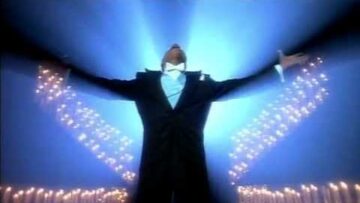
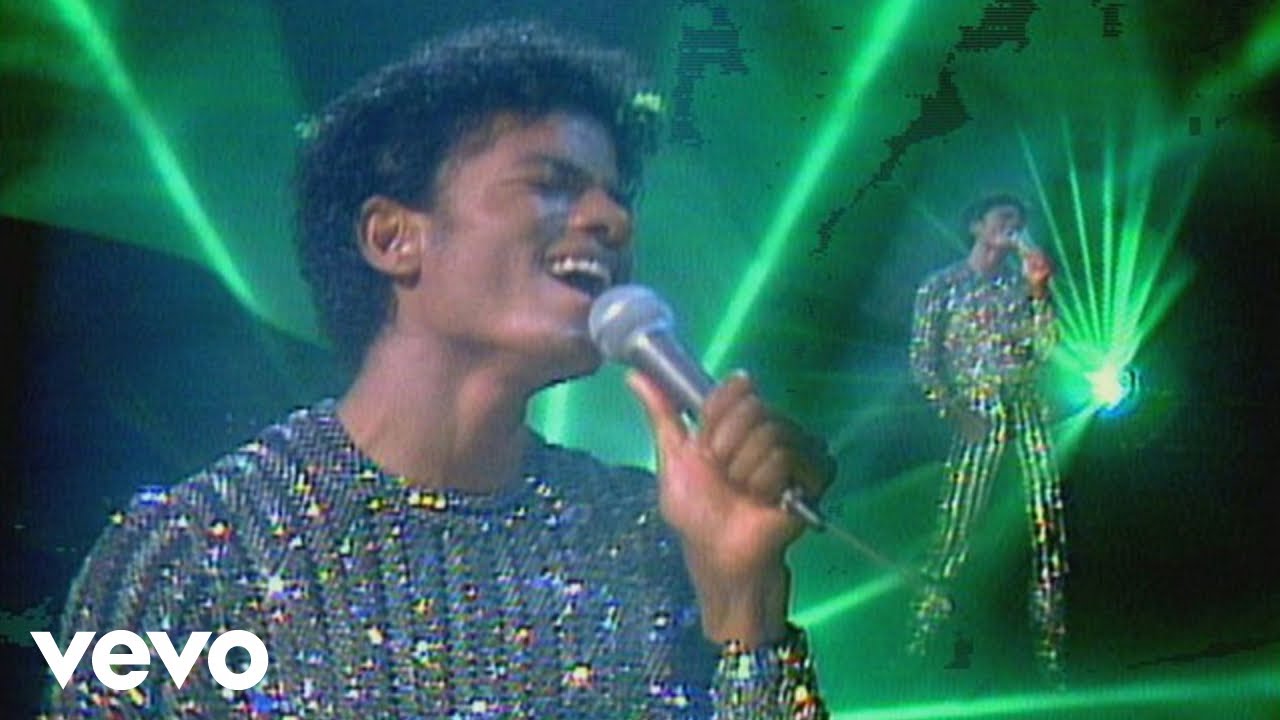
The music video, directed by Bruce Gowers — the same man who had shot Queen’s “Bohemian Rhapsody” promo — was filmed at the 800 Stage in Los Angeles in 1979. Gowers was working on a tight budget. “In those days they were done for peanuts. Absolute peanuts. I think about all we could afford was the laser,” he later told Rolling Stone. Jackson wore a sequined suit that seemed to absorb and refract every photon of the green laser light around him, turning what could have been a budget limitation into an aesthetic statement. The video and the sound created the same sensation: intimacy at scale. Something vast, rendered personal.
Rod Temperton would go on to write the title track of Thriller in 1982, cementing one of the most extraordinary songwriter-artist pairings of the era. He died in London in September 2016, largely unknown to the general public despite having shaped some of the most recognisable recordings of the 20th century. Gilles Peterson paid tribute: “Apart from Lennon and McCartney no one from the UK has contributed more to popular music.” Quincy Jones, who died in November 2024, said the collaboration with Jackson was the high point of his creative life. Rolling Stone placed “Rock with You” in its 500 Greatest Songs of All Time. It was, in the end, the song Karen Carpenter called too funky, the song Heatwave didn’t have room for, the song with the unrepeatable title — and one of the most joyful, perfectly constructed recordings ever committed to tape. Every second of its 3:38 running time explodes with unabashed joy, deepened only by the knowledge that Michael Jackson would never sound so free on record ever again.