





![Kid Rock – All Summer Long [Official Music Video]](https://musicvideosclub.com/wp-content/uploads/2025/12/kid-rock-all-summer-long-officia-360x203.jpg)

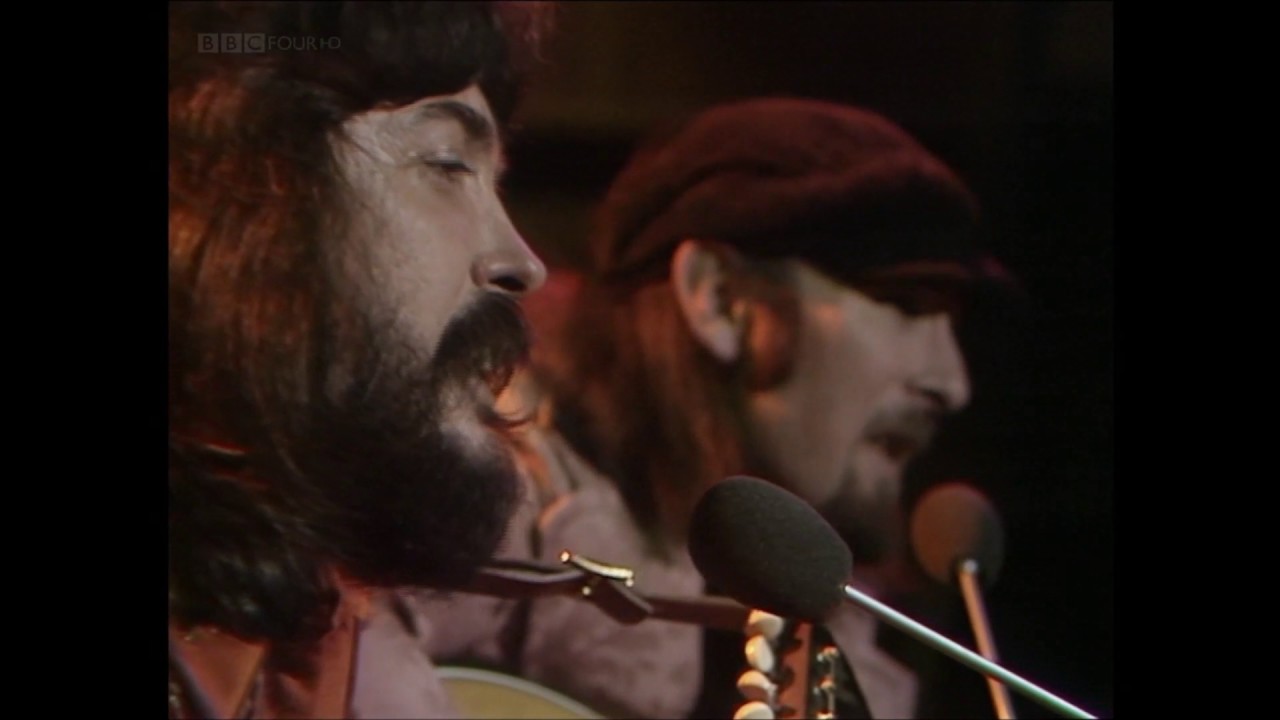
Seals and Crofts – Summer Breeze
The Toy Piano Nobody Had Permission to Use — and the Song It Made Immortal
Dash Crofts was setting up at The Sound Factory in Hollywood when he spotted a toy piano sitting in the corner of the studio. Nobody knew quite who it belonged to. He couldn’t reach anyone who might have given him official clearance to use it. It was already in tune — a minor miracle in itself — and so he borrowed it anyway, and laid down the melody line that would become the most recognisable thing about “Summer Breeze.” That small act of pragmatic larceny is baked into the DNA of one of the most beloved recordings of the entire decade: the instrument most people assume is a delicate acoustic keyboard is, in fact, a child’s toy that Crofts grabbed without asking. “I couldn’t resist,” he said later. Neither, as it turned out, could America.
Released on August 31, 1972, “Summer Breeze” peaked at number six on the Billboard Hot 100 and number four on the Adult Contemporary chart, spending eighteen weeks on the singles chart in total. The album it introduced peaked at number seven on the Billboard Top LPs chart — the highest album chart position Seals & Crofts would ever achieve — and finished second on Billboard’s Top Pop Albums of 1973 list. Rolling Stone would later rank it number 13 on their list of the Best Summer Songs of All Time. For a song built around a borrowed toy piano, a mandolin, and two Texans’ instinct for harmony, these are not modest numbers.
Jim Seals wrote the lyric from a specific place: the domestic contentment of a man coming home, the jasmine in the evening air, his woman waiting inside, the simple fact of being somewhere you want to be. It is a song about nothing dramatic and everything human. Seals explained the duo’s approach to songwriting in plain terms: “We try to create images, impressions and trains of thought in the minds of our listeners.” What makes “Summer Breeze” work is that those images are so precise and so ordinary that they become universal — the kitchen light, the screen door, the breeze itself. No metaphor required. The song puts you in a specific moment and trusts you to find your own meaning in it.
Producer Louie Shelton, who had only recently begun working with the duo when Year of Sunday came together, understood from the first sessions that his job was to stay out of the way while giving the material room to breathe. At The Sound Factory in Hollywood, with strings arranged by Marty Paich and the rhythm section anchored by bassist Harvey Brooks, Shelton built a recording that feels lighter than the sum of its parts. John Hartford contributed banjo. Red Rhodes played steel guitar. And somewhere in the track, almost weightless beneath Crofts’s mandolin runs, that toy piano sits doing what toy pianos were never designed to do: carrying the emotional centre of a song that would outlast everything around it.
Summer Breeze was the fourth album Seals & Crofts had made, but the first to fully reveal what they were capable of commercially. The follow-up singles campaign deepened the impact: “Hummingbird” went to number twenty on the Hot 100 and confirmed that the breakthrough was not a fluke. Diamond Girl arrived in 1973 and sent them to number six on the Hot 100 again, cementing a run of success that would continue through I’ll Play for You and Get Closer. In every meaningful sense, “Summer Breeze” was the moment the door opened — and it opened specifically because of what the duo were, not just what they made. Their Bahá’í faith, their collaborative writing process, their refusal to chase trends — all of it was already fully formed before the toy piano was ever switched on.
The song’s second life in other artists’ hands has been extraordinary. The Isley Brothers’ 1974 cover — all deep funk and wah-wah guitar, a complete reinvention of the source material — reached number ten on the R&B chart and number sixteen in the UK, pulling an entirely different audience into the same set of images. Type O Negative transformed it into a gothic metal centrepiece on Bloody Kisses in 1993, a version that divided purists and confirmed the song’s structural resilience. The Rick Rubin remix surfaced in the 1997 horror film I Know What You Did Last Summer. It has since appeared in Dazed and Confused, Vacation, and Tron: Ares, each placement finding something slightly different in the same melody.
Jim Seals died on June 6, 2022. Dash Crofts — who borrowed that toy piano and played the mandolin runs and stood beside his partner for seven decades of music — died on March 26, 2026, at the age of 85. What they left behind, at its most concentrated, is three and a half minutes of a summer evening in California, built by two men from West Texas who understood that the smallest images hold the most weight. “Summer Breeze” will never stop making people feel fine. That is a rare thing to make. Rarer still to make once and get it exactly right.
SONG INFORMATION
Related videos
 Watch LaterAdded
 Watch LaterAdded
02:27
Watch LaterAdded
02:27  Watch LaterAdded
03:08
Watch LaterAdded
03:08