




![Van Halen – Everybody Wants Some!! (Live at the Tokyo Dome 2013) [PROSHOT]](https://musicvideosclub.com/wp-content/uploads/2025/10/van-halen-everybody-wants-some-l-360x203.jpg)
Billy Squier – The Stroke
He Wrote It as a Satire of the Music-Industry Executives Who “Stroke” Artists to Extract Profit. The Audience Heard a Sexual Innuendo and Took It to Number Seventeen on the Billboard Hot 100. MTV Launched Three Months After the Record’s Release and Put the Video in Heavy Rotation. Billy Squier Spent the Next Three Years as One of the Most-Watched Faces on the Network.
Billy Squier had wanted Brian May. The Queen guitarist had been the producer Squier most wanted for his second solo album, the follow-up to 1980’s modestly received The Tale of the Tape, and Squier had reached out to him directly in late 1980. May was, at that point, working full-time on the production of Queen’s Hot Space sessions and had no time to take on an outside project. He recommended his own collaborator instead — a Bavarian-born recording engineer and producer named Reinhold Mack, who had just produced Queen’s commercial blockbuster The Game the previous year. Mack was a veteran of Munich’s Musicland Studios, the facility built by Giorgio Moroder where ELO, Deep Purple, Queen, and Donna Summer had all cut significant records through the late 1970s. Squier flew to Munich and met Mack at the studio. The two hit it off. The agreement to co-produce Don’t Say No together was settled by the end of the meeting. Recording would take place primarily at Power Station Studios in New York City, with additional sessions and final mixing at Musicland. Squier brought with him a batch of songs he had written across 1980, refined for the project after watching The Tale of the Tape fail to break commercially. One of those songs was The Stroke.
The lyric had been built around a metaphor. Squier had spent the previous five years navigating the music industry — first as the frontman of Piper, the Boston rock band that had been managed by the same firm that handled Kiss and had opened two sold-out nights at Madison Square Garden in 1977 without breaking commercially, then as a Capitol Records solo artist whose debut had not converted the rock-radio interest in his single You Should Be High Love into broader chart success. He had watched executives at every level of the industry deliver the kind of professional flattery that aspiring artists experience as a constant background noise — the firm handshakes, the assurances of belief in the project, the contingent enthusiasm that reverses the moment commercial returns slip. “Now everybody, have you heard,” the song opens. “If you’re in the game, then the stroke’s the word.” The verses elaborate. “Put your right hand out, give a firm handshake. Talk to me about that one big break. Spread your ear pollution both far and wide. Keep your contributions by your side.” The chorus arrives. “Stroke me, stroke me. Could be a winner, boy, you move quite well.” The song is, by Squier’s own subsequent explanation in multiple interviews, a critique of the industry’s manipulative architecture — not a sexual lyric.
The Sexual Reading That Made It a Hit
What he had written and what listeners heard were, however, two different recordings. The chorus phrase — repeated insistently across the arrangement, set against Squier’s swaggering vocal delivery and the hammering rhythm of Bobby Chouinard’s drumming — landed on American AOR radio in May 1981 as something other than satire. Most rock-radio listeners absorbed The Stroke as a piece of sexual innuendo so direct that it bypassed innuendo entirely. The double meaning was, Squier later acknowledged, the engine of the song’s commercial success. The track that he had intended as a critique of industry sycophancy became, instead, the kind of arena-rock single that AOR programmers could play with the assurance that the audience would respond. The lyric’s actual meaning was beside the point. The recording’s relentless groove, Mack’s compressed and stadium-ready production, and Squier’s vocal delivery did the work that the lyric’s stated subject had not been asked to do.
The recording itself benefited from Mack’s signature production approach. The Power Station’s large wooden live room produced a natural, expansive reverb on Chouinard’s drums — the kind of cavernous, room-mic’d drum sound that would define mainstream rock production for the rest of the decade. Mack layered Squier’s guitar tracks dense enough to fill the arrangement without crowding the vocal. The bass, played by Mark Clarke, was given more melodic prominence than was typical for the era’s hard-rock productions. The track ran three minutes and forty seconds — short enough for radio, long enough to establish the chorus phrase deeply enough in the listener’s ear that the song was difficult to dislodge. Don’t Say No reached stores on April 13, 1981. The Stroke was released as the lead single in May with Too Daze Gone as the B-side.
MTV, August 1, 1981, and What Came After
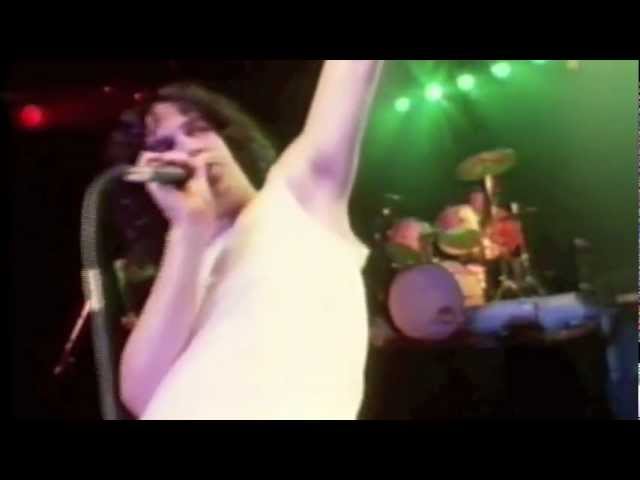
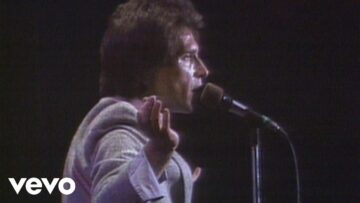
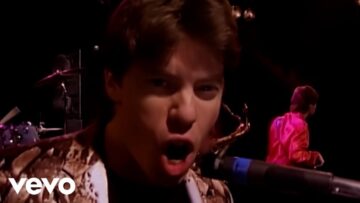
The single peaked at number seventeen on the Billboard Hot 100 and number three on the Mainstream Rock Tracks chart. The album reached number five on the Billboard 200. Don’t Say No would be certified Gold by the RIAA in July 1981, Platinum two months later, and would eventually go 3× Platinum, selling over three million American copies. The single’s most consequential afterlife, however, was on television. MTV launched on August 1, 1981 — three months after Don’t Say No‘s release. The music video for The Stroke, directed by Kenny Ortega in May 1981 in a studio outside London, was filmed on the same day as the videos for In the Dark and My Kinda Lover. All three entered MTV rotation in the network’s first weeks. Squier — a guitarist with sufficient screen presence to translate his arena-rock material into the new visual medium — became one of MTV’s earliest staples. The Stroke was played on the network with a frequency that, by Squier’s account, sometimes hit five or six rotations a day across the autumn and winter of 1981. The follow-up album, Emotions in Motion, arrived in summer 1982 and produced his biggest single, Everybody Wants You (#32 Billboard Hot 100, #1 Mainstream Rock for six weeks). The album went 2× Platinum. By the end of 1982, Billy Squier was one of the most commercially successful new rock artists in America.
His third album, Signs of Life, was released in 1984. The lead single, Rock Me Tonite, was tracked at Mack’s direction. The music video — directed by Kenny Ortega, the same filmmaker who had handled The Stroke three years earlier and who would within a year choreograph Dirty Dancing and within the decade direct Hocus Pocus — was filmed in a pink-and-satin bedroom with Squier dancing in a tank top through the song’s running length. The video reached MTV in the summer of 1984. The audience that had absorbed The Stroke as a piece of sexual swagger three years earlier read the new clip as a different signal entirely. The mockery was immediate and severe. The album peaked at number eleven — significantly lower than the previous two albums — and rock radio’s interest in Squier’s subsequent material never recovered. He continued to record and tour through the rest of the 1980s and into the 1990s, but the commercial trajectory the first three records had built was effectively broken by a four-minute clip. The song that had launched his career was still in rotation on classic-rock radio across the years that followed. The Big Beat from his 1980 debut would be sampled over two hundred times by hip-hop producers across the next four decades — Jay-Z, Kanye West, Run-DMC, A Tribe Called Quest, Alicia Keys. The Stroke itself was sampled by Eminem and Nas. By 2026, Squier had largely retired from active performing. The song he had written as a critique of music-industry flattery had, with its sexual reading intact, kept paying out for four and a half decades.