



![Van Halen – Everybody Wants Some!! (Live at the Tokyo Dome 2013) [PROSHOT]](https://musicvideosclub.com/wp-content/uploads/2025/10/van-halen-everybody-wants-some-l-360x203.jpg)
![Van Halen – Dreams (Official Music Video) [HD]](https://musicvideosclub.com/wp-content/uploads/2026/01/van-halen-dreams-official-music-360x203.jpg)




The Spencer Davis Group – Keep On Running
Chris Blackwell Brought a Jamaican Ska Singer’s Song to a Birmingham R&B Band With a Seventeen-Year-Old Lead Singer. Steve Winwood Reworked It on Piano Into a Rock Number. The Recording Knocked the Beatles Off the Top of the UK Chart and Gave the Founder of Island Records Enough Money to Pay Off the Loan He Had Taken to Make It.
Chris Blackwell had a problem in autumn 1965. The Jamaica-born founder of Island Records was running a small independent label out of London. He had been distributing the records he produced for Island through Philips’ Fontana imprint, and he had been managing the Birmingham R&B band the Spencer Davis Group — a four-piece built around a seventeen-year-old keyboardist and vocalist named Steve Winwood whose talent everyone agreed was self-evidently extraordinary, but who had not yet produced a single that broke into the Top 40 of the UK Singles Chart. The band’s previous four singles — covers of John Lee Hooker, Brenda Holloway, and other American R&B material — had charted respectably but had not crossed over. Blackwell had also been bringing Jamaican musicians to England. Among the writers he had on his Island Records staff payroll was Wilfred “Jackie” Edwards, a singer-songwriter from Kingston who had been recording ska and rocksteady records for Island since the early 1960s. Blackwell had brought Edwards over to England that year. He asked Edwards if he had anything he had written that might suit the Spencer Davis Group. Edwards played him a ska track he had recorded earlier that year for his own album Come On Home. It was called Keep On Running.
The song was, in Edwards’ original recording, a relaxed ska shuffle — laid-back tempo, off-beat guitar accents, the kind of arrangement that Blackwell was producing for Jamaican audiences and that had not yet found a route into British pop. Steve Winwood listened to it. He worked out a different arrangement on piano. He converted the ska shuffle into a driving rock-and-R&B groove, kept the melodic shape of the chorus, and gave the song a rhythmic identity nothing like the original. The session was scheduled at Pye Studios in London for October 21, 1965. Spencer Davis on rhythm guitar. Muff Winwood, Steve’s older brother, on bass. Pete York on drums. Steve Winwood on lead vocals, piano, organ, and the fuzz guitar that would define the recording’s opening figure. The song they cut that day — produced by Chris Blackwell, engineered for maximum chart impact — was finished in a single session.
The Loan Against the Label
What made the recording financially possible was a loan Blackwell had taken out to pay for it. Island Records, in autumn 1965, was a small independent label with limited cash reserves. Blackwell had borrowed money from a London firm called Scala Brown Associates to fund the recording. In exchange for the loan, he had put up a substantial portion of Island Records as collateral — meaning that the recording session at Pye Studios in October 1965 carried, in addition to its commercial stakes, the possibility that Blackwell could lose the label he had built if the single did not perform. The bet was, by any reasonable assessment of the British pop market in late 1965, a calculated one. The Spencer Davis Group had not had a Top 40 hit. The single being recorded was a cover of a ska song. The arrangement Steve Winwood had developed was, while distinctive, not obviously chart-shaped.
The single was released by Fontana on November 26, 1965, with High Time Baby — a Spencer Davis Group original — on the B-side. It climbed steadily through December and the first weeks of January 1966. The fuzz guitar opening — Steve Winwood’s, the same kind of distorted lead figure Keith Richards had used to open the Rolling Stones’ (I Can’t Get No) Satisfaction earlier that year — gave the recording an immediate radio identity. Winwood’s vocal, mature far beyond his seventeen years, carried the lyric with the confident soul-influenced phrasing that would define his recording career through the next six decades. The shuffle rhythm had been preserved from Edwards’ original; the tempo and energy had been doubled. Keep On Running reached number one on the UK Singles Chart in December 1965, displacing the Beatles’ double A-side We Can Work It Out/Day Tripper from the top. It held the position for two weeks. It also reached number three in Ireland, number four in New Zealand, number seven in the Netherlands, and number eight in West Germany. The success allowed Blackwell to rapidly pay back the Scala Brown Associates loan and recover full ownership of Island Records. The label’s subsequent expansion — eventually signing Bob Marley, Cat Stevens, Traffic, John Martyn, Nick Drake, and U2 across the following two decades — would not have been possible if the Birmingham R&B band’s seventeen-year-old singer had not made the arrangement work on the night of October 21, 1965.
The American Reception and the Birmingham Band That Outgrew Itself
What followed in the United States, however, was a different story. Keep On Running entered the Billboard Hot 100 on February 27, 1966 at number eighty-three. It climbed to number seventy-six and disappeared four weeks later. The chart underperformance was, Spencer Davis would later explain, primarily a matter of how American radio was structured in 1966. “The radio was split into black and white stations,” Davis told the music historians Jon Kutner and Spencer Leigh. “Keep On Running was played on black stations in the States, and when they saw a picture of these four shining white boys, the record was dropped from the playlists, so the momentum was lost.” The racial segregation of American AM radio in the mid-1960s meant that a British R&B band whose sound suggested Black American influence could find its records pulled from Black-format stations the moment promotional photographs identified the performers as white. The Spencer Davis Group would not find their American breakthrough until late 1966, when Gimme Some Lovin’ — co-written by the band itself rather than an Island staff writer — would cross over to American AM radio independently.
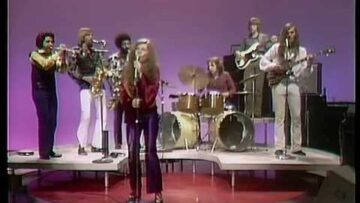
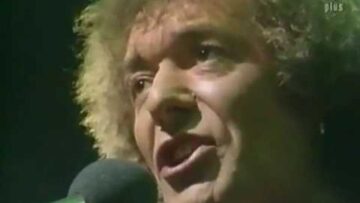
The Beat-Club broadcast featured here was filmed in West Germany in early 1966 during the song’s continental European chart run. Beat-Club, the Radio Bremen-produced music programme that had become continental Europe’s primary platform for British rock acts in the mid-1960s, hosted Spencer Davis Group as the song was peaking across the territory. By autumn 1966, the band would have a second UK number-one with Jackie Edwards’ Somebody Help Me. Gimme Some Lovin’ would follow in late 1966 and become a transatlantic hit. I’m a Man would arrive in early 1967. In April 1967, Steve Winwood left the band to form Traffic — taking with him to that new project the elements of soul, jazz, and folk influence that had defined his contributions to the Spencer Davis Group. The band auditioned replacements. Among the rejected applicants for the vocalist position, reportedly, was a twenty-year-old piano player named Reginald Dwight, who would shortly afterwards rename himself Elton John and become one of the most commercially successful recording artists of the next five decades. The Spencer Davis Group continued recording without the Winwood brothers through 1968. They split in 1969. Spencer Davis re-formed the band twice more — once in 1973 with new personnel, again in 2006 as a touring act. Davis died in October 2020, aged eighty-one. The song that had been written by a Jamaican Island staffer, reworked by a seventeen-year-old at his keyboards, recorded at Pye Studios under a loan that had put Island Records up as collateral, and that had displaced the Beatles at the top of the UK chart — has continued, as the most-streamed Spencer Davis Group recording across every subsequent decade, to outlast everything else the band did. Sometimes the song the label founder takes a financial gamble on becomes the song that pays for everything that follows.