


Rod Stewart – It Takes Two (with Tina Turner)
Rod Stewart had been a fan of Tina Turner’s for a decade. He had brought her onto Saturday Night Live for her first appearance there. When he finally wanted to record with her, he reached past his own catalogue and picked a 1966 Marvin Gaye and Kim Weston Motown duet that almost no one had thought to revisit.
The friendship that produced “It Takes Two” had begun nine years before the recording. In October 1981, Rod Stewart attended a Tina Turner concert at the Ritz in New York. Turner — by then 41, four years out from her divorce from Ike Turner, performing solo in small rooms and rebuilding a career that had been derailed for half a decade — opened her set with three Rod Stewart songs. Stewart went backstage afterward. He invited her to perform with him on Saturday Night Live the next night. The October 18, 1981 broadcast was the first time Turner had ever appeared on the show. Two months later, Stewart was headlining the LA Forum, broadcasting the concert worldwide by satellite, and he invited Turner to join him for two songs in the main set and a Kim Carnes-included encore — material that was released the following year on the home video Tonight He’s Yours and on Stewart’s Absolutely Live album. Through the 1980s, Turner became one of the most successful comeback stories in music history; Stewart kept selling out arenas and putting albums into the upper reaches of every chart that mattered. Both of them had become very rich and very famous. Neither of them had recorded together in the studio.
In late 1989, Stewart was assembling material for his sixteenth solo album, the record that would become Vagabond Heart. He had decided he wanted a duet with Turner — not a new composition written for the occasion, but a cover of a Motown record they both already loved. The song he settled on was “It Takes Two,” the 1966 duet that William “Mickey” Stevenson and Sylvia Moy had written for Marvin Gaye and Kim Weston at the height of Motown’s Detroit period. Weston, married at the time to Stevenson, had recorded the song with Gaye at Hitsville USA across three sessions between November 27, 1965, and March 2, 1966. Tamla released it as a single on December 4, 1966; by January 1967, it had reached No. 4 on Billboard’s Soul Singles chart and No. 14 on the Hot 100. Weston, however, had already left Motown for MGM by the time the single was peaking — when Gaye performed the song on American Bandstand on March 18, 1967, he stood alone on the stage with a large rag doll in place of his absent duet partner. It was Gaye’s first major UK hit, reaching No. 16 there in the spring of 1967. The song’s afterlife was steady but not enormous. The Marvin Gaye / Tammi Terrell duets that followed in the next two years had overshadowed it almost immediately, and by 1990 the original was a deep cut for soul listeners rather than a universally recognized standard.
Bernard Edwards at the desk in 1990
Stewart picked Bernard Edwards to produce. The Chic co-founder — by 1990 a decade past “Good Times,” “Le Freak,” and the production work he and Nile Rodgers had done for Sister Sledge, Diana Ross, and Debbie Harry — had moved into a second career as a hired producer for artists outside his own band’s catalogue. He was already producing tracks for the David A. Stewart-helmed Power Station follow-up and would later go on to oversee Robert Palmer’s “Simply Irresistible” sessions. For “It Takes Two” he assembled a small studio band built around himself on bass: Jeff Golub on guitars, Chuck Kentis on keyboards, Rave Calmer on drums, Jimmy Roberts on saxophone, and additional remix work later from Nick Launay. Stewart cut the lead vocal first; Turner came in to record her parts in a separate session, her vocal flown into the Edwards mix from Los Angeles. The arrangement Edwards built around the song stripped out the brassy Motown horn chart of the original and replaced it with the smoother, FM-radio-shaped Chic-derived pulse he had been refining since the late seventies — a tighter rhythm bed, a more prominent bass line, a chorus designed for the radio formats that had been built around the 1989 records Tina Turner had been making with Dan Hartman on Foreign Affair. The result ran four minutes and thirteen seconds. Warner released it as the lead single from Vagabond Heart on November 12, 1990 — four months ahead of the album itself.
The single climbed to No. 5 on the UK Singles Chart in early 1991 and stayed in the British charts for eight weeks. It reached No. 7 on the European Hot 100, No. 3 on the European Airplay chart, No. 16 in Australia, No. 22 in Germany, and the top ten in the Netherlands, Ireland, Belgium, and Switzerland. It was not released as a single in the United States, where Warner had decided to lead with the Patrick Leonard-produced “Rhythm of My Heart” as the album’s American single — a decision that the British chart performance of “It Takes Two” suggested may have been a missed opportunity. Vagabond Heart itself reached No. 2 in the UK and No. 10 in the US when it was released on March 25, 1991. The album sold past four million copies worldwide on the strength of “Rhythm of My Heart,” the Van Morrison cover “Have I Told You Lately,” the Robbie Robertson cover “Broken Arrow,” and Stewart’s reading of Smokey Robinson’s “The Motown Song” — a four-single run that gave Stewart one of the most commercially consistent albums of his entire career.
David Hogan, Nice, and the Pepsi commercial
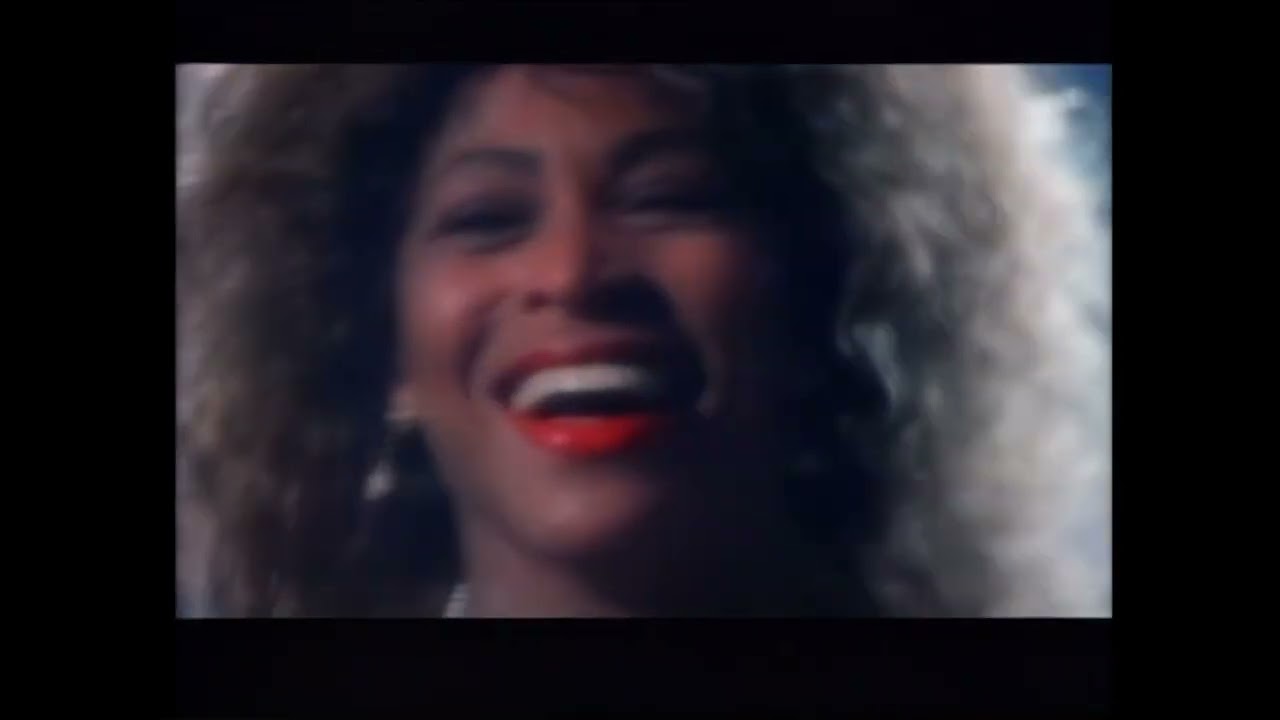
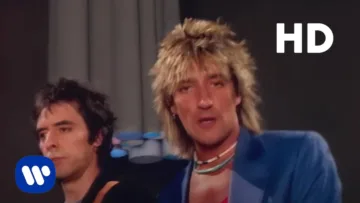
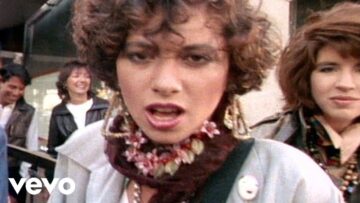
The music video featured on this page was directed by David Hogan and produced by Simon Straker on the French Riviera in late 1990. The shoot took place across two days in Nice. The opening sequence shows Turner alone in a Mediterranean nightclub with a packed crowd around her, singing the first verse on her own; Stewart drives through the streets of Nice in convertible footage shot in late afternoon light, arrives at the club, and walks in to perform the rest of the song with her. Turner’s touring band — guitarist James Ralston and drummer Jack Bruno — appear in the background of the club scene. The video closes with Stewart and Turner leaving the club together and walking the Nice streets in evening light. Pepsi, who had signed Turner as their global brand ambassador in 1987 and had been running her in a series of commercials through the late eighties, recognised the material immediately. The video was re-edited into a slightly different cut for a Pepsi advertising campaign that ran across European television markets through 1991. The commercial included additional behind-the-scenes footage of Turner and Stewart on set in Nice — the only known recording of them recording in the studio together.
Turner died on May 24, 2023, at her home in Küsnacht, Switzerland, at the age of 83, after a long period of declining health that she had spoken about publicly only in her later years. She had retired from touring in 2009 after the Tina!: 50th Anniversary Tour and had spent the years between her last concert and her death living quietly with her second husband Erwin Bach in the Zurich suburb that had been her primary residence since the 1990s. Stewart paid tribute to her on social media that week. The Rock and Roll Hall of Fame, which had inducted Turner as a solo artist in 2021 (separately from her 1991 induction as half of Ike & Tina Turner), held a memorial segment at the November 2023 ceremony. The third anniversary of her death falls this coming Sunday.
Rod Stewart is now 81 years old. He launched the One Last Time farewell tour in 2024 and extended it through 2026, with North American dates running through Knoxville, Hollywood Bowl, Red Rocks, Jones Beach, and a nine-show residency at The Colosseum at Caesars Palace in Las Vegas. The Swing Fever album he recorded with Jools Holland in 2024 gave him his eleventh UK No. 1 album, tying him on the all-time list with David Bowie, Taylor Swift, and U2. He has been inducted into the Rock and Roll Hall of Fame twice — as a solo artist in 1994 and as a member of Faces in 2012 — and was knighted at Buckingham Palace in 2016 for services to music and charity. The catalogue he is performing on the farewell tour runs more than sixty years deep. “It Takes Two” appears in the setlist on some nights of the tour, performed as a solo vocal over Turner’s recorded vocal track flown into the mix from the 1990 master. The duet that began with a 1966 Motown record and a 1981 backstage invitation has become, in the third year after Tina Turner’s death, the recording her duet partner reaches for when he wants to bring her back into the room.