


![Three Degrees – When Will I See You Again [HQ stereo]](https://musicvideosclub.com/wp-content/uploads/2024/10/three-degrees-when-will-i-see-yo-360x203.jpg)
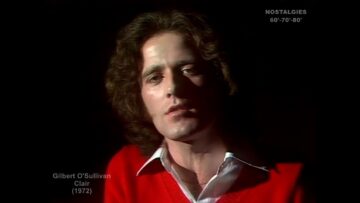
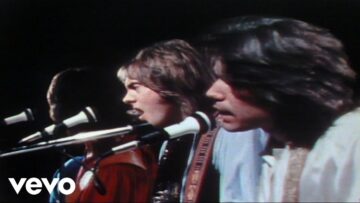
Thin Lizzy – Are You Ready
The Rhetorical Question That Became Their Battle Cry
Released on October 16, 1976 as the opening track on Johnny the Fox, “Are You Ready” became Thin Lizzy’s signature concert opener, a rhetorical question that audiences would answer with roaring affirmation across thousands of shows throughout their career. The album peaked at number eleven on the UK Albums Chart, marking Thin Lizzy’s second consecutive top twenty album after the breakthrough success of Jailbreak earlier that year. What made this track particularly special was that it represented one of the few times Phil Lynott shared songwriting credits with his entire band, co-writing with drummer Brian Downey and guitarists Scott Gorham and Brian Robertson. The song’s title deliberately omitted a question mark, perhaps because when Lynott asked if you were ready, there was only one acceptable answer.
Johnny the Fox sold strongly through the autumn of 1976, though it failed to match Jailbreak‘s commercial peak of number ten in the UK. In the United States, the album reached number fifty-three on the Billboard 200, continuing the band’s slow but steady climb toward American recognition. The album achieved gold certification in the UK, the band’s second consecutive gold album. “Are You Ready” never charted as a single during the studio album era, but its live version from Live and Dangerous became one of the most explosive tracks on that double album, released in April 1981 on the Live Killers EP alongside “Dear Miss Lonely Hearts” and “Bad Reputation.” That EP reached number nineteen on the UK Singles Chart, finally giving the song chart recognition five years after its recording.
Phil Lynott wrote most of Thin Lizzy’s material, but “Are You Ready” emerged from a collaborative effort during the Johnny the Fox sessions. The lyrics were almost certainly Lynott’s work alone, crafted to serve as an uptempo prelude to a night of heavy rocking. The song built around an African-style drum pattern that launched into the harmonized twin guitar attack that had become Thin Lizzy’s trademark sound. Lynott wanted the album to push the band’s harder edge after Jailbreak had balanced romance with aggression. This was pure adrenaline, designed to grab audiences by the throat from the first note. The song became so identified with Thin Lizzy’s live shows that by 1978, Lynott had even suggested it could become their new signature tune when the boys were back in town, replacing gentler moments with unremitting firepower.
Recording took place at Ramport Studios in London during summer 1976, with John Alcock producing the album in collaboration with Lynott. The sessions were captured quickly, as Thin Lizzy had spent most of the year touring behind Jailbreak and needed to capitalize on their momentum. The track featured the classic lineup of Lynott on bass and vocals, Gorham and Robertson on guitars, and Downey on drums. Robertson and Gorham’s dual guitar work created that distinctive harmonized sound, trading off riffs and building toward explosive solos. Downey’s drumming drove the track with relentless energy, establishing the rhythm that made it impossible to remain seated. The studio version clocked in at just over two minutes, though live performances often stretched significantly longer as the band used it to warm up both themselves and the audience for the marathon sets ahead.
Johnny the Fox was Thin Lizzy’s seventh studio album, released on October 16, 1976 by Vertigo Records. The album followed Jailbreak by just seven months, an ambitious turnaround that producer John Alcock worried might be too rushed. The album’s concept revolved around a character named Johnny the Fox, a small-time hustler navigating Dublin’s underworld. Other tracks included “Don’t Believe a Word,” which became a UK top twenty single, and “Johnny,” the first part of the title character’s story. Phil Lynott was writing at his creative peak during this period, balancing street-level storytelling with hard rock arrangements. The classic lineup of Lynott, Downey, Gorham, and Robertson would record one more studio album together, Bad Reputation in 1977, before Robertson’s final departure in 1978.
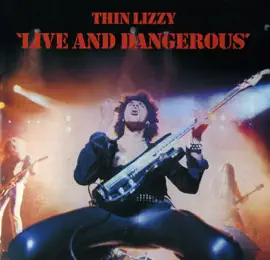
The song’s live legacy far exceeded its studio existence. The version on Live and Dangerous, recorded at various UK venues including London’s Hammersmith Odeon in 1976 and 1977, became the definitive recording. That double live album, released in June 1978, captured Thin Lizzy at their absolute peak and is widely regarded as one of rock’s greatest live albums. The Live and Dangerous version of “Are You Ready” showcased the dual guitar attack of Robertson and Gorham at its most powerful, with each guitarist taking center stage for distinctive solos that blended bluesy bends with rock intensity. When the album was partially re-recorded in studio to fix sections not captured properly live, producer Tony Visconti and the band preserved the raw energy that made those performances legendary. Nobody cared about the studio touch-ups because the result remained explosive.
Phil Lynott’s vision for Thin Lizzy’s musical direction in 1976 comes through clearly on “Are You Ready.” In a 1978 interview with Hot Press, he explained that the music was going to get more aggressive, achieved through techniques like using open chords rather than bar chords. That aggression defined “Are You Ready,” a track designed to kick open doors rather than knock politely. The song represents Thin Lizzy at their most direct and powerful, a distillation of everything that made them one of rock’s most exciting live acts. Four decades after its release, that opening question still resonates, a rhetorical challenge that audiences continue to answer with the same enthusiasm they showed when Lynott first asked it from stages across the world. When you hear those opening drums and that twin guitar attack, there’s only one possible response to are you ready.
SONG INFORMATION