

Don McLean – American Pie
Written Thirteen Years After The Thirteen-Year-Old Read The Headline
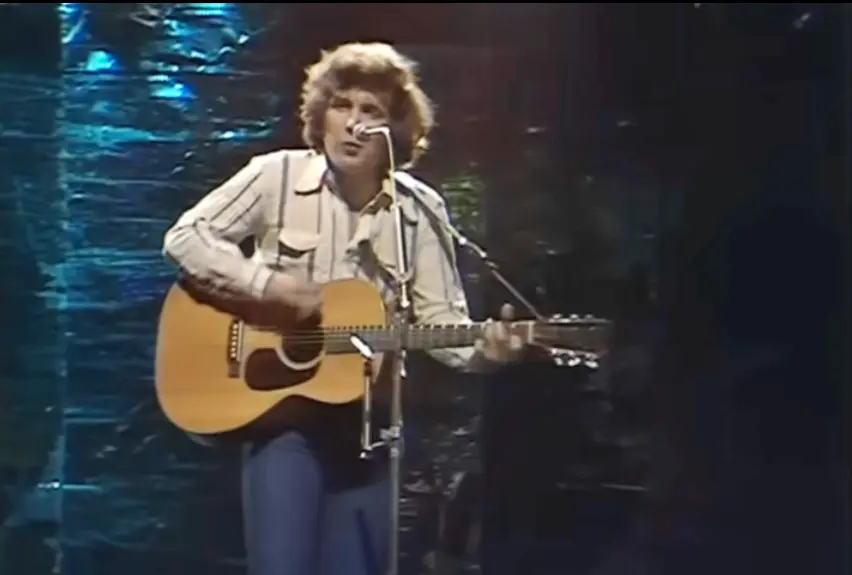
Released in November 1971 as a single from the album of the same name, “American Pie” became Don McLean’s signature masterpiece, spending four weeks at number one on the Billboard Hot 100 starting January 15, 1972 and topping charts in Australia, Canada, and New Zealand. At eight minutes and thirty-two seconds combined across both sides of the 45rpm single, it held the record as the longest song to reach number one until Taylor Swift’s “All Too Well” broke the mark in 2021. What audiences hearing that epic cultural tapestry didn’t realize was that the opening line February made me shiver, with every paper I’d deliver referenced a specific moment on February 4, 1959 when McLean, a thirteen-year-old newspaper delivery boy in New Rochelle, New York, cut open his bundle of papers and saw the front page headline announcing that Buddy Holly, Ritchie Valens, and The Big Bopper had died in a plane crash the day before. Thirteen years later, McLean transformed that childhood trauma into an elegy for American innocence that became the number five song of the twentieth century according to the RIAA’s Songs of the Century project.
The single entered the Hot 100 at number sixty-nine after just eight weeks on the chart and climbed rapidly before hitting number one, staying there through early February. The track also topped the Billboard Easy Listening chart and spent twenty weeks on the Hot 100 total. The American Pie album, released in October 1971 on United Artists Records, reached number one on the Billboard 200 the week after the single topped the Hot 100, with the album staying at number one for seven weeks and the single maintaining its summit for four. In the UK, the song peaked at number two, kept from the top by Chicory Tip’s “Son of My Father” and Nilsson’s “Without You,” though it stayed three weeks at that position on its original 1971 release. A 1991 reissue reached number twelve. The album eventually achieved double-platinum certification in the United States and gold certification in the UK, selling millions worldwide and establishing McLean as far more than a folk club performer.
McLean wrote “American Pie” in Cold Spring, New York and Philadelphia, Pennsylvania, though various locations have claimed to be where the song was written. Caffè Lena in Saratoga Springs, New York claims he wrote it there, and a plaque marks a specific table, though McLean has disputed this, saying the song was only written in Cold Spring and Philadelphia. The first verse came easily, with McLean later explaining that writing it exorcised his long-running grief over Buddy Holly’s death. The phrase the day the music died emerged as a central motif, though McLean later acknowledged in 2015 sale notes that he couldn’t remember exactly when those words came to him, only that a light went off in my head when they did. A month or so later in Philadelphia, he realized the song had to go forward from 1957 and take in everything that has happened, positioning himself as a witness to cultural changes like Mickey Mouse in Fantasia. The cryptic verses alluding to Dylan, the Beatles, the Stones, the Byrds, and jarring sixties events were woven into an abstract autobiography of his life from the mid-fifties until he wrote the song in the late sixties.
Recording sessions took place on May 26, 1971 at The Record Plant in New York City, Studio A on West 44th Street. Producer Ed Freeman assembled accomplished musicians who were not studio musicians who could act like a metronome because he wanted to capture the feel of a band that was really cooking. The sessions proved difficult initially, with McLean on guitar, a bassist, and drummer rehearsing the song for two weeks at a rented rehearsal studio but struggling to find the right sound. It kept sounding like a polka, McLean later recalled. Freeman finally brought in pianist Paul Griffin at the last minute, which is when the tune came together, transforming the arrangement entirely. Freeman had wanted to use session musicians while McLean preferred playing rhythm guitar himself, and they eventually compromised with McLean staying on. Freeman, who called the song a eulogy for a dream that didn’t take place, decided the production needed to sound like a unified band rather than overdubbed tracks, giving it the live feel that made the recording breathe. A month after recording, the track received its first radio airplay on New York’s WNEW-FM and WPLJ-FM to mark the closing of Fillmore East, the famous concert hall.
The American Pie album was released in October 1971 on United Artists Records, marking McLean’s sophomore effort following his 1970 debut Tapestry which had achieved only moderate commercial success. McLean envisioned the album as a unified work influenced by the Beatles’ Sgt. Pepper’s Lonely Hearts Club Band, dedicating it to Buddy Holly with a melancholy feel and rather sparse arrangements. The album’s inner sleeve featured a free verse poem McLean wrote about William Boyd, also known as Hopalong Cassidy, along with a photograph of Boyd in full costume. The album was recorded during a period when McLean’s first marriage was failing and the optimism of the sixties was giving way to the nihilism and hedonism of the seventies. The track spawned another major hit with “Vincent (Starry Starry Night),” which reached number twelve on the Hot 100 and became his other signature song, proving American Pie was no fluke but rather the work of a serious songwriter hitting his creative peak.
The song’s cryptic lyrics inspired immediate analysis, with WCFL DJ Bob Dearborn publishing his interpretation on January 7, 1972, four days after the song reached number one on rival station WLS. Numerous other interpretations quickly followed, largely converging on Dearborn’s reading identifying the jester as Bob Dylan, the quartet practicing in the park as the Beatles, Jack Flash on a candlestick as the Rolling Stones, and the fifth verse’s satanic imagery as referencing Altamont Speedway where the Stones’ 1969 free concert descended into violence when Hells Angels security stabbed a fan to death. McLean declined to explain definitively until 1978, famously saying they’re beyond analysis, they’re poetry and once quipping that the song meant he would never have to work another day in his life. When he finally sold his original handwritten manuscript at Christie’s auction on April 7, 2015 for $1,205,000, making it the third highest auction price for an American literary manuscript, he released his songwriting notes explaining many references, confirming Dylan, the Beatles, the Stones, Janis Joplin as the girl who sang the blues, and the Father, Son, and Holy Ghost as the three musicians who died in the crash.
The covers of “American Pie” ranged from respectful to ridiculous. The Brady Bunch recorded the first major cover in 1972 for their album Meet The Brady Bunch, creating what became a staple of Worst Covers of All Time lists with Barry Williams later writing in his autobiography ouch, worst of all was our extraordinarily awful rendition. Madonna’s 2000 version for The Next Best Thing soundtrack condensed the song to four and a half minutes, containing only the beginning of the first verse and all of the second and sixth verses. Produced by Madonna and William Orbit as a dance-pop track, it peaked at number twenty-nine in the US but topped the UK chart, ironically going one spot higher than McLean’s original. While it was voted the worst cover version ever by BBC 6 Music and ranked third worst by Rolling Stone, McLean praised it as sensual and mystical, a gift from a goddess. Weird Al Yankovic’s 1999 Star Wars parody “The Saga Begins” narrated The Phantom Menace from Obi-Wan’s perspective, with McLean admitting he nearly sang Yankovic’s lyrics during his own concerts because his children played it constantly.
The song achieved unexpected cultural penetration beyond music. Lori Lieberman attended a McLean performance at the Troubadour in Los Angeles in late 1971 and was so moved by his singing of “Empty Chairs” that she wrote poetic notes on a napkin, leading to her co-writing “Killing Me Softly with His Song” with Norman Gimbel and Charles Fox, inspired by McLean’s performance style. The track appeared in films including Born on the Fourth of July, Celebrity, Josie and the Pussycats, Black Widow where it became favorite character Yelena Belova’s favorite song, and Finch. Boxer Tyson Fury sang it with McLean in promotional videos. South Korean President Yoon Suk-yeol performed it at a White House state dinner in 2023, prompting McLean to humorously offer a duet. The Library of Congress chose it for preservation in the National Recording Registry in 2017 as culturally, historically, or artistically significant. Garth Brooks called it probably the greatest song in music history, performing it with McLean at his 1997 Central Park concert before one hundred thousand fans.
McLean has performed the song thousands of times since 1971, though its meaning continues evolving with each performance and each listener’s interpretation. The phrase the day the music died entered American vernacular, applied to various cultural moments beyond the February 3, 1959 plane crash. The song stands as a generational touchstone for baby boomers while remaining relevant to subsequent generations discovering it through covers, samples, films, and streaming platforms that have pushed it past 1.6 billion plays. Looking back, the track that McLean wrote as an abstract autobiography of his generation’s loss of innocence between 1959 and 1970 became America’s unofficial elegy for itself, a wistful invitation to inhabit an imagined time before everything got complicated. The thirteen-year-old newspaper boy who shivered reading that headline grew into the voice of collective nostalgia, proving that sometimes personal grief transformed into art becomes the story we tell ourselves about ourselves to make sense of being alive.