


![Eric Clapton – I Shot The Sheriff [Crossroads 2010] (Official Live Video)](https://musicvideosclub.com/wp-content/uploads/2026/09/eric-clapton-i-shot-the-sheriff-360x203.jpg)







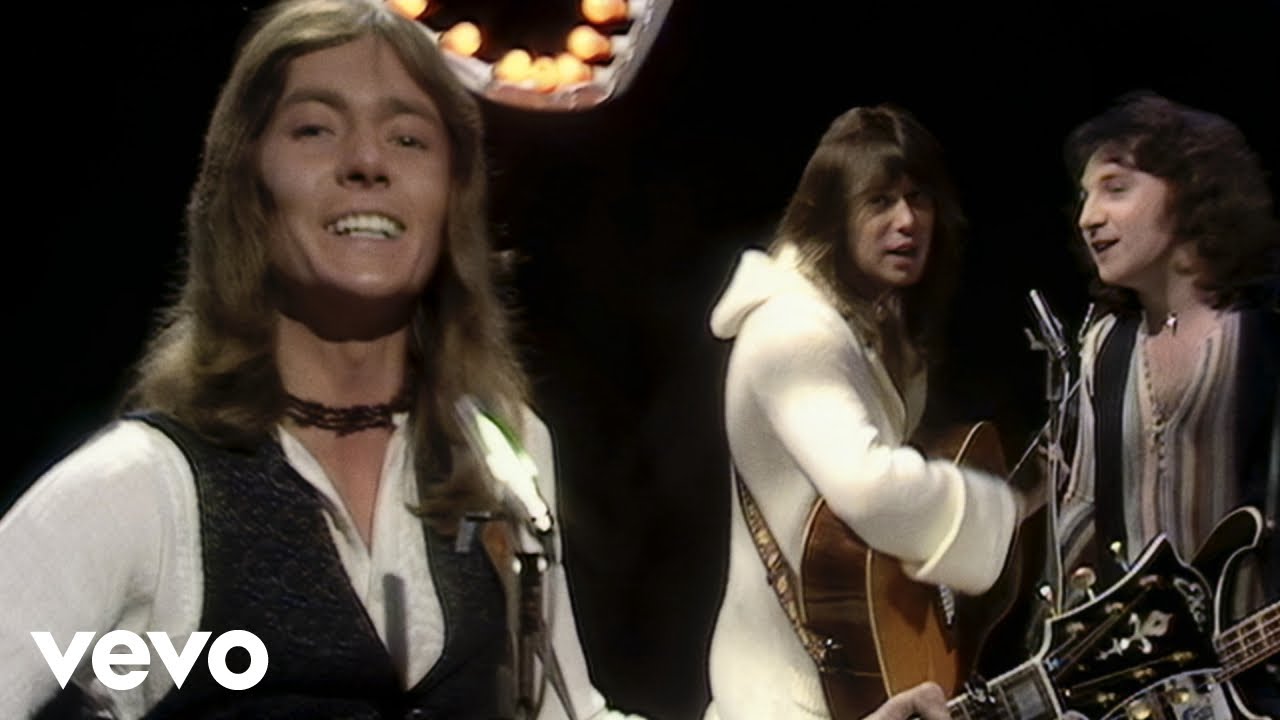
Smokie – If You Think You Know How to Love Me
The Single Had Been Released Six Weeks Earlier and Hadn’t Entered the UK Chart. Then Smokie Performed It on Top of the Pops on July 24, 1975 — and Watched the Song Climb to Number Three in Nine Weeks, Breaking Their Career Across Europe.
Smokie had been a working band for nine years and had not had a hit. The four Yorkshire musicians — Chris Norman on vocals and rhythm guitar, Alan Silson on lead guitar, Terry Uttley on bass, Pete Spencer on drums — had been playing together since 1966 in various lineups under various names. They had been the Elizabethans, then Kindness, then briefly Kindness with Pete Spencer replacing Ron Kelly on drums in 1973. They had recorded singles for RCA Records and Decca Records through the late 1960s and into the early 1970s. None of those singles had charted. They had nearly given up. In 1974, their manager Bill Hurley arranged an introduction to Nicky Chinn and Mike Chapman — the Australian-British songwriting and production team known as Chinnichap, whose production credits already included Sweet’s Ballroom Blitz and Block Buster!, Mud’s Tiger Feet and Dyna-mite, Suzi Quatro’s Can the Can and 48 Crash, and over a dozen other British Top 10 singles. Chinn and Chapman signed Smokie to Mickie Most’s RAK Records label and began assembling material designed to push the band toward the chart success the previous nine years had not produced.
The first single under the new arrangement, Pass It Around, did not chart. The second single, recorded at Audio International Studios in London with engineer Pete Coleman, was If You Think You Know How to Love Me. Chinn and Chapman wrote the song themselves. The arrangement was characteristic of their mid-1970s production work — a melodic mid-tempo soft-rock track with prominent acoustic guitars layered against electric textures, Phil Dennys’ subtle string arrangement entering on the chorus, and Chris Norman’s distinctive husky baritone carrying the lead vocal in front of the band’s three-part backing harmony. The song’s central theme — a man’s rueful response to a lover who claims to understand him better than she actually does — gave Norman a vehicle for the slightly weary, slightly wounded vocal style that would define Smokie’s sound across the rest of their career. The single was released by RAK in June 1975, with the band billed on the label as Smokey — the original spelling the band would soon change to avoid confusion with Smokey Robinson.
Six Weeks of Nothing, Then One Television Appearance
The single, after release, did nothing for six weeks. It did not enter the UK Singles Chart through the back half of June or the first half of July 1975. Radio play was inconsistent. The band had been at this stage of a release before — the moment where promotional support either materialised or the record began its slow disappearance. Then, on July 19, 1975, the single finally appeared on the UK chart at the bottom of the Top 75. Within days of the entry, the band were booked to perform the song on the BBC’s Top of the Pops. The episode aired on July 24, 1975. Smokie performed If You Think You Know How to Love Me in front of the standard Top of the Pops audience — the studio dancers, the flat lighting, the three-minute mimed performance to the studio recording that had become the most-watched promotional vehicle for any rising British single in the 1970s.
The chart response over the following weeks confirmed what the broadcast had set off. The single climbed each successive week — from the lower Top 40 into the Top 20, the Top 10, the Top 5, and finally to number three on the UK Singles Chart by the early autumn. It spent nine weeks in the UK Top 40. It also reached number two in Ireland, number three in Sweden, number six in Norway, number eight in Germany, and number fifteen in the Netherlands. In South Africa it peaked at number two on the Springbok Radio chart and spent fourteen weeks on the chart, finishing the year at number eighteen on the 1975 year-end list. The song spent over 100 cumulative weeks on charts globally — among the longest sustained chart runs by any British single of 1975.
The Career That Followed and the Years That Followed It
The next year, 1976, gave Smokie three more UK Top 20 singles — Don’t Play Your Rock ‘n’ Roll to Me (#8 UK), Something’s Been Making Me Blue (#17 UK), and Living Next Door to Alice (#5 UK, the band’s biggest international hit and their American breakthrough). By 1977 the band were one of the most reliable European singles acts on RAK Records’ roster. They continued to record and tour through the rest of the decade. Chris Norman left the band in 1986 to pursue a solo career — most successfully in continental Europe, where he would have a substantial second career as a solo recording artist into the 1990s and 2000s — and was replaced as Smokie’s lead vocalist by Alan Barton, formerly of the band Black Lace. The 1988 reformation of Smokie under Barton’s vocal lead included a re-recording of If You Think You Know How to Love Me for the album All Fired Up.
Alan Barton was killed in a tour bus accident in Germany on March 23, 1995, aged forty-one. The bus crashed near the town of Wertheim am Main while the band was on a German tour. Three other band members were injured. Mike Craft replaced Barton as Smokie’s lead vocalist and has continued to front the band since. Chris Norman has continued his solo career. Mike Chapman, the song’s co-writer, went on to produce Blondie’s Parallel Lines in 1978 and several Pat Benatar records in the early 1980s. Nicky Chinn, his songwriting partner, eventually withdrew from active production work and has lived between London and Cape Town across the decades since. The song they had written and produced together for a Yorkshire band on the verge of giving up has remained, fifty years on, one of the defining mid-1970s European soft-rock recordings. The Top of the Pops broadcast on July 24, 1975, was the night nothing about the band’s commercial trajectory had been clear before, and everything was clear after. Sometimes nine years of working and one mimed performance to studio audience are the same thing in retrospect.
SONG INFORMATION