








Kenny Chesney – Carry On
When Kenny Chesney sent “Carry On” to country radio, all 158 stations on the Mediabase panel added it in the first week — something only Garth Brooks and one 2024 release had ever done before.
Kenny Chesney had been quiet for two years, and then he came back with a record that did something almost nothing in country radio history has done. “Carry On” was released as a single on May 8, 2026, and when it went out to country radio, every single one of the 158 stations on the Mediabase reporting panel added the song to rotation in its first week. That is the kind of unanimity that effectively does not happen. According to Mediabase’s own records, a song locking the entire panel in its debut week had occurred only twice before: Garth Brooks did it in 1997, and Post Malone and Morgan Wallen matched it in 2024. “Carry On” was the third. It gave Chesney the largest single-day radio add of his entire career — a career that already includes more than thirty number-one singles and around thirty million albums sold. “Based on the response from radio,” Chesney said, “I’m not the only one looking to be empowered, inspired, lifted up.”
The song that prompted that response is, by design, an uncomplicated one. “Carry On” was written by the Nashville songwriters Jessi Alexander, Matt Jenkins, and Chase McGill — a trio whose individual catalogs run through some of the biggest country records of the last decade — and it is built around the idea of letting go of stress rather than chasing anything. Chesney has described the song as being about hitting a reset button. “We all got stress with work, we all got stress with relationships, we all got stress with life,” he said when he announced the record. “And when I first heard ‘Carry On,’ it reminded me just how simple hitting the reset button can be.” The lyric makes the point in plain terms — a verse about carrying on with karaoke whether or not you can carry a tune, a closing line about how you can’t carry anything with you in the end anyway. Chesney co-produced the track with Buddy Cannon, the producer who has worked on every Chesney album for more than two decades. “Sometimes when you’re running down a song,” Chesney said of the session, “it all just falls into place because it just feels good.”
The first single on a label of his own
“Carry On” carries a significance beyond the song itself: it is the first release on Hey Now Records, the independent label Chesney established in March 2026 with himself as its flagship artist. After decades of major-label releases — BNA, Columbia Nashville, Warner Nashville, his own Blue Chair imprint operating under those majors — Chesney moved into a fully independent structure for this new chapter, with Hey Now distributed through Warner Records. “Carry On” is both the debut single for the label and the lead single from Chesney’s upcoming twenty-first studio album, a record he was still mixing in the studio as the single went to radio. It is also his first solo release since “Just to Say We Did” in July 2024, ending a quiet stretch that, by recent-era Chesney standards, counted as a genuine pause. The album it precedes has been described as drawing from a wide spread of genres, and Chesney has placed “Carry On” in the lineage of his most expansive, life-thrown-wide-open singles — songs like “American Kids,” “Save It for a Rainy Day,” and “Get Along.”
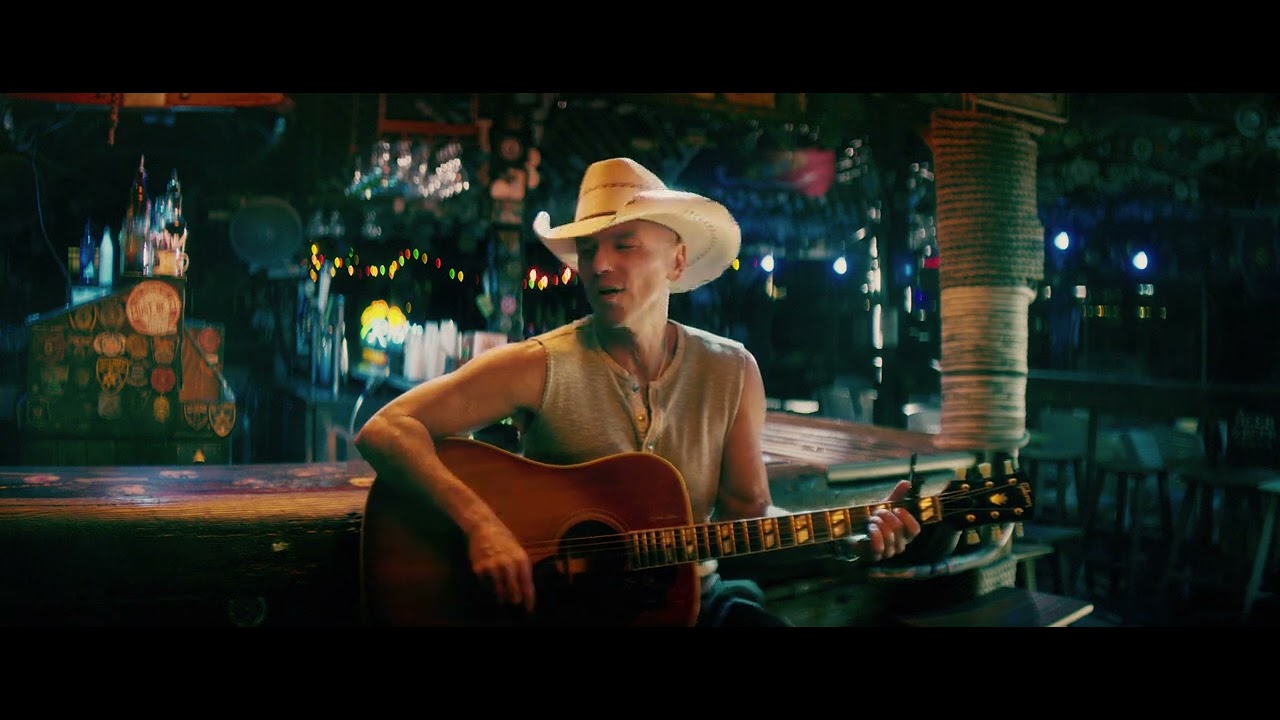
The official music video — premiering today on Chesney’s YouTube channel — was directed by Shaun Silva, Chesney’s longtime video collaborator, and filmed in the Florida Keys. Chesney shot it in and around Key West, including at Schooner’s Wharf, the open-air Key West bar that is named directly in the song’s lyric. The choice of location was deliberate and personal. Key West has been Chesney’s creative touchstone for his entire career — the place his “island” songbook has drawn from since the early 2000s — and he framed the video as an attempt to show the part of the island that tourists don’t see. “Key West isn’t about who you are, but what’s in your soul,” Chesney said. “It’s the great equalizer, with wisdom to be found just about anywhere if you listen. I knew I wanted this video to show people that heart — beyond what tourists see — and give them a sense of what this song’s really reaching into in terms of how to live.” He described the feeling the video chases as “a different kind of freedom” — people who aren’t running after anything, but letting go and holding onto what makes them happy.
A Hall of Famer starting over
“Carry On” arrives at a particular moment in Chesney’s career. In October 2025, he was inducted into the Country Music Hall of Fame, alongside the producer Tony Brown and the late June Carter Cash — the institution’s formal recognition of a three-decade run that began with his 1994 debut In My Wildest Dreams and grew into one of the largest touring operations in American music, the stadium-filling phenomenon his audience calls No Shoes Nation. A new artist with a single this dominant at radio would be called a breakout. Chesney, at 58 and a year past his Hall of Fame induction, is instead doing something rarer: starting a new label, releasing a twenty-first album, and finding that the country-radio system has responded to his return more emphatically than it has to almost anyone’s debut. His 2026 residency at Sphere in Las Vegas, the immersive venue he played to acclaim in its previous run, returns for dates between June 19 and July 11.
For all the history around it — the radio record, the new label, the Hall of Fame ring — “Carry On” itself is built to be light. It is a song about not carrying things: not stress, not other people’s opinions, not the weight of whatever the week has handed you. Chesney has spent thirty years making summer-shaped records for an audience that treats his catalog as a seasonal ritual, and “Carry On” is plainly engineered to be the next one. The difference this time is the structure underneath it. The song is the first thing Kenny Chesney has released as the owner of the label putting it out — a Hall of Famer, two years quiet, walking back in through a door he built himself.
SONG INFORMATION
Related videos
 Watch LaterAdded
03:05
Watch LaterAdded
03:05  Watch LaterAdded
03:29
Watch LaterAdded
03:29  Watch LaterAdded
03:49
Watch LaterAdded
03:49