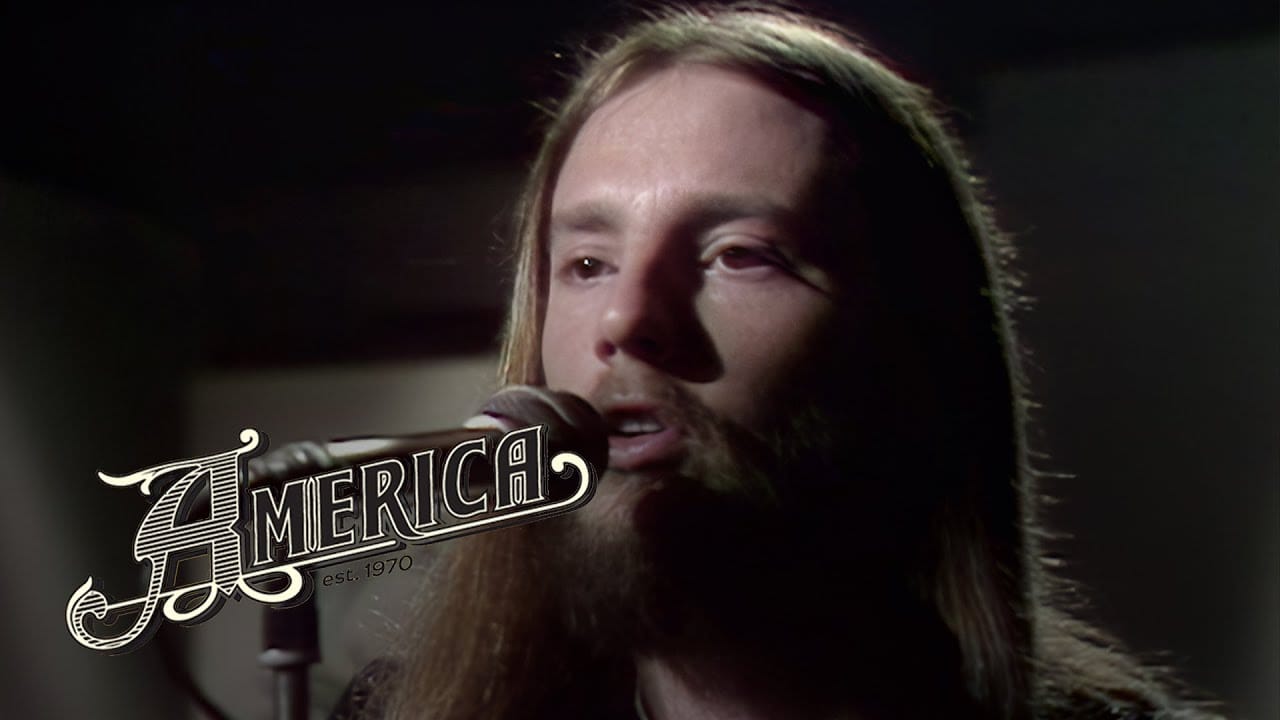
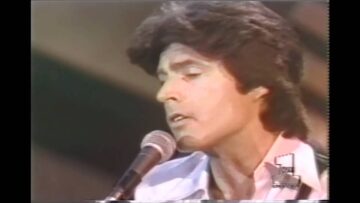
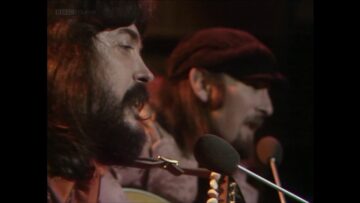
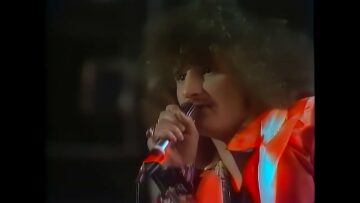
America’s “A Horse With No Name” became a chart-topping folk rock classic in 1972, and one of the band’s signature tracks. The performance on May 24, 1973, filmed for the BBC television series In Concert, captures the group at the height of their early success. Broadcast in the UK and archived by the BBC, this live rendition remains one of the most circulated early video documents of the band.
Background & release
Written by Dewey Bunnell and originally titled “Desert Song,” the track was inspired by desert imagery from Bunnell’s youth and a longing for open landscapes while living in England. Released as a single in early 1972, it reached No. 1 in the United States and Canada, No. 3 in the UK, and later became certified Gold by the RIAA.
The live performance used here comes from the BBC’s In Concert series, directed by Stanley Dorfman, filmed on May 24, 1973. This broadcast preserved the band’s live energy just a year after the single had become an international success.
Composition & lyrics
The song is built on a repeating chord sequence in E Dorian mode, carried by layered acoustic guitars, bass, light percussion, and Bunnell’s lead vocal. Its minimal lyrical style lists simple desert imagery — “plants, birds, rocks and things” — creating a hypnotic, dreamlike effect. The lyrics stirred controversy at the time, with some radio stations banning it under the mistaken belief that “horse” referred to heroin; Bunnell has consistently denied this interpretation.
The video is a straightforward live capture typical of early 1970s BBC music broadcasts, emphasizing the performance without added effects. It stands out as one of the earliest filmed appearances of the band performing their breakthrough song.
Many listeners initially mistook “A Horse With No Name” for a Neil Young track due to Dewey Bunnell’s vocal style, and critics often pointed out the similarity. In an ironic twist, the single replaced Neil Young’s “Heart of Gold” at No. 1 in the United States.
Over time, the track became a staple of classic rock radio and a defining example of 1970s soft rock.
Cultural impact
The song has been widely used across popular culture:
Television:Friends (“The One With Joey’s Big Break”), Parks and Recreation, The Simpsons, Six Feet Under.
Films:Air America (1990), Hideous Kinky (1998), The Trip (2002), American Hustle (2013).
Video games:Grand Theft Auto. Initially hesitant, the band agreed to license the song after encouragement from Gerry Beckley’s son. As Beckley explained in 2016: “Almost weekly, we’ll have some kid come up to us and say, ‘I learned about your music through Grand Theft Auto.’”
Personnel & credits
Dewey Bunnell – Lead vocals, acoustic guitar
Gerry Beckley – Guitars, backing vocals
Dan Peek – Bass, backing vocals
Ray Cooper – Percussion (studio)
Kim Haworth – Drums (studio)
Director (TV special): Stanley Dorfman
Timeline
Date
Event
Nov 1971
Single released in the UK
Jan 1972
Single released in the US
Mar 1972
Hits #1 on Billboard Hot 100
1972
Certified Gold in the US
May 24, 1973
Performed live on BBC In Concert, directed by Stanley Dorfman
1990
Featured in film Air America
1998
Featured in film Hideous Kinky
2002
Featured in film The Trip
2013
Featured in film American Hustle
2016
Gerry Beckley interview notes GTA’s role in introducing the song to younger fans
References
A Horse With No Name – Wikipedia.
Rhino – “Single Stories: A Horse With No Name.”
Interesting Literature – Analysis of song and lyrics.