

Donna Summer – MacArthur Park (Live 1978)
Moroder Bought An Eight-Track Machine Just To Hear The Original
Released in September 1978, Donna Summer’s disco reimagining of “MacArthur Park” climbed to number one on the Billboard Hot 100 on November 11, holding the top spot for three consecutive weeks and becoming her first chart-topper. The single also reached number five in the UK, number eight on the Billboard R&B chart, and earned Summer her first Grammy nomination for Best Female Pop Vocal Performance at the 21st Annual Grammy Awards. The track sold multiple millions worldwide and finished at number 12 on Billboard’s year-end Hot 100 for 1979. Producer Giorgio Moroder had heard Richard Harris’s baroque 1968 original on the Hollywood Freeway while driving, immediately recognizing its potential as a disco showstopper with high notes perfect for Summer’s voice. When Casablanca Records president Neil Bogart finally located a copy, it arrived on eight-track tape. Moroder bought a new machine just to play it, convinced this decade-old melodramatic ballad about cake left out in the rain could become disco’s most unlikely triumph.
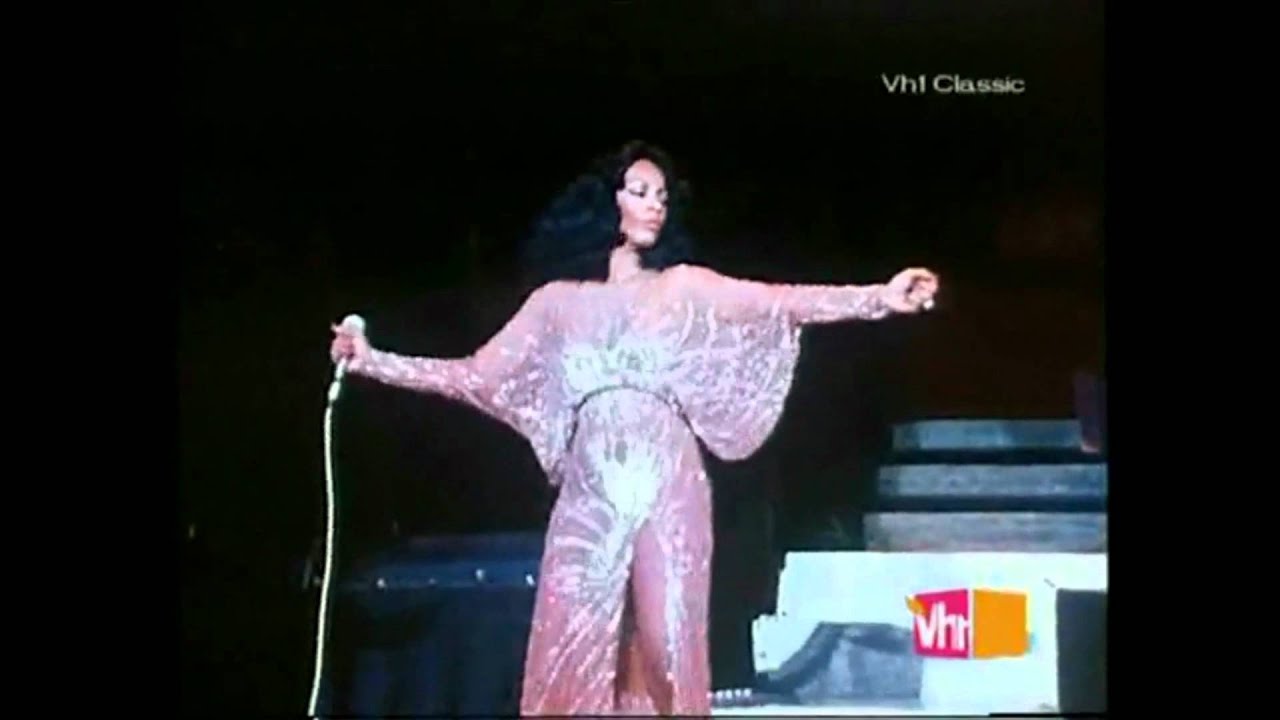
While “MacArthur Park” dominated American pop and R&B charts throughout late 1978, it became the last of seven Jimmy Webb compositions to reach the Top 10 on the Hot 100 and the only Webb song ever to hit number one. The 12-inch single version of the full 17-and-a-half-minute “MacArthur Park Suite” spent five weeks at number one on Billboard’s Hot Dance Club Songs chart, showcasing the track’s versatility across formats. The suite appeared as side four of Summer’s double live album Live and More, released August 28, 1978, which reached number one on the Billboard 200 the same week “MacArthur Park” topped the Hot 100. Summer became just the fourth solo Black artist to simultaneously hold the number one single and album in America. The album achieved platinum certification and featured three sides of live material recorded at the Universal Amphitheatre in Los Angeles on June 17, plus the studio-recorded suite that changed everything.
Jimmy Webb wrote the original song in 1967 as part of a cantata he presented to The Association during their Birthday album sessions. After 15 hours struggling in the studio, Webb walked in and played his 24-minute suite featuring various movements including what would become “MacArthur Park.” The band loved certain sections but refused to devote an entire album side to Webb’s cantata. Webb insisted it was all or nothing, so he shopped it elsewhere. Actor and singer Richard Harris recorded it in 1968, and it peaked at number two on the Hot 100, becoming an instant punchline for its surreal imagery of melting cake and metaphorical rainfall. Webb drew inspiration from MacArthur Park in Los Angeles, the landmark across from the life insurance company where his girlfriend worked, transforming lost love into baroque pop kitsch that captured Hollywood’s fading musical era just as the counterculture exploded. Andy Kaufman performed a deadpan spoken-word recitation of the lyrics during his 1975 Saturday Night Live audition.
When Moroder and collaborator Pete Bellotte decided to either remix or remake a 1960s hit as a dance track, they had no specific song in mind until Moroder heard Harris’s version on the radio. Finding a copy proved difficult because Richard Harris was better known by 1978 for starring in shark thriller Orca than for his recording career, which had ended in 1974. The record industry hadn’t yet embraced back catalog sales, making Harris’s original nearly impossible to locate. Once Moroder finally heard it on eight-track, he spent an hour or two finding a key where Summer could sing really high but still with a big voice. He played piano while she sang along until they found the perfect range, then brought in Greg Mathieson to create the arrangement. Moroder’s most innovative contribution came when he recorded his own voice singing 20 seconds of notes on 24-track tape, creating a loop he could manipulate through the SSL desk to form eight chords simply by moving tracks. This created the choir sound heard behind Summer on the chorus, giving the track its otherworldly shimmer.
The nearly 18-minute “MacArthur Park Suite” incorporated three songs—the main Jimmy Webb composition bookending two originals by Summer, Moroder, and Bellotte. The suite opened with a slow cello intro and solemn verses before transitioning into “One of a Kind,” then featured “Heaven Knows,” a duet between Summer and Brooklyn Dreams singer Joe Esposito that became a hit in its own right, peaking at number four on the Hot 100 in early 1979. Brooklyn Dreams included musician Bruce Sudano, whom Summer would marry in 1980. The suite concluded by returning to the main theme with a reprise of “MacArthur Park.” The seven-inch single edit ran three minutes and 56 seconds, omitting the balladic second movement to create a radio-friendly version that lost none of the original’s dramatic sweep. The shorter edit showcased Summer’s soaring vocals and Moroder’s sleek production without the extended medley format, proving disco could handle complexity as well as dancefloor simplicity.
Live and More represented a bold gamble for Casablanca Records. The concept of a live disco album seemed almost contradictory since Summer’s best songs sounded like studio creations, but she was a slick, practiced performer who brought her records to life onstage. The first three sides captured her June 17, 1978 Universal Amphitheatre concert, including hits like “Love to Love You Baby,” “I Feel Love,” and “Last Dance” alongside a jazz-inflected medley featuring George Gershwin’s “The Man I Love,” Duke Ellington’s “I Got It Bad,” and the standard “Some of These Days.” The fourth side’s studio-recorded suite marked a turning point. After this album, Summer, Moroder, and Bellotte would abandon the side-long progressive Eurodisco suites that defined Once Upon a Time and embrace a more direct approach that yielded “Hot Stuff” and “Bad Girls” in 1979. “MacArthur Park” was the last great gasp of disco as high art before the genre pivoted toward pure commercial dominance.
In 2013, Laidback Luke remixed “MacArthur Park” for the posthumous compilation Love to Love You Donna, released to dance clubs nationwide after Summer’s death in May 2012. The remix hit number one on the Dance Club Songs chart, giving Summer her 15th career chart-topper on that ranking and her first posthumous number one. She became the first artist to top the chart after death since Michael Jackson’s “Hollywood Tonight” in 2011. Ralphi Rosario and Frank Lamboy also contributed remixes, with Rosario using original recording stems and adding extra parts that were never heard in the 1978 version. Pet Shop Boys sampled Summer’s recording in their 1999 track “New York City Boy” from Nightlife. VH1 ranked the song number 89 on their 100 Greatest Dance Songs in October 2000, while Slant Magazine placed it at number 28 in their 2020 ranking. Billboard honored it at number 73 on their March 2025 list of the 100 Best Dance Songs of All Time.
Donna Summer’s version remains the definitive disco reinterpretation of a song that shouldn’t have worked but somehow transcended its own absurdity. At the 23rd Annual Grammy Awards, Summer performed a medley of her hits that reminded audiences she was far more than the First Lady of Love—she was a vocalist with classical training and range that few disco singers could match. As music journalist Gene Sculatti noted, Summer had aspirations beyond hit singles. She wanted recognition as a serious artist, and “MacArthur Park” proved she could tackle ambitious material and make it her own. The track’s success paved the way for her dominance in 1979, when she became the first female artist in chart history to score three number one singles in a calendar year. Giorgio Moroder later said that recording helped change the face of music, showing that disco could be sophisticated, theatrical, and emotionally complex. “MacArthur Park” transformed a punchline into a masterpiece, a disco queen’s coronation disguised as a cover song.
SONG INFORMATION