






Doris Day – Que Sera, Sera
She Recorded It in One Take, Said “That’s the Last You’ll Ever Hear of That Song” — and It Became Her Signature
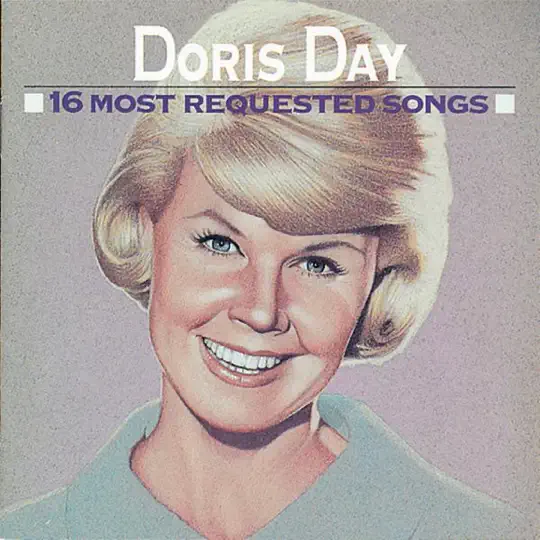
Doris Day did not want to record “Que Sera, Sera.” When songwriters Jay Livingston and Ray Evans played it for her, she dismissed it as a children’s song — slight, forgettable, beneath the material she preferred. The song she actually loved from the film was a ballad called “We’ll Love Again,” which she recorded with obvious affection and fully expected to be the hit. Paramount insisted on “Que Sera, Sera” because it was the song that mattered to the plot, and eventually Day relented. She recorded it in one take. Producer Paul Weston, who was present at the session, later recalled that when the take was done, Day looked up and said: “That’s the last time you’ll ever hear that song.” She was wrong about almost nothing else in her career. She was spectacularly wrong about this.
The circumstances that brought Doris Day to the song in the first place were themselves a product of Hollywood’s agency system at full power. Alfred Hitchcock wanted James Stewart for the lead in his 1956 remake of The Man Who Knew Too Much. Stewart was represented by the omnipotent MCA, who told Hitchcock he could have Stewart only if he also took two other MCA clients: Doris Day, and the songwriting team of Livingston and Evans. Hitchcock accepted the deal without enthusiasm, having no particular interest in adding a singer to what he envisioned as a suspense film. He told Livingston and Evans that he didn’t want a song but that the studio wanted one for Day, and offered the only guidance he could: Stewart’s character was a roving ambassador, so something with foreign words in the title would be appropriate. Also, at one point in the film, Day would sing to her young son. Jay Livingston had recently seen a film called The Barefoot Contessa, in which a character used the Italian phrase “che sarà, sarà.” He brought the title to Evans, they wrote the song, and Livingston played the completed version for Hitchcock. The director listened, said: “Gentlemen, I told you I didn’t know what kind of song I want. That’s the kind of song I want” — and walked out. They barely saw him again for the rest of the production.
A Song That Had to Do Two Jobs
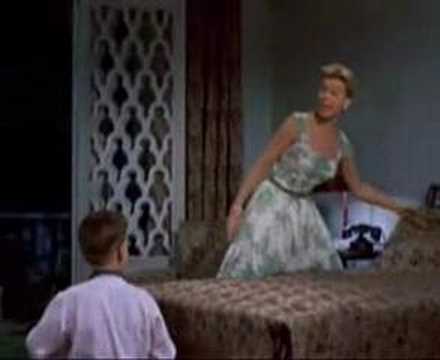
What makes “Que Sera, Sera” unusual among film songs is that it functions as a genuine plot mechanism rather than mere accompaniment. In The Man Who Knew Too Much, Day plays Jo McKenna, a retired popular singer who, along with her husband and their young son, becomes entangled in an assassination plot while vacationing in Morocco. The boy is kidnapped and held at a foreign embassy. When Jo and her husband finally locate the building where they believe their son is being held, Jo sits down at a piano and begins playing and singing “Que Sera, Sera” as loudly as she can — not for the audience, not for the film’s score, but as a signal, a maternal beacon sent into the building in the hope that her son will hear his mother’s voice and let his parents find him. He does. He whistles along from the room where he’s being held, giving away his location seconds before he was to be killed. The song saves his life. That function — a lullaby weaponised by desperation — gives the recording an emotional charge that a straightforward ballad could never quite match.
Day’s recording for Columbia Records was released in 1956 and reached number two on the Billboard Top 100 in the United States — held off the top spot but a dominant presence on radio throughout that summer. In the UK it reached number one. The song won the Academy Award for Best Original Song at the 29th Academy Awards — the third Oscar in that category for Livingston and Evans, who had previously won in 1948 and 1950 — defeating Cole Porter’s “True Love,” which had been considered the frontrunner by most of the Hollywood trade press. The American Film Institute later placed it at number 48 on their 100 Years…100 Songs list. It charted again in 1976 when it was re-released in the UK and reached number seven. Every chart position, every award, every re-release happened because of a recording that its singer had dismissed in a single sentence the moment she finished it.
The Song She Couldn’t Escape
From the moment the film was released and the single began climbing the charts, “Que Sera, Sera” became inextricable from Doris Day’s public identity in a way that no amount of preference for other material could undo. She sang it again in Please Don’t Eat the Daisies in 1960 and in The Glass Bottom Boat in 1966. From 1968 to 1973 she re-recorded it as the theme song for all 124 episodes of her television sitcom The Doris Day Show, turning a song she had once dismissed into the sonic wallpaper of a five-year television run. The irony was total and apparently not lost on Day, who in later life was far more gracious about the song than her initial one-take verdict might have suggested. She came to understand that the song’s philosophy — whatever will be, will be, the future isn’t ours to see — resonated with audiences in a way that transcended its origins as a piece of Hitchcock plot machinery. It was a philosophy of acceptance, and it found its audience precisely because acceptance is difficult and the song made it sound effortless.
The range of the song’s cultural reach has been extraordinary. It has been recorded in Danish, French, Mandarin, Spanish, Japanese, Swedish, and German — Nana Mouskouri performed a German version in 1964 — and the phrase “que sera, sera” entered everyday usage in multiple languages as a result of the recording’s global circulation. In England it became a football chant, adapted by fans celebrating a cup run toward Wembley Stadium. Versions of it have appeared on film and television soundtracks for seven decades, frequently deployed for ironic effect against scenes of impending disaster — its surface serenity playing against visual catastrophe in a way Hitchcock himself would have appreciated. The Simpsons used it as the citizens of Springfield sang it in anticipation of a comet strike. The song has acquired a second life as cultural shorthand for fatalism, comfort, and the refusal to be controlled by anxiety about the future.
Doris Day died on May 13, 2019, at her home in Carmel-by-the-Sea, California, at the age of 97. She had spent the final decades of her life largely removed from public attention, devoting herself to animal welfare advocacy. The song she recorded in one take in 1956, the song she declared finished and forgettable the moment it was done, outlasted every other claim on her legacy and remains the first thing most people reach for when they want to say her name in music. Livingston and Evans wrote it because an agent packaged them with a director who didn’t want them. Hitchcock accepted it because it was the kind of song he hadn’t known he wanted. Day recorded it because Paramount insisted. None of them saw it coming. Whatever will be, will be.
SONG INFORMATION