






Loretta Lynn – Coal Miner’s Daughter
She Wrote Too Many Verses for One Song — and Left Four of Them in the Studio, Where They Were Lost Forever
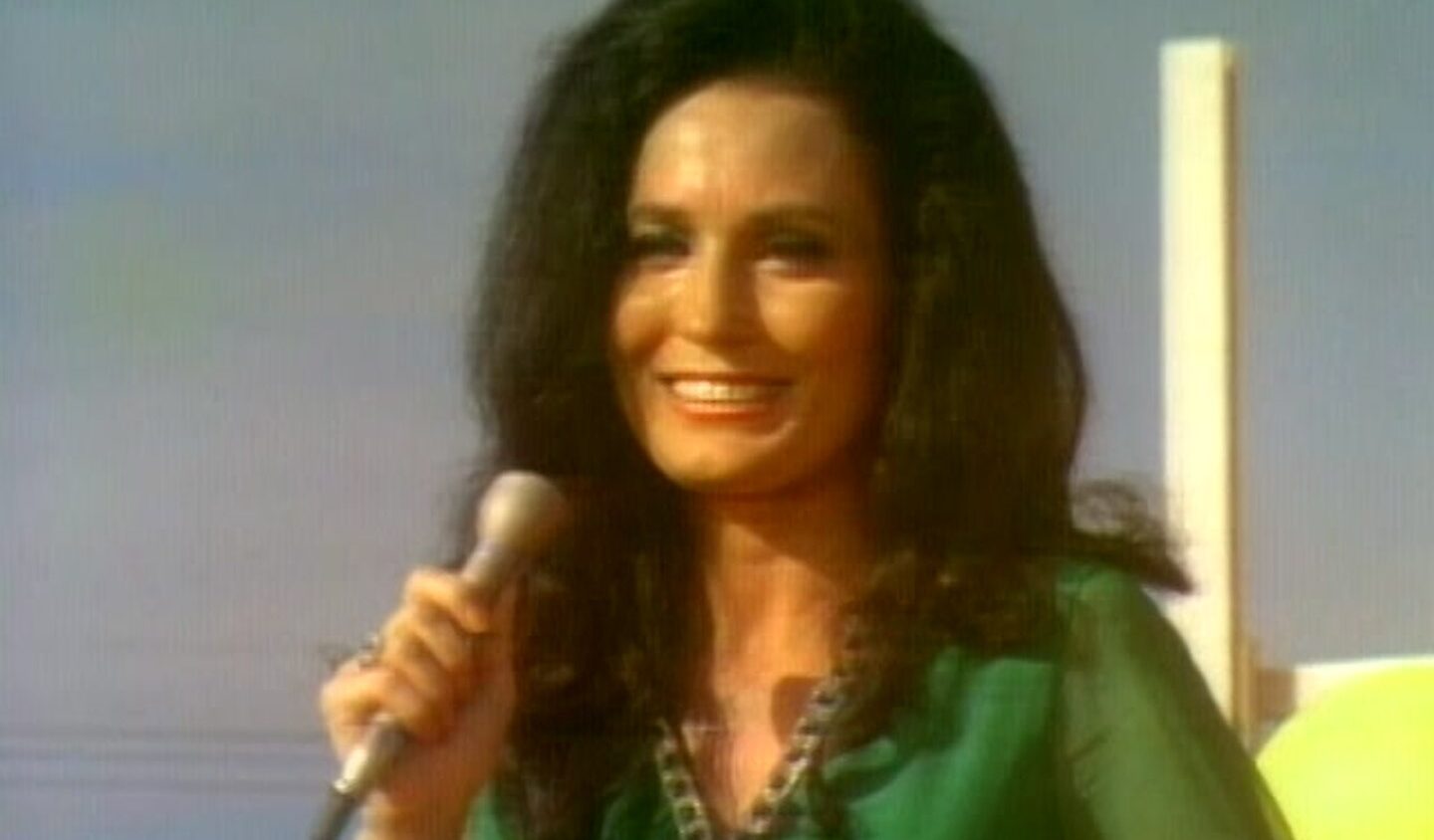
Loretta Lynn wrote “Coal Miner’s Daughter” on a $17 guitar. The song had been there all along — the cabin on the hill in Butcher Hollow, Kentucky, the coal-oil lantern, the well where she drew water, her father digging in the earth for the wage that kept all eight children alive, her mother rocking the babies and reading the Bible in the coal-burning light. Lynn was already a significant country star by the time she sat down to write it, a decade into a recording career that had made her famous for a different kind of song entirely: the bold, confrontational declarations of “You Ain’t Woman Enough” and “Don’t Come Home A-Drinkin’.” What she had never written — not once in ten years of hits — was a song this quiet, this personal, this proud. She wrote it quickly, and she wrote too much of it. When she brought it to her producer Owen Bradley, the song had enough verses for a ballad that could have stretched past eight minutes. Bradley told her she had to cut some of them. He put it plainly: there had already been one “El Paso,” and there was never going to be another. Lynn went back, removed four verses, and left them in the studio. She wished for the rest of her life that she hadn’t. They were never found.
The recording was made on October 1, 1969, during a session at Bradley’s Barn in Mount Juliet, Tennessee — the same session block that would feed several of Lynn’s albums that year and the next. It was produced by Owen Bradley, who had shaped the Nashville Sound throughout the 1950s and 1960s and whose instinct for arrangement had already served Patsy Cline, Brenda Lee, and Kitty Wells. Bradley understood immediately what he had: not a tough-talking single in the established Loretta Lynn mode, but something categorically different — a first-person autobiography set to music, without sentimentality, without melodrama, and without a single wasted line. The recording was cut nearly a year before it was released. When Decca issued it as a seven-inch vinyl single on October 5, 1970, backed with “The Man of the House,” it had been sitting in the can through all of that year’s sessions. It reached number one on the Billboard Hot Country Singles chart in December 1970, spending one week at the top — Lynn’s fourth career number one. It also entered the Billboard Hot 100 at number 83, her first appearance on that chart in more than a decade of recording. Canada followed, with a simultaneous number one on the RPM Country Singles chart.
What Bradley Understood That Nashville Didn’t Yet Know
The song that emerged from those edits was still six verses deep, which was already more than most country radio of 1970 would easily accommodate. Bradley had identified something unusual in the writing that went beyond its personal dimensions. Lynn was approaching a subject — working-class rural poverty in Depression-era Kentucky — that the Nashville industry had largely treated as raw material to be romanticised or simplified. She did neither. The song doesn’t lament poverty and doesn’t dress it up. It presents specific, verifiable details — a coal-oil lantern, a sack of seeds from the company store, corn on the hillside — and builds from those details toward a statement of pride so plainly delivered that it sounds like fact rather than feeling. Billboard, reviewing the album on January 16, 1971, praised it for “retaining true country flavor.” The Library of Congress essay written for the National Recording Registry placement called it “perhaps one of country music’s most autobiographical songs ever, a major achievement for a genre which often specializes in memoirs set to music.” The Cary O’Dell essay for the Library also noted that the song changed Lynn’s image — that until this point she had been known primarily for her assertive, confrontational records, and that “Coal Miner’s Daughter” revealed a different register entirely: reflective, grief-tinged, and disarmingly specific.
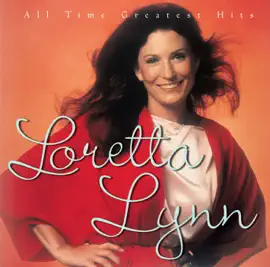
The song was included on the album of the same name, released January 4, 1971, as the opening track. The album was certified Gold by the RIAA in 1983. It later became the title and subject of Lynn’s 1976 autobiography, told to journalist George Vecsey, which became a bestseller and expanded the reach of both the song and its author far beyond country radio. In 1980, the autobiography was adapted into a film directed by Michael Apted, with Sissy Spacek in the lead role. Spacek, who had been expected to lip-synch to Lynn’s recordings, instead performed all the songs herself. Her version of “Coal Miner’s Daughter” reached number 23 on the country chart. Her performance earned the Academy Award for Best Actress. The film won two Golden Globes. The song, the book, and the film had by this point merged into a single cultural entity — a phrase, a story, and a voice that had come from a cabin in Butcher Hollow and travelled to every corner of the English-speaking world.
What the Institutions Decided
In 1998, the original 1970 recording was inducted into the Grammy Hall of Fame for its enduring historical significance. In 2001 the Recording Industry Association of America included it on their Songs of the Century list. In 2009 the Library of Congress added it to the National Recording Registry. Rolling Stone placed it at number 42 on their 100 Greatest Country Songs of All Time and number 255 on the 500 Greatest Songs of All Time. Country Music Television included it on their 100 Greatest Songs of Country Music. NPR named it one of the 100 Most Significant Songs of the 20th Century. Each of these bodies, independently and over three decades, reached the same conclusion: that a song written quickly on a $17 guitar, with four verses lost in a studio, had done something permanent. In 2021, at the age of 88, Lynn re-recorded the song as a spoken-word recitation at Cash Cabin Recording Studio in Hendersonville, Tennessee — produced by John Carter Cash and her daughter Patsy Lynn Russell — with minimal instrumentation. It was released as the lead single from Still Woman Enough. She had sung the song in every imaginable style over fifty years. She still had things to say about it. Loretta Lynn died on October 4, 2022, at her home in Hurricane Mills, Tennessee. She was ninety years old.
SONG INFORMATION
Kacey Musgraves performed this song in tribute to Lynn at the Grammy Awards in 2023. Lynn died five months earlier at 90.