



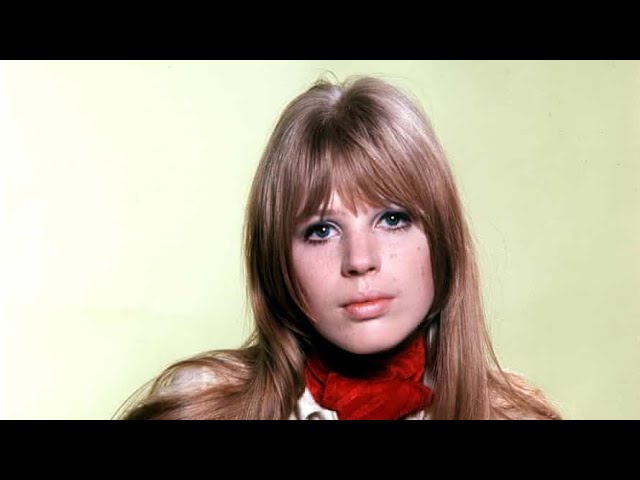



Marianne Faithfull – As Tears Go By
Andrew Loog Oldham Locked Mick Jagger and Keith Richards in a Kitchen and Told Them to Write a Song with No Sex in It. The Seventeen-Year-Old Convent Girl He Handed the Result to Took It to Number Nine.
The song was an experiment, and the experiment was that Mick Jagger and Keith Richards could write a ballad. Their manager, Andrew Loog Oldham, locked them in the kitchen of his flat in late 1963 with instructions to come out with a song between them — and, in the version of the story Oldham has told most often, with the additional brief that he wanted “a song with brick walls all around it, high windows, and no sex.” What they produced was As Tears Go By: a delicate string-led miniature of the kind no one expected the Rolling Stones to be capable of writing, and a kind no one wanted them to record. The Stones were a rough rhythm and blues band cultivating a reputation as the dirty alternative to the Beatles. A wistful chamber-pop ballad about watching children play in the evening of the day was not what the public bought tickets to see them be. So Oldham gave the song to a different artist entirely.
Marianne Faithfull was seventeen years old. She had been at a Rolling Stones launch party in early 1964 with the artist John Dunbar, the man she would marry the following year, and Oldham — running both the band and a parallel career as an impresario looking for new acts — had taken one look at her and signed her on the spot. Convent-educated, half-Austrian, the daughter of an English military intelligence officer and a Habsburg baroness, she had been singing folk songs a cappella in Reading coffeehouses while still at school, building a small reputation that the launch party brought to the right person at the right moment. Her recording career began in June 1964 with a single nobody — including her — was sure would work. The original A-side had been a song by Lionel Bart that, in Faithfull’s own later assessment, was “awful”: a piece of show-business material in the wrong vocal register that she could not sing convincingly no matter how many takes they did. In desperation, Oldham asked her to try the Jagger-Richards composition that had been planned for the B-side.
The session, when it came, took two takes. Mike Leander wrote the orchestral arrangement, the cor anglais line that opens the record establishing the song’s tone before Faithfull has sung a syllable. Andrew Oldham produced. The young singer recognised it would work the moment the strings entered. As soon as she heard the cor anglais playing the opening bars, she wrote in her 1994 autobiography, she knew it was going to work — two takes later, it was done, and Oldham hugged her and told her she had a number-six hit. Decca, hearing the result, switched the song to the A-side, and the B-side became Faithfull’s reading of Greensleeves. The single was released in the United Kingdom on June 26, 1964.
The Making of a Voice the Country Had Not Met Yet
The record’s distinguishing quality, half a century later, is its strangeness in context. Even by 1964 standards As Tears Go By sounded innocent in a way the rest of the year’s pop did not — too pure, too unhurried, too unwilling to compete for the listener’s attention with the volume and momentum that the British Invasion had taught everyone to expect. Its baroque-pop string arrangement predated the Beatles’ similar experiments on Yesterday and In My Life by more than a year. Faithfull’s vocal — a high, breathy alto with no theatrical conviction in it — sold the lyric’s premature regret precisely because it sounded too young to have earned the perspective the words described. A seventeen-year-old singing about watching the children play, observed from the evening of the day, was the entire point of the record. The performance worked because it should not have.
The single reached number nine in the UK Singles Chart in late summer 1964 and number eight in Ireland. It crossed the Atlantic later in the year, entering the Billboard Hot 100 the week of November 28, 1964, and climbing through the early months of 1965 to peak at number twenty-two — which is why the song is sometimes catalogued as a 1965 recording in American sources, a mistake the chart timing makes natural. NBC’s variety programme Hullabaloo — broadcast from London in segments presented by the Beatles’ manager Brian Epstein — gave Faithfull her American television breakthrough that year, and French and German television followed. Within a year of the single’s release she had two albums in stores on the same day in April 1965 — the pop record Marianne Faithfull, produced by Mike Leander, and the folk record Come My Way, the album she had wanted to make first. Decca had wanted only the pop record. She made both.
The Song Came Back to Her, Twice
The Rolling Stones recorded their own version of As Tears Go By in 1965, with a different arrangement — no percussion, opening on acoustic guitar before strings entered in the second verse — and Mike Leander again wrote the string parts. Their reading appeared on the American edition of December’s Children (And Everybody’s) in October 1965 and as a single, climbing to number six on the Billboard Hot 100 and giving the band their first major American hit in the ballad register the song had been written in. Faithfull, who was by then beginning the relationship with Mick Jagger that would define the second half of the decade for her, found herself in the unusual position of having had the hit first with a song her boyfriend’s band had also recorded. She would return to it twice more across her career — on the 1987 album Strange Weather in a slower, gravelly cabaret reading made after years of addiction and recovery, and again on 2018’s Negative Capability, by which point her voice carried the full weight of everything the seventeen-year-old version of her had only sung past. “Forty is the age to sing it,” she told Vogue in 1987, “not seventeen.” Marianne Faithfull died in London on January 30, 2025, aged seventy-eight. Listening to the 1964 single in the days after her death — re-uploaded across the internet by collectors and tribute channels in remastered pseudo-stereo — was a way of returning to the recording on which the rest of the career was built, the two takes that became the door through which everything else arrived.
SONG INFORMATION
Related videos
 Watch LaterAdded
04:05
Watch LaterAdded
04:05  Watch LaterAdded
02:57
Watch LaterAdded
02:57  Watch LaterAdded
03:04
Watch LaterAdded
03:04