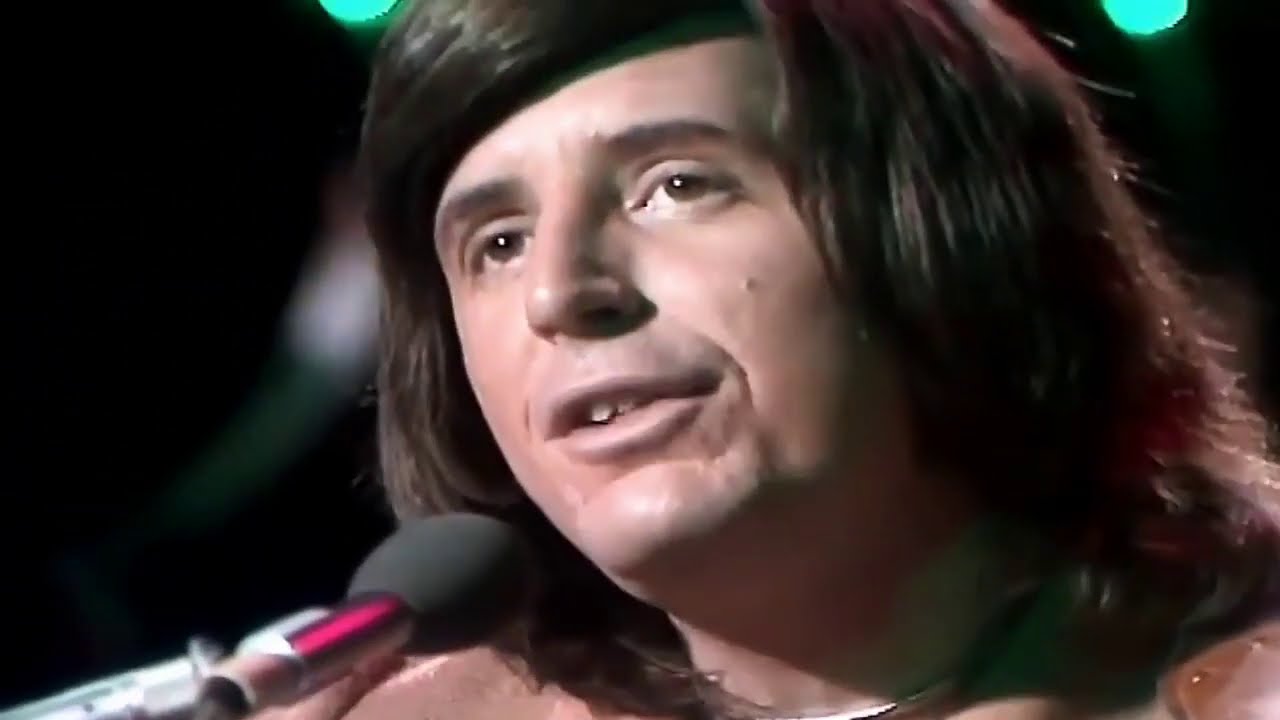
Lobo had never been to almost any of the places in his cross-country road-trip song — he just picked cities that sounded far away, and the whole thing clicked once he added a dog named Boo.
The song moves like a real journey — bright red Georgia clay, wheat fields near St. Paul, an old car limping toward Los Angeles, two young travelers living off the land with a dog in the back seat. Almost none of it happened. When Roland Kent LaVoie wrote “Me and You and a Dog Named Boo,” the only place in the lyric he had actually been was Georgia. The rest he invented, choosing towns and cities simply because they sounded far away, and the song only truly came together, by his own account, once he thought to drop in a dog named Boo. The most beloved road-trip record of the early 1970s is, in large part, a trip its author never took.
It was the record that launched him. LaVoie had spent the 1960s in a string of bands — one early group, the Rumours, briefly included the future country-rock pioneer Gram Parsons and the comic singer Jim Stafford, whose later hits LaVoie would go on to produce — before producer Phil Gernhard signed him in 1971 and suggested he record under a single anonymous alias. He picked Lobo, Spanish for wolf. “Me and You and a Dog Named Boo,” recorded at New York’s Electric Lady Studios and released in March 1971, was his debut single, and it went straight into the American Top 10, peaking at No. 5 on the Hot 100 and topping Billboard’s Easy Listening chart for two weeks that May — the first of four No. 1s he would eventually score on that chart.
The title everyone gets wrong
Listeners have been misquoting it for fifty years. The natural, grammatical phrasing would be “you and me,” and that is how a great many people remember and repeat the title — but LaVoie wrote it deliberately as “me and you,” because that was the order that let the line rhyme the way he wanted. The apparent grammatical stumble is the whole point, a small piece of songwriting engineering hiding inside what sounds like a casual turn of phrase. It is one of those titles that fights the memory: say it out loud and the brain wants to correct it, which may be exactly why it has stuck around so stubbornly.
A hit that traveled further than its author
The song reached far beyond the United States. It climbed to No. 4 in Britain in the summer of 1971 and spent four weeks at No. 1 in New Zealand, and it proved durable enough to be recorded that same year as a country single by Stonewall Jackson and performed by the animated Brady Kids on television. For LaVoie it was the doorway to everything that followed: the bigger ballad “I’d Love You to Want Me” arrived the next year and became his signature, but this was the one that made him, a warm, unhurried travelogue about freedom and companionship that most listeners never realized was largely imagined. Lobo kept the wolf’s anonymity for the rest of his career, remaining, decades later, especially beloved across Southeast Asia — a songwriter far better known than his own name.
SONG INFORMATION
Artist: Lobo (Roland Kent LaVoie)
Song: “Me and You and a Dog Named Boo”
Album:Introducing Lobo
B-side: “Walk Away from It All”
Released: March 1971
Recorded: 1970
Studio: Electric Lady Studios, New York City
Label: Big Tree
Songwriter(s): Roland Kent LaVoie
Producer(s): Phil Gernhard
Length: 2:53
Chart Performance: US Billboard Hot 100 No. 5; US Easy Listening No. 1; UK No. 4; New Zealand No. 1