


![The Score – Revolution: Lyrics [Assassins Creed: Unity]](https://musicvideosclub.com/wp-content/uploads/2025/10/the-score-revolution-lyrics-assa-360x203.jpg)





![George Benson – Give Me The Night (Official Music Video) [HD Remaster]](https://musicvideosclub.com/wp-content/uploads/2026/02/george-benson-give-me-the-night-360x203.jpg)

![Bruno Mars – Risk It All [Official Music Video]](https://musicvideosclub.com/wp-content/uploads/2026/02/bruno-mars-risk-it-all-official-360x203.jpg)



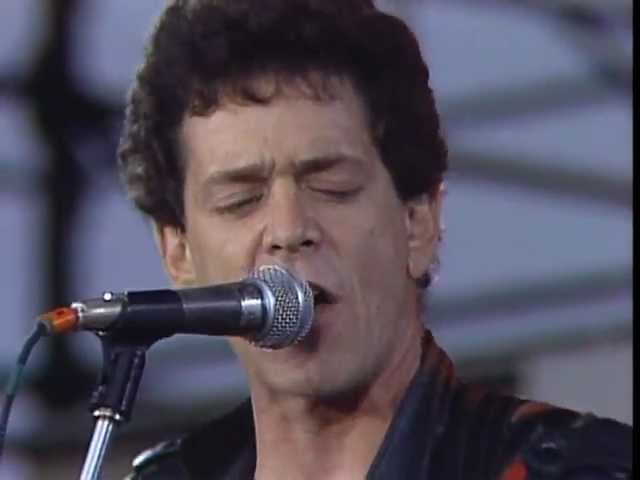
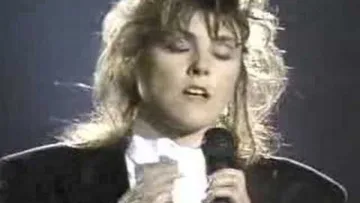


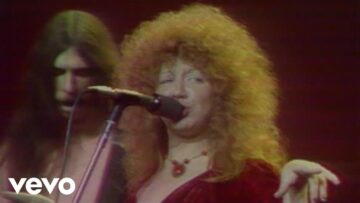
Lou Reed – A Walk On The Wild Side (Live at Farm Aid 1985)
The Bassline That Cost £17 And Fooled Every Censor On Earth
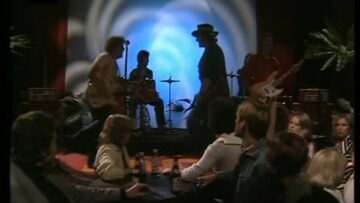
What you’re watching is Lou Reed sharing a stage with Bob Dylan, Tom Petty, Billy Joel, Joni Mitchell, and fifty other artists at Memorial Stadium in Champaign, Illinois on September 22, 1985 — the first ever Farm Aid concert, a twelve-hour benefit for America’s family farmers that drew 80,000 people and raised over nine million dollars. Reed was an odd fit for a country-flavoured bill built around Willie Nelson, John Mellencamp, and Neil Young. But “Walk on the Wild Side” needed no introduction in any room — and a song about outcasts finding their way to New York City carried its own quiet solidarity with people who were losing their land.
Released on November 24, 1972 as a double A-side with “Perfect Day,” “Walk on the Wild Side” peaked at number 16 on the Billboard Hot 100 in early 1973 and hit number ten in the UK — remarkable for a song whose lyrics touched on transgender identity, male prostitution, drug use, and oral sex with the casual matter-of-factness of someone reading a shopping list. The BBC played it for months before anyone in the building appears to have worked out what the phrase “giving head” meant. RCA, taking no chances in America, pressed a cleaned-up version for radio stations. Most DJs played the original regardless.
The song started life as a theatre commission. Reed had been asked to score a stage musical adaptation of Nelson Algren’s 1956 novel of the same name. When the project was abandoned, he simply recycled the title and repopulated the lyrics with people he actually knew — the denizens of Andy Warhol’s Factory in New York: Holly Woodlawn, Candy Darling, Joe Dallesandro, Jackie Curtis, and Joe Campbell, known around the Factory as Sugar Plum Fairy. “I don’t like to waste things,” Reed said later. When the song came out, he fully expected each of them to claw his eyes out in revenge. Instead, Candy Darling told him she had memorised every word and wanted to record a response album. Reed had misjudged the room entirely.
David Bowie and Mick Ronson produced the whole of Transformer — including this track — at Trident Studios in London in just 60 hours. Bowie was simultaneously rehearsing his Spiders from Mars band for a live show at the Rainbow Theatre, which meant sessions were squeezed into daytime hours — not Reed’s natural hours. Engineer Ken Scott, who had come to the project straight from cutting Ziggy Stardust, recalled that Reed’s body was present in the studio while the rest of him seemed elsewhere entirely. The baritone saxophone solo drifting over the song’s fadeout was played by Ronnie Ross — the same man who had taught Bowie saxophone during his childhood in Bromley. After Ross nailed it in a single take, Bowie turned up unannounced at the session specifically to surprise his old teacher. The bass line — the song’s most iconic element — was built by Herbie Flowers on two instruments simultaneously: a stand-up double bass and an electric bass guitar, layered on top of each other. Flowers was paid a session fee of £17 for each line. Nobody at the time imagined it would become one of the most recognised bass riffs in the history of popular music.
Transformer was Reed’s second solo album and the one that transformed him — as the title quietly suggested — from Velvet Underground cult figure into international star. His first solo record had failed entirely. RCA had paired him with Bowie as a commercial gambit. It worked beyond anyone’s reasonable expectations: the album climbed to number 29 in the US and number 13 in the UK, built almost entirely on the momentum of this single. Within a year, Reed was selling out arenas across Europe and America — playing to audiences who had never heard of the Velvet Underground and didn’t need to.
The song’s afterlife has been restless and democratic. A Tribe Called Quest sampled Flowers’ bass line for their 1991 single “Can I Kick It?” — one of hip hop’s most elegant borrowings. Marky Mark and the Funky Bunch leaned on it just as heavily for “Wildside” the same year. The song has appeared in films, advertisements, and television soundtracks too numerous to count, in every corner of the world, still immediately recognisable from the first four notes. Reed died in October 2013, but the walk goes on.
He described the characters in the song with characteristic economy: “I always thought it would be kind of fun to introduce people to characters they maybe hadn’t met before — or hadn’t wanted to meet.” A £17 bass line, a clueless BBC, and a handful of Factory superstars who might have clawed his eyes out — that’s all it took. Watch this Farm Aid performance and you’ll understand why, thirteen years after it was recorded, a song about Manhattan’s wild side could hold a crowd of 80,000 midwestern farming families in the palm of its hand without changing a single word.
SONG INFORMATION
Related videos
 Watch LaterAdded
04:38
Watch LaterAdded
04:38  Watch LaterAdded
04:11
Watch LaterAdded
04:11  Watch LaterAdded
03:15
Watch LaterAdded
03:15