



![Led Zeppelin – Whole Lotta Love (Live at The Royal Albert Hall 1970) [Official Video]](https://musicvideosclub.com/wp-content/uploads/2024/09/led-zeppelin-whole-lotta-love-li-360x203.jpg)
Metallica – Enter Sandman
When The Producer Said He’d Never Work With Them Again
Released on July 29, 1991, “Enter Sandman” arrived two weeks before Metallica’s self-titled fifth album and transformed the San Francisco thrash metal band into global superstars overnight. The single peaked at number 16 on the Billboard Hot 100 and reached number five in the UK, but those chart positions barely tell the story of its cultural dominance. The song achieved gold certification on September 30, 1991, becoming Metallica’s second single to ship more than 500,000 copies in the United States. By 2025, it had earned nine-times platinum certification for shipping over nine million copies, making it one of the most commercially successful rock singles in history. The album debuted at number one in ten countries and sold 598,000 copies in its first American week alone. Producer Bob Rock later admitted the recording sessions were so contentious that when they finished, he told the band he’d never work with them again, and they felt exactly the same way about him.
While “Enter Sandman” conquered America throughout the summer and fall of 1991, it reached number one in Finland, number two in Canada and Norway, number four in Denmark and Ireland, and cracked the Top 10 across Europe and Australia. The song spent 100 weeks on Billboard’s Rock Digital Song Sales chart by 2025, outlasting all other Metallica tracks combined. Only AC/DC’s “Thunderstruck” and Disturbed’s cover of “The Sound of Silence” have spent more time on that specific chart. According to Nielsen Music, “Enter Sandman” was the eighth most-played song of the 2010s decade on mainstream rock radio with 126,000 spins. The song won Best Hard Rock Video at the 1992 MTV Video Music Awards and was nominated for Best Rock Song at the 34th Grammy Awards, ultimately losing to Sting’s “The Soul Cages.” VH1 later ranked it the fifth greatest hard rock song of all time, while Rolling Stone placed it at number 408 on their 500 Greatest Songs list.
“Enter Sandman” was the first song Metallica wrote for the Black Album when they began composing in July 1990. Kirk Hammett, James Hetfield, and Lars Ulrich crafted the music collaboratively, with Hammett contributing the main riff. Hetfield wrote lyrics about a child’s nightmares, originally conceiving far darker themes about destroying the perfect family and sudden infant death syndrome. For the first time in Metallica’s history, Ulrich and producer Bob Rock told Hetfield his lyrics weren’t good enough and demanded rewrites. Hetfield complied, shifting to the version that juxtaposes childhood bedtime prayers with lurking terrors. The band recorded an instrumental demo on August 13, 1990, in Lars Ulrich’s basement, but the song nearly got cut entirely. Rock insisted Hammett and Hetfield rewrite the riff’s rhythm, creating the crushing groove that became the final version. According to Ulrich, the song served as the foundation and guide for the entire record even before it had lyrics.
Recording sessions stretched from October 6, 1990, to June 16, 1991, primarily at One on One Studios in Los Angeles, with additional work in Vancouver between April and May. Metallica were fans of Bob Rock’s production on Mötley Crüe’s Dr. Feelgood and initially asked him only to mix their album. Rock refused, saying he’d only work with them as full producer. His vision convinced them to hire him, though the collaboration proved explosive. Rock insisted the band record live in the same room rather than building tracks in sections like their previous producer Flemming Rasmussen had done. Hetfield, Ulrich, Hammett, and bassist Jason Newsted were skeptical at first, questioning why anyone would record that way. Rock’s approach was revolutionary for them—he could go back and fix individual elements, change drum sounds, and capture the complete feel of each song as the band performed it. The sessions were marked by screaming arguments, with Rock pushing for dozens of takes until he got perfect performances. As Rock later reflected, he didn’t follow the rules of metal because he was fundamentally a song person who cared about composition over genre conventions.
The Metallica album, released August 12, 1991, became the band’s commercial breakthrough and remains the best-selling album in the United States since Nielsen SoundScan tracking began. It sold 31 million copies worldwide on physical media and was certified double Diamond in 2025 for shipping 20 million copies in America alone. Four additional singles followed “Enter Sandman” to promote the album. “The Unforgiven” became a Top 10 hit in Australia, “Nothing Else Matters” reached number six in the UK and Ireland, “Wherever I May Roam” peaked at number two on Mainstream Rock charts, and “Sad but True” barely scraped the Hot 100 at number 98. The album spent 488 weeks on the Billboard 200, making it the third-longest charting album in the SoundScan era behind only Pink Floyd’s The Dark Side of the Moon and Carole King’s Tapestry. It never sold fewer than 1,000 copies in any single week.
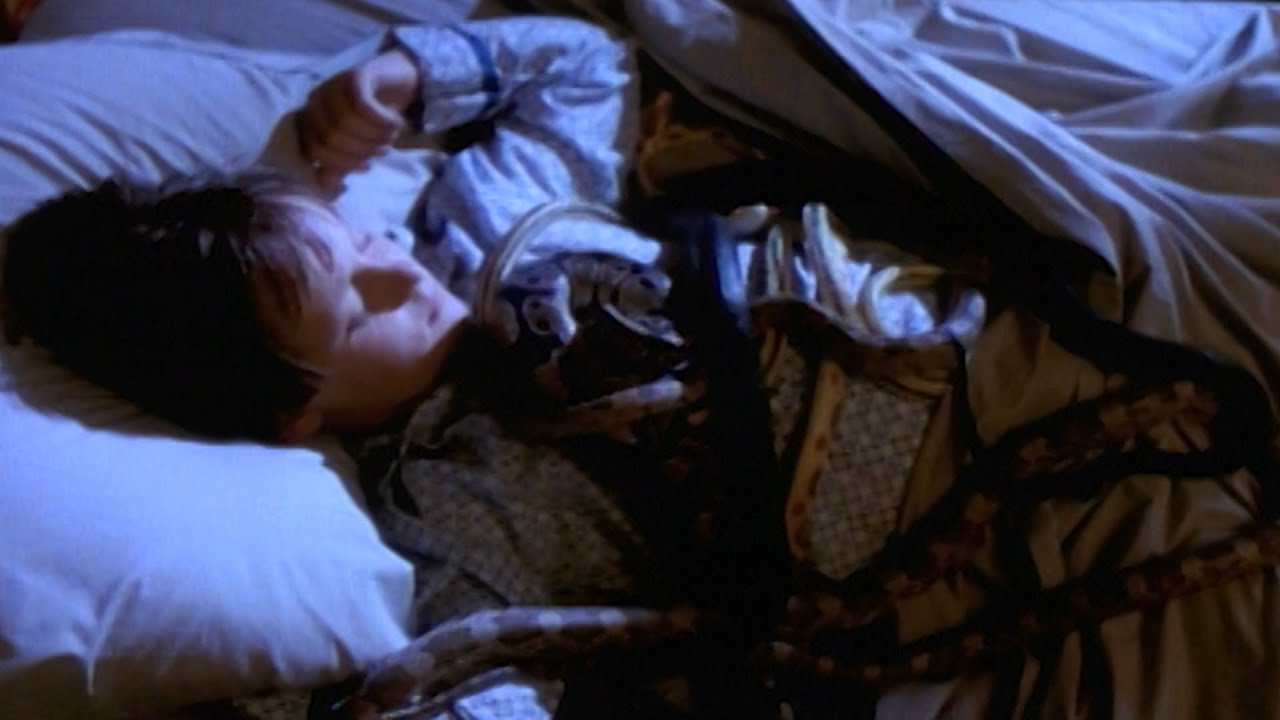
In August 2021, exactly 30 years after its original release, “Enter Sandman” re-entered the German Singles Chart at number one when a CD single was reissued to benefit survivors of the 2021 European floods. The Wayne Isham-directed video, which premiered July 30, 1991, became the first of six Metallica videos Isham would direct. The imagery of children having nightmares intercut with band performance became iconic. At the 1992 Freddie Mercury Tribute Concert, Metallica performed “Enter Sandman,” “Sad but True,” and “Nothing Else Matters,” with Hetfield joining Queen members Brian May, Roger Taylor, and John Deacon alongside Black Sabbath’s Tony Iommi to perform “Stone Cold Crazy”—the Queen cover that served as the B-side to the “Enter Sandman” single. That cover version won Metallica a Grammy Award and later appeared on their covers album Garage Inc.
Bob Rock and Metallica reconciled their differences quickly, working together on four more albums including Load, ReLoad, and St. Anger. Rock himself played bass on St. Anger after Jason Newsted’s departure. As for “Enter Sandman,” it became the song that redefined what heavy metal could achieve commercially without compromising its edge. VH1 placed it 22nd on their 40 Greatest Metal Songs list and 18th on their 100 Greatest Songs of the ’90s. The Rock and Roll Hall of Fame includes it among the 500 Songs That Shaped Rock. James Hetfield later said the simplicity was intentional—they wanted to strip away the complexity that had defined their earlier work and create something with undeniable power. As Bob Rock reflected decades later, making the Black Album was probably the biggest accomplishment of his professional life, and he believed the band would say the same thing.
SONG INFORMATION
Related videos
![Led Zeppelin – In My Time of Dying (Live at Earls Court 1975) (Official Video) [HD]](https://musicvideosclub.com/wp-content/uploads/2026/03/led-zeppelin-in-my-time-of-dying-360x203.jpg) Watch LaterAdded
Watch LaterAdded
 Watch LaterAdded
08:56
Watch LaterAdded
08:56  Watch LaterAdded
02:16
Watch LaterAdded
02:16