




![Van Halen – Dreams (Official Music Video) [HD]](https://musicvideosclub.com/wp-content/uploads/2026/01/van-halen-dreams-official-music-360x203.jpg)





Pink Floyd – Wish You Were Here (Official Video)
Fifty Years Later, The Song Finally Gets Its First Official Video
On December 18, 2025, Pink Floyd released the first official video for “Wish You Were Here,” exactly 50 years and three months after the song appeared on their landmark ninth studio album. Directed by Justin Daashuur Hopkins and produced by Son&Heir—the company behind work for Radiohead and Al Gore—the psychedelic visual arrived as the Wish You Were Here 50th anniversary reissue reclaimed the number one spot on the UK Albums Chart. The album originally reached number one in Britain within two weeks of its September 12, 1975 release, debuting at number three before climbing to the top. Five decades later, it became the Christmas number one of 2025, breaking The Beatles’ record for the longest gap between an album’s first and most recent chart-topping appearance in Britain. The original album also hit number one in the United States, Belgium, France, Italy, New Zealand, and Spain, ultimately selling 13 million copies worldwide.
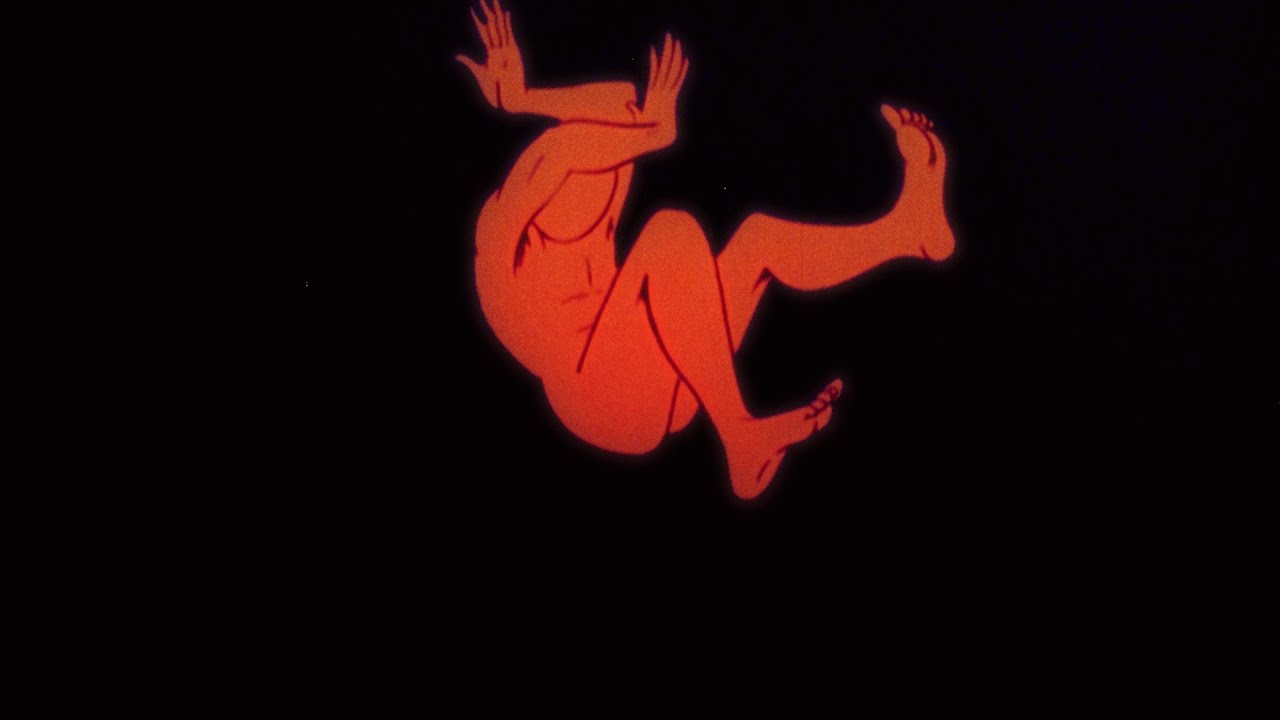
Released during the autumn of 1975, Wish You Were Here became Pink Floyd’s fastest-selling album ever and their first to top charts on both sides of the Atlantic simultaneously. EMI Records could barely keep up with demand, informing retailers they could only fulfill half of their orders despite 250,000 advance sales in the UK alone. In America, Columbia Records received 900,000 advance orders, the largest for any Columbia release at that time. The album reached number one on the Billboard 200 in its second week. The new video opens with a slice of the moon before exploding into chaotic imagery—sperm racing toward an egg, an eye filled with flames, lights zipping through darkness. Intimate studio footage shows the band during the 1975 recording sessions, running through Westminster tube station, and traveling on the London Underground. Whimsical animations feature a figurine floating through time and space, creating what Rolling Stone described as a fever dream that circles back to echo its opening images.
Pink Floyd began recording Wish You Were Here in January 1975 at Abbey Road Studios, wrapping in July after sessions that Roger Waters later described as torture. The band struggled with creative exhaustion following the phenomenal success of The Dark Side of the Moon, which had made them wealthy beyond imagination. Waters admitted they’d achieved everything they’d aimed for since their teenage years, leaving them questioning what came next. The breakthrough arrived when Waters proposed the album’s theme should center on absence—being absent from relationships, from conversations, from one’s own life. For “Wish You Were Here,” David Gilmour recorded the opening bars from his car radio, with engineer Brian Humphries capturing someone turning the dial through various stations. The classical music briefly heard is the finale of Tchaikovsky’s Fourth Symphony. Gilmour performed the intro on twelve-string guitar, processed to sound like an AM radio broadcast, then overdubbed a fuller acoustic guitar solo mixed to sound like a guitarist playing along with the radio before the broadcast fades and the band enters.
Jazz violinist Stéphane Grappelli contributed to the track after being invited from Abbey Road’s Studio Two, where he was recording with Yehudi Menuhin. The band paid Grappelli £300 for his session, equivalent to £3,200 today, but decided during mixing his contribution was unsuitable. Rather than wiping the recording entirely, they buried it so low in the mix it’s nearly inaudible around the 5:21 mark. For decades, drummer Nick Mason believed the piece had been erased. The full Grappelli version surfaced in the EMI vaults during 2011 remastering work and appears on expanded editions. The most haunting moment of the sessions occurred in June 1975 when Syd Barrett, Pink Floyd’s founding member who’d left seven years earlier due to mental breakdown, unexpectedly appeared at Abbey Road. The band was mixing the final version of “Shine On You Crazy Diamond,” their tribute to Barrett. He’d become unrecognizable—overweight, head and eyebrows shaved, carrying a bag of sweets. Waters reportedly wept upon realizing who the visitor was. Barrett picked up Gilmour’s Martin D-35 guitar and played a bit before leaving. The band never saw him again.
The album served as Pink Floyd’s response to their newfound global fame, expressing the alienation that came with massive success. “Welcome to the Machine” and “Have a Cigar” attacked the music industry directly, with Roy Harper singing lead on the latter after Waters struggled with the vocals. Harper’s presence added realism when he crooned the immortal line asking which one’s Pink—a question industry types had actually posed to the band. The nine-part “Shine On You Crazy Diamond” was split in two, bookending three shorter compositions. Other singles from the album were never released in 1975, though “Have a Cigar” backed with “Welcome to the Machine” appeared as a single in some territories. The band toured North America before the album’s release, performing at Knebworth Festival on July 5, 1975, where they debuted the live arrangement of their material. The title track and “Welcome to the Machine” wouldn’t be performed live until their 1977 In the Flesh tour.
The 50th anniversary deluxe box set released December 12, 2025 includes six previously unreleased alternate versions and demos, 16 live recordings from bootlegger Mike Millard’s legendary Los Angeles Sports Arena tape from April 26, 1975, three concert screen films from the 1975 tour, and a Storm Thorgerson short film. Steven Wilson restored and remastered the Millard bootleg. James Guthrie created a new Dolby Atmos mix—his first work with Pink Floyd dated back to 1979’s The Wall. The box also features a replica Japanese seven-inch single of “Have a Cigar” backed with “Welcome to the Machine,” a hardcover book with unseen photographs, a comic book tour program, and a Knebworth concert poster. Limited edition pressings on crystal-clear vinyl sold through pop-up stores in the UK, Europe, and United States, each location carrying an exclusive edition of the revived Brain Damage fanzine founded by Pink Floyd historian Glenn Povey.
Both Gilmour and Waters have praised “Wish You Were Here” as one of Pink Floyd’s finest achievements. Waters noted the collaboration between himself and Gilmour was really good, with all bits of it really, really good. Gilmour playfully called it a very simple country song while acknowledging that because of its resonance and emotional weight, it ranks among their best. The song reached number 302 on Rolling Stone’s 500 Greatest Songs of All Time in 2021, while Billboard and Louder Sound ranked it number one and number three respectively on their lists of the 50 greatest Pink Floyd songs. As David Gilmour reflected during the 50th anniversary celebrations, raising a glass of champagne to the album’s return to number one, the song captures something universal about longing and disconnection. “Wish You Were Here” remains the band’s most emotionally direct statement—four and a half minutes asking whether we can tell heaven from hell, blue skies from pain, presence from absence.
SONG INFORMATION
Chart Performance: Album reached No. 1 in UK, US, Belgium, France, Italy, New Zealand, Spain; Reclaimed No. 1 in UK (Christmas 2025)
Related videos
 Watch LaterAdded
02:59
Watch LaterAdded
02:59  Watch LaterAdded
03:19
Watch LaterAdded
03:19  Watch LaterAdded