



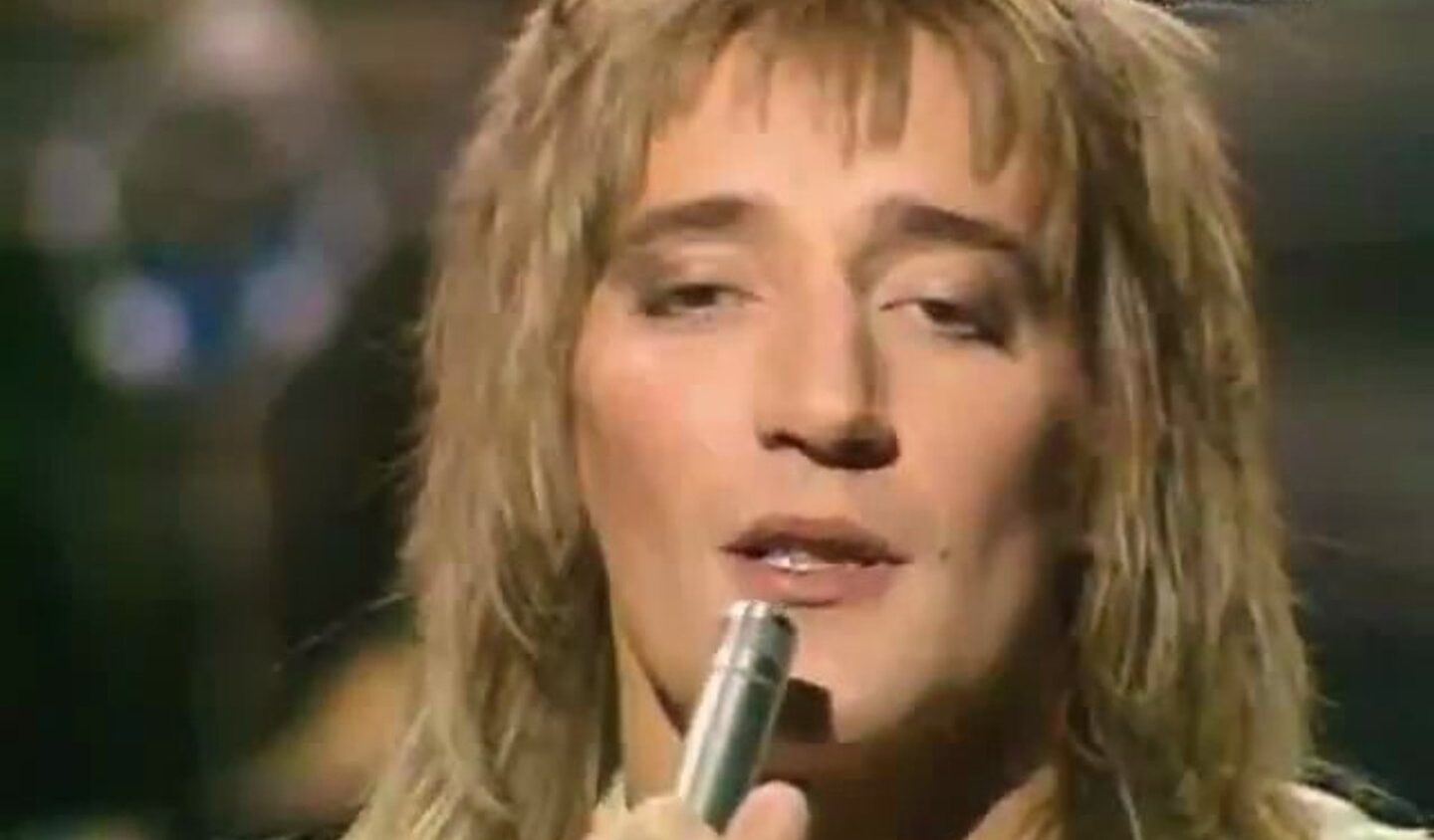





Rod Stewart – Sailing
Muscle Shoals Was Dry And He Sang The Only Song Of His Life Completely Sober
Released in August 1975, Rod Stewart’s cover of “Sailing” transformed a spiritual odyssey written by Gavin Sutherland into Britain’s biggest-selling single, moving 1.12 million copies and ranking as the 112th UK million-seller. The song topped the UK Singles Chart for four weeks in September 1975, marking Stewart’s third number one and his final chart-topper with significant Faces involvement before his acrimonious exit from the band by year’s end. Written and first recorded by the Sutherland Brothers in June 1972, the original peaked at only number fifty-four that July, selling approximately forty thousand copies. Stewart’s girlfriend Dee Harrington spotted them performing on BBC Two’s Old Grey Whistle Test and alerted him to the song. The recording took place at Muscle Shoals Sound Studio in Alabama during the Atlantic Crossing sessions, produced by Tom Dowd. Stewart later admitted it was the only song he’d ever recorded completely sober, waking to Dowd’s 10am phone call demanding he get to the studio in thirty minutes because they’d already mixed the backing track and needed vocals immediately.
The chart story became extraordinary through multiple revivals. After its initial four-week reign atop the UK chart in September 1975, the song returned to number fifty in September 1976 when the BBC selected it as theme music for Sailor, a documentary series following HMS Ark Royal on a five-and-a-half-month North American deployment. The series aired from 5 August through 7 October 1976, and “Sailing” climbed back to number three by mid-October, remaining in the UK top fifty into January 1977. Stewart performed it live on Top of the Pops broadcast 23 September 1976, cementing its second chart run. In 1982, as British forces sailed from Portsmouth Harbour on 5 April during the third day of the Falklands War, Rod Stewart’s “Sailing” blared from the quay’s public address system, becoming an unofficial military as troops departed. A 1987 charity reissue following the Herald of Free Enterprise ferry disaster reached number forty-one in the UK and number thirty in Ireland. The song failed to reach the US top forty, peaking at only number fifty-eight on Billboard despite Atlantic Crossing reaching number nine.
Gavin Sutherland wrote “Sailing” with his brother Iain in June 1972, providing their own backing with Gavin on bass drum and Iain on harmonium, intentionally giving it what they called a Celtic feel with overdubbed vocals. In a 1975 Scottish Daily Express interview, Gavin explained the amusing misunderstanding surrounding the lyrics, noting most people assumed it addressed a young man crossing the Atlantic to reunite with his girlfriend when actually the song had nothing to do with romance or ships whatsoever. Instead, it served as an account of mankind’s spiritual odyssey through life on the way to freedom and fulfillment with the Supreme Being. Stewart’s interpretation ignored this theological dimension entirely, transforming it into a secular ballad about homesickness that resonated with his personal circumstances. Having left Britain with girlfriend Britt Ekland for Los Angeles to avoid paying eighty-three percent tax on his earnings, Stewart related to themes of longing and separation even if he’d manufactured them for financial rather than spiritual reasons.
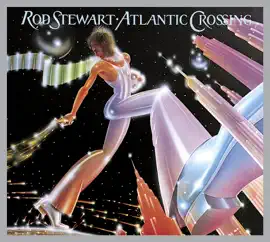
Recording at Muscle Shoals Sound Studio between April and June 1975 marked Stewart’s complete break from his Mercury Records collaborators including Ronnie Wood and Ian McLagan. Producer Tom Dowd assembled session musicians including the Memphis Horns and Booker T. and the MG’s, with Pete Carr playing both acoustic and electric guitars. Stewart arrived at the studio terrified because Muscle Shoals was a dry area and he desperately needed alcohol to calm his nerves before singing. He’d never recorded anything anywhere without drinking first, let alone a big old before 10:30 in the morning. With no liquor available anywhere, he recorded it completely sober, completing vocals in six or seven takes according to his recollection. The backing track had already been mixed when Dowd called, leaving Stewart no time to prepare mentally or vocally for what would become his signature song. The album was cleverly titled Atlantic Crossing to emphasize his geographical and professional transition, divided into a fast side and slow side at Britt Ekland’s suggestion, a format Stewart would repeat for his next two albums.
“Sailing” appeared on Atlantic Crossing, Stewart’s sixth solo album released 15 August 1975, which peaked at number one in the UK becoming his fourth solo album to achieve that distinction. The album featured classic rock favorites “Three Time Loser” and “Stone Cold Sober” alongside “I Don’t Want to Talk About It,” another of Stewart’s most popular songs. Stewart reportedly argued vehemently against releasing “Sailing” as the lead single from Atlantic Crossing, instead advocating for his own composition “Three Time Loser” which became the only track from the album performed during the Faces’ final US tour in autumn 1975. The rest of the group heavily disliked Stewart’s change in musical direction on this album, tensions that contributed to the band’s dissolution by year’s end when Stewart announced his exit following the album’s success and his permanent move to the United States. The song became Stewart’s calling card despite his initial resistance to its release.
The song’s association with British military and naval culture created unexpected longevity. Beyond the Falklands War deployment moment, Sailor the BBC documentary became so culturally significant that when the DVD was released decades later, the most common complaint centered on copyright issues preventing inclusion of Stewart’s version as theme music, forcing the use of a military band arrangement instead. Viewers who’d grown up with the series in 1976 considered the substitution sacrilege. The documentary captured HMS Ark Royal’s final voyage before decommissioning, following the ship’s company through training exercises, shore leave escapades including a memorably awkward strip club visit, and emotional family reunions upon return to port. When the 1984 follow-up Sailor: Eight Years On showed all that remained of Ark Royal was a rusting hull in a breaker’s dock, tough master-at-arms Tom Wilkinson was visibly moved to tears, the moment made more poignant by “Sailing”‘s absence from the rerun due to licensing restrictions.
Stewart’s performance history with the song evolved considerably. It debuted as a concert number during his European tour from November 1976 through January 1977, usually serving as the purported finale before “Stay With Me” as encore. The tour launched 1 November 1976 at Trondheim Spektrum in Norway, proceeding through Scandinavia, Finland, Belgium, and the Netherlands before playing nine British cities including six nights at Olympia London split between December 1976 and January 1977. His 1982 Absolutely Live concert album featured a performance. Notable renditions included the 20 June 1986 Prince’s Trust All-Star Rock Concert with Elton John on piano and Eric Clapton on guitar, and the 1 July 2007 Concert for Diana memorial gala, both held at Wembley Stadium. Two music videos were produced, the first filmed in Dublin’s port and on Moore Street featuring Stewart and Britt Ekland airing on Top of the Pops 28 August 1975, and a 1978 New York Harbor version showing Stewart in sailor outfit looking wistful, which became one of the first videos aired on MTV’s 1 August 1981 launch.
The covers and cultural appropriations tell their own story. Joan Baez included it on her 1977 album Blowin’ Away, Brotherhood of Man on their 1980 compilation 20 Number One Hits, and The Nolan Sisters on 1978’s 20 Giant Hits. Robin Trower with bassist James Dewar on vocals covered it on 1976’s Long Misty Days while Roger Whittaker tackled it on his 1978 Roger Whittaker Sings the Hits. Dame Vera Lynn recorded a version befitting its military associations. Instrumental versions came from the London Symphony Orchestra on their 1977 Classic Rock album and Richard Clayderman on 1988’s A Little Night Music. French singer Joe Dassin recorded a French version titled “Ma musique” in 1975. Most remarkably, a re-worded rave version by Slipstreem became a UK top twenty hit in 1993, while the melody became the foundation for Millwall FC supporters’ infamous football chant “No one likes us, we don’t care,” turning a spiritual odyssey into football terrace defiance.
Looking back, “Sailing” represents multiple ironies. Stewart argued against its release yet it became his biggest UK single. Written as a spiritual journey toward the Supreme Being, audiences heard romantic longing and military patriotism. Recorded completely sober out of necessity rather than choice, it became the song most associated with Stewart’s voice despite being a cover. The Muscle Shoals musicians, whom Stewart initially expected to be Black like Aretha Franklin’s band, intimidated him when he discovered they were the legendary white rhythm section who’d backed countless soul legends. His suspicion transformed to terror when forced to sing without his usual Bacardi and Coke, yet the vulnerability of performing sober at 10:30am produced his most enduring vocal. The song that nearly had a third chart run during the Falklands summer of 1982, that played as British forces sailed toward war, that became inseparable from HMS Ark Royal’s final voyage, that Millwall supporters transformed into terrace rebellion—none of it reflected Gavin Sutherland’s intention to document mankind’s path to divine freedom. But perhaps that’s precisely why “Sailing” endures. Like all great songs, it escapes its creator’s control, meaning whatever listeners need it to mean. For Stewart in 1975, hung-over and terrified in Muscle Shoals without a drink, it meant proving he could still sing. For Britain across four decades, it’s meant coming home, going to war, remembering ships that no longer sail, and finding community through shared cultural memory. The spiritual odyssey Sutherland intended became the most secular of British s, proof that sometimes the journey matters more than the intended destination.
SONG INFORMATION
Related videos
 Watch LaterAdded
 Watch LaterAdded
 Watch LaterAdded
02:16
Watch LaterAdded
02:16