She wrote it to answer people who doubted the marriage would last. It didn’t.
The song was an answer before it was a hit. In 1997, Shania Twain and her husband and producer Robert John “Mutt” Lange were writing Come On Over mostly apart — she on the road, he in the studio — trading ideas back and forth while the press ran its usual commentary about the marriage: the age gap, the speed of it, whether it could hold. You’re Still the One was Twain’s direct reply. Look how far we’ve come, the song says. We took the long way, but we got there. It became one of the most-played wedding songs of its era. The marriage it defended ended in 2010.
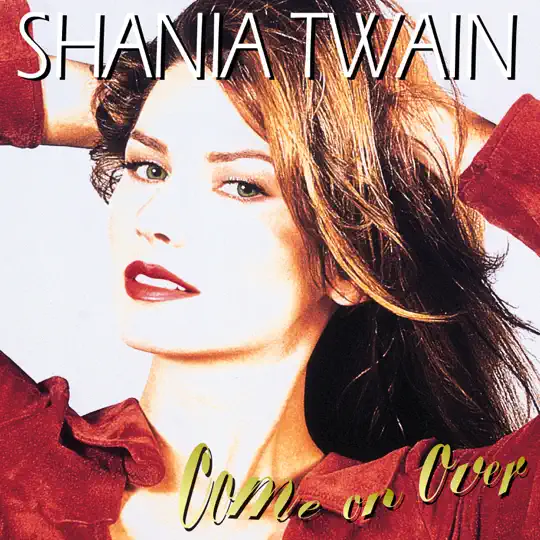
Twain and Lange wrote it together and he produced it, as he had everything on the album, cut at Masterfonics in Nashville. It is a plain, patient piano ballad — organ and acoustic guitar underneath, pedal steel and harmony coming in on the bridge — built to hold a lyric that is not clever so much as certain. Mercury released it to pop radio on January 13, 1998, and to country radio a month later, the third single from Come On Over and the first aimed at the pop market rather than country alone.
Six charts, one week apiece at the top of the ones that mattered
It topped Hot Country Songs for a single week on May 2, 1998 — Twain’s sixth country No. 1 — and did something bigger on pop radio. It debuted at No. 51 on the Hot 100 in February and climbed to No. 2, staying on the chart 42 weeks, becoming her first top ten crossover hit. It also went to No. 1 on Adult Contemporary, reached No. 1 in Australia — still her only Australian chart-topper — and made the top ten in Britain, the Netherlands, New Zealand and Taiwan. Double platinum in the US.
The Grammys nominated it for four awards in 1999, including Record of the Year and Song of the Year, and it took home two: Best Country Song and Best Female Country Vocal Performance. It lost the top two categories to a fellow Canadian, Celine Dion’s My Heart Will Go On. The video, directed by David Hogan and built around Twain on a beach and model John Devoe in a beach house, earned her a nomination for Best Female Video at the 1998 MTV Video Music Awards — the first time any female country artist had been nominated for an MTV award at all.
What the song became once the marriage ended
Twain and Lange divorced in 2010. Twain has said publicly, in her own words, that for a long stretch afterward she did not want to perform the song — that she found herself wondering whether it still meant what it meant when she wrote it, whether singing it was even honest anymore. What changed her mind was watching what the song had become for everyone else. It is now attached to other people’s weddings, other people’s anniversaries, other people’s marriages that are still going. Twain has described coming to see the song’s meaning as belonging to the audience rather than to her own history with it — which is, in its way, exactly the kind of reframing the song itself argues for. Look how far we’ve come. Just not the two people who wrote it.
SONG INFORMATION
Artist: Shania Twain
Song: “You’re Still the One”
Album:Come On Over
B-side: “Don’t Be Stupid (You Know I Love You)”
Released: January 13, 1998
Recorded: 1997
Studio: Masterfonics, Nashville, Tennessee
Label: Mercury
Songwriter(s): Shania Twain, Robert John “Mutt” Lange
Producer(s): Robert John “Mutt” Lange
Length: 3:34
Chart Performance: US Billboard Hot 100 No. 2; US Hot Country Songs No. 1; US Adult Contemporary No. 1; Australia No. 1; UK No. 10
Certification: RIAA Double Platinum
Awards: Grammy Awards — Best Country Song, Best Female Country Vocal Performance (1999)
Director: David Hogan
Lineup: Shania Twain (vocals), Robert John “Mutt” Lange (background vocals)