





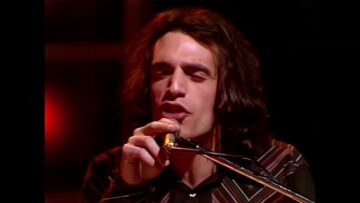
The Stylistics – I Can’t Give You Anything (But My Love)
The Song That Saved Them in Britain When America Had Already Moved On
By the summer of 1975, The Stylistics had a problem. Their creative partnership with producer Thom Bell — the architect of the Philadelphia soul sound, the man who had shaped “You Make Me Feel Brand New,” “Betcha by Golly Wow,” and essentially every note that had made the group famous — was over. Bell had grown frustrated with the label’s commercial expectations and walked away after 1974, leaving behind a catalog of recordings that had defined a genre and a group who now had to figure out who they were without him. What arrived in the vacuum was Hugo Peretti and Luigi Creatore — Hugo & Luigi — a production partnership whose pedigree ran from co-writing “Twistin’ the Night Away” with Sam Cooke to co-producing “Shout” for the Isley Brothers. Working alongside them was George David Weiss, whose previous co-writing credit included “Can’t Help Falling in Love” for Elvis Presley. Into the arranger’s chair stepped Van McCoy, whose own composition “The Hustle” had just departed the top of the charts. On paper it was an impressive team. In practice, for many critics and hardcore fans, it still felt like a consolation prize. The song they made together disagreed.
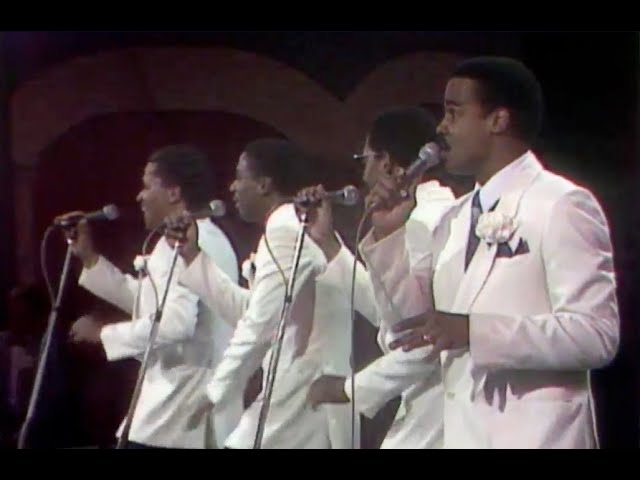
Released in July 1975, “I Can’t Give You Anything (But My Love)” spent three weeks at Number One on the UK Singles Chart in August — the only chart-topper of the group’s entire career in Britain, despite ten previous chart singles in the country. In the United States, where Bell’s departure had done far more damage to their commercial standing, the single stalled at Number 51 on the Billboard Hot 100 and Number 18 on the R&B chart. The contrast between those two sets of numbers tells the story of where The Stylistics stood in 1975 more precisely than any summary could: a group who had effectively become a British phenomenon while the country that had produced them had moved its attention elsewhere. They leaned into the reality. The UK dates kept coming. The television appearances kept coming. By 1984, when this performance was filmed, Russell Thompkins Jr. was still delivering the falsetto that had defined the group’s sound since their debut — and British audiences were still showing up to hear it.
The lyric sits in a long tradition of working-class romantic declarations — the narrator acknowledges he cannot offer furs, jewels, or material extravagance, and offers instead the one thing he actually has. Hugo & Luigi and Weiss had built their reputation across two decades on exactly this kind of writing: direct, emotionally unambiguous, built for voices rather than instruments. The arrangement Van McCoy delivered around those vocals used lush strings and a driving bassline that navigated the narrow space between the Philly soul of the Bell years and the disco current running through the charts that summer — enough pulse to feel contemporary, enough orchestration to feel like The Stylistics, enough momentum to keep Russell Thompkins Jr.’s falsetto at the center of everything. McCoy was arranging the session in the weeks immediately following “The Hustle” reaching Number One. He had just demonstrated he understood the dance floor better than almost anyone in New York. He chose to leave most of that knowledge at the door and build something that served the song first.
The recording took place at Media Sound Studios in New York City — one of the premier facilities of the mid-1970s New York session world, housed in a former Baptist church on West 57th Street whose natural reverb was prized by producers across every genre. The first commercial pressing carried a misprint on the label that has become a minor collector’s footnote: the A-side read “Gibe” instead of “Give” — a quality control error that nobody caught until the copies were already in distribution. Corrected pressings followed promptly, but the misprinted originals circulate among collectors with the kind of affectionate notoriety that only an unambiguous manufacturing accident can generate. The song itself was too good for the typo to matter.
The following year, The Stylistics covered “Can’t Help Falling in Love” — a song George David Weiss had co-written for Elvis Presley fourteen years earlier, now handed back to the group that had just worked with him. Their version reached Number Four in the UK. The detail is almost too neat: the same songwriter connecting Elvis’s most enduring ballad to a British audience’s affection for a Philadelphia soul group, threading through a single year of recording history. Andy Williams had taken the song to Number Three in the UK in 1970. The Stylistics made it a Top 5 hit for the third time in that market, which says as much about the quality of Weiss’s original composition as it does about the group’s British following.
The 1984 television performance captures the group operating nine years past their commercial peak with exactly the confidence that comes from knowing the songs well enough that the notes have become instinctive. Thompkins’ falsetto remains the defining instrument in the arrangement — the quality that Thom Bell had identified when he reluctantly agreed to work with them after an audition he didn’t think much of, the quality that carried every subsequent producer’s arrangement regardless of how the surrounding production evolved. A voice like that does not retire from a song. It simply finds new things to say inside it. British television in 1984 gave it a room and an audience that was happy to listen. The feeling on screen is entirely mutual.
SONG INFORMATION
Related videos
![Stevie Nicks – Talk To Me (Official Music Video) [HD Remaster]](https://musicvideosclub.com/wp-content/uploads/2025/12/stevie-nicks-talk-to-me-official-360x203.jpg) Watch LaterAdded
Watch LaterAdded
 Watch LaterAdded
 Watch LaterAdded