


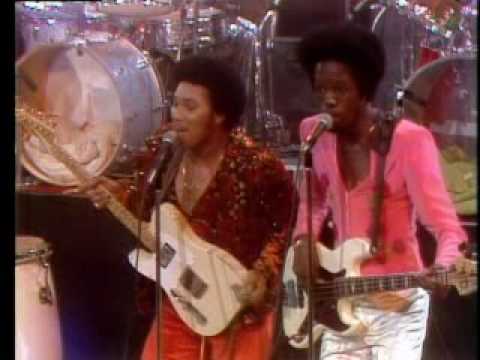

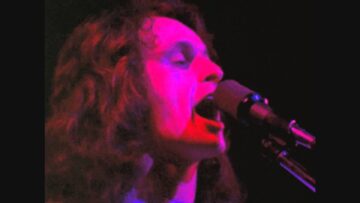
Earth, Wind & Fire – Shining Star
Maurice White Took a Walk Under the Rocky Mountain Sky on the First Night of the Caribou Ranch Sessions, Looked Up at the Stars, and Came Back Inside with the Concept for the Song That Would Become Earth, Wind & Fire’s Only Number-One on the Billboard Hot 100.
Maurice White was forty-seven days into his thirty-fourth year and three weeks into a recording residency at Caribou Ranch — the high-altitude studio Jim Guercio had built in Nederland, Colorado, the same complex where Elton John had recorded Caribou a year earlier and where Chicago had cut six albums by then. Earth, Wind & Fire had arrived to record what would become their sixth studio album, That’s the Way of the World. The album was a movie soundtrack — Sig Shore, the producer of Superfly, had hired the band to score his music-business drama starring Harvey Keitel — and the band had been booked for an extended residency to complete the work. On one of the first nights, White stepped outside the studio compound and walked. He looked up. “We are all shining stars in our essence,” he later said. “I was overwhelmed and inspired.” He came back inside and took the concept to the band. Larry Dunn worked out the chorus hook on his Fender Rhodes within minutes. Philip Bailey arrived with the lyric. The song that resulted was Shining Star. It would become the only single Earth, Wind & Fire ever placed at number one on the Billboard Hot 100.
Maurice White was an unusual figure to be writing inspirational R&B records in 1974. He had been born in Memphis in 1941, had played drums on Booker T. and the M.G.s’ early sessions, had moved to Chicago and worked as a Chess Records session drummer through the 1960s, had toured with the Ramsey Lewis Trio in jazz settings, and had only formed Earth, Wind & Fire — initially called the Salty Peppers with his brother Verdine — in 1969. By 1974 the band had released five studio albums, built a reputation for elaborate live performances and theatrical staging, and had scored their first significant hit with Mighty Mighty from Open Our Eyes. Their pop-chart presence had been modest. White had also begun a working partnership with the Chicago jazz arranger Charles Stepney — a former Chess Records collaborator who had worked with Ramsey Lewis and the Dells — and the chemistry between the two had pushed the band’s sound toward what Stepney’s son Charles Stepney III later described as the careful integration of jazz harmony, gospel vocal arrangement, and African percussion that would define the band’s mature work. Stepney was thirty-three. He would die of a heart attack in May 1976, fourteen months after Shining Star reached number one. He never saw the band’s biggest commercial successes that followed.
Caribou Ranch, the Dead Room, and the Engineer Who Did Anything to Find Some Life
The basic tracks for Shining Star were cut at Caribou Ranch by the band’s working rhythm section — Verdine White on bass, Larry Dunn on Rhodes and clavinet, Al McKay on guitar, Ralph Johnson on drums, Maurice White also on drums — with engineer George Massenburg in the control room and Maurice supervising. Massenburg has been candid in subsequent interviews about the limitations of the Caribou facility. “The studio was completely dead,” he told Mix magazine in 2004. “I overdubbed as much as I could in this little live area right in front of the control room window, just to find some kind of life. You would do anything to put some kind of life in it.” The Caribou tape machine — an Ampex 1000 24-track that Elton John had reportedly offered to buy from Guercio for the express purpose of pushing it off a mountain — produced what Massenburg considered substandard captures of the rhythm tracks. The horns were eventually re-cut at Sunset Sound’s Studio 2 in Los Angeles. The strings were tracked at Warner Music One in Burbank. The guitars and vocals were overdubbed at Hollywood Sound. Charles Stepney wrote the horn charts. “Charles was our George Martin,” Verdine White would later say. “He was able to harness all that sound we had and have it make sense, musically.”
What made the recording was Maurice White’s decision about the closing vamp. The original mix carried Massenburg’s standard reverb across the four-part vocal stack — “Shining star, for you to see, what your life can truly be” — fading slowly under instrumental backing. White asked Massenburg to strip the reverb completely off the vocals and let the harmonies sit dry, in the listener’s ear, with the band underneath. The effect, Massenburg later remembered, was striking enough that the team kept it. The vocals jumped forward in the mix in a way no reverb-treated vocal would. The song was also too long. Massenburg made three edits to remove choruses, producing what he described as “film ‘jump cuts’: three sections jumping closer and closer to you” — the song’s structural rhythm of repetition and intensification, climbing toward the dry vocal close, was an editing-room decision rather than a performance one. The single ran two minutes and fifty seconds. The album version ran longer.
The Number One That Changed What the Band Was
The single was released by Columbia Records on January 21, 1975. It entered the Billboard Hot 100 in February, climbed steadily through the spring, and reached number one the week of May 24, 1975. It also topped the Billboard Hot Soul Songs chart that May, the band’s first single to reach number one on either chart and the only single in their career to reach number one on the Hot 100. It was certified Gold by the RIAA on June 16, 1975. It would win the 1976 Grammy Award for Best R&B Performance by a Duo or Group with Vocals. In 2008, it was inducted into the Grammy Hall of Fame. The album That’s the Way of the World — released on March 15, 1975 — reached number one on the Billboard 200 and stayed for three weeks. The band had spent four years working their way toward broad commercial recognition. Shining Star arrived. The breakthrough was complete. Their next three albums each sold at least two million copies. Sing a Song, Getaway, Serpentine Fire, Got to Get You Into My Life, September, Boogie Wonderland, After the Love Is Gone, Let’s Groove — the catalogue of hits that listeners now associate with Earth, Wind & Fire as a culture-spanning act began with the song Maurice White had walked outside Caribou Ranch one night and conceived of in five minutes.
The song’s afterlife has been disproportionate to its three-minute running length. It has been performed by the band — and the post-Maurice-White successor lineup that Philip Bailey continues to lead — at virtually every concert and television appearance since 1975. It has been sampled, covered, used in films, used in television commercials, played at sporting events, and selected by the Library of Congress as one of the recordings most representative of mid-1970s American popular music. Maurice White died on February 4, 2016, at age seventy-four, of complications from Parkinson’s disease, which he had lived with privately for over twenty years. Philip Bailey has continued to tour with Earth, Wind & Fire through the years since. Larry Dunn left the band in 1983 and returned to producing and session work. Verdine White, the bassist whose four-on-the-floor pulse had anchored the Caribou Ranch rhythm tracks, has remained with the band continuously since 1969 and has played the song Shining Star, by his own count, several thousand times. The walk under the stars at Caribou Ranch became, in the end, one of the most-recorded inspirational lyrics of the 1970s — and the recording that demonstrated, in three minutes, what a band that had been preparing for ten years could do once they were ready.
SONG INFORMATION
“Shining Star” – Single by Earth, Wind & Fire from the album That’s the Way of the World
Released January 21, 1975
Songwriters Maurice White, Larry Dunn, Philip Bailey.
Charted No.1 in US