





Status Quo – Pictures Of Matchstick Men
He Wrote Three-Quarters of It on the Toilet Hiding from His Wife and Mother-in-Law, It Was Almost Released as the B-Side, and It Became the Only American Hit Status Quo Would Ever Have
Francis Rossi was eighteen years old, newly married, living with his wife and mother-in-law, and trying to write a song. The flat was too noisy, the conversation was too constant, and so he did what eighteen-year-old songwriters with overcrowded flats sometimes do — he locked himself in the bathroom. Three-quarters of Pictures Of Matchstick Men was written there, sitting on the toilet with a guitar across his knees. The remaining quarter he finished off in the lounge once the women had moved on. It was only the second song he had ever written. Within twelve months it would carry his unknown south London band into the British Top 10, the American Top 20, and a place in pop history that the next sixty years of his career would never quite eclipse.
The band were called The Status Quo, though they had been The Spectres only a few months earlier and had briefly considered Traffic — until Steve Winwood’s group beat them to it. Rossi sang lead and played lead guitar. Alan Lancaster was on bass. John Coghlan played drums. Roy Lynes played the Vox Continental organ that haunts the song’s middle eight. Rick Parfitt, the band’s newest recruit, had joined that summer; whether he actually played on the master take has been quietly disputed by Quo biographers ever since, with Parfitt himself recalling that they ran the song down only three times before producer John Schroeder had what he wanted and that “every time we played it, tingles went up my arms.” The song was tracked at Pye Studios in London in late 1967. Schroeder, the in-house Pye producer who had previously worked with Helen Shapiro and Petula Clark, did not initially regard Pictures Of Matchstick Men as the A-side. The intended A-side was a piece of straight British psych-pop called Gentleman Joe’s Sidewalk Café. Rossi’s bathroom song was meant for the flip.
The B-side that almost stayed a B-side
How the swap happened is variously remembered — somebody at Pye, somebody at the band’s management, somebody who simply listened to the two recordings back-to-back and trusted their ears. The record was issued on January 5, 1968, with Pictures Of Matchstick Men on the A-side and Gentleman Joe demoted to the B. The opening guitar figure — strident and tremulous, played on a guitar with the top two strings tuned to the same B note — was unlike anything in the British Top 40 that winter. Rossi has said since that he was trying to write something in the chord sequence of Jimi Hendrix’s Hey Joe, with lyrics chasing the spaced-out Lennon vocabulary of the moment. The “matchstick men” themselves were a borrowed image — the spindly industrial figures of the Salford painter L. S. Lowry, whose stick-thin Northern townscapes were a piece of common British visual currency Rossi did not need to explain to a domestic audience. He used them metaphorically. The matchstick men of the song are not Lowry’s literal subjects but people reduced to silhouettes by emotional distance — a pop image of someone who has flattened into nothing more than an outline.
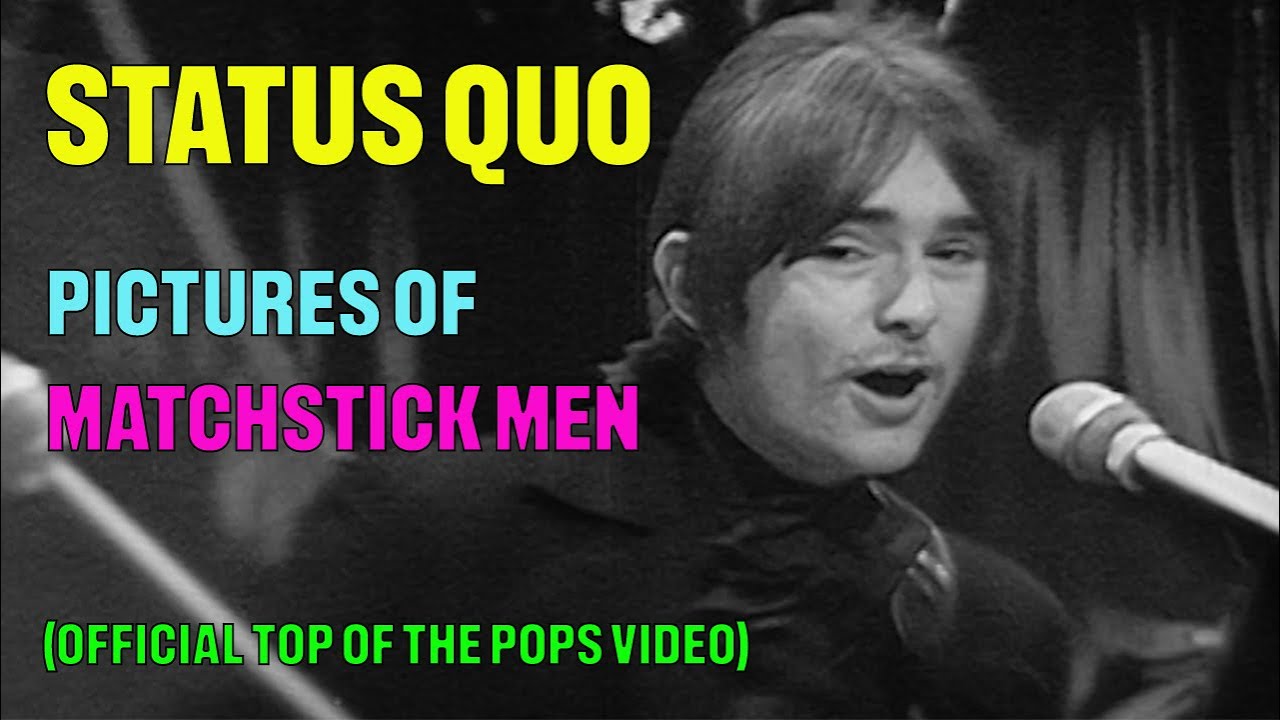
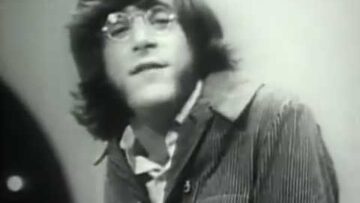
The record entered the UK chart at the end of January and climbed to number seven by the second week of February. On Thursday, February 15, 1968, the band performed it on Top of the Pops at the BBC Television Centre — the performance preserved on this page. It was their first appearance on the show and the start of a relationship that would, over the next forty-plus years, set the all-time record for Top of the Pops appearances by a single act: 106. America followed without warning. Pictures Of Matchstick Men entered the Billboard Hot 100 in the spring of 1968 and climbed to number 12 — a higher placement than the band ever achieved at home with this record, and a placement they would never approach again on the American chart. Their only other Hot 100 entry, Ice In The Sun, would scrape the lower reaches later that same year. After that, nothing. They had been offered the keys to the American market and chose, deliberately, not to use them.
The hit that built a career — somewhere else
The decision to stay home looked, at the time, like a missed opportunity. In hindsight it was the foundation of one of the longest-running careers in British rock. Rather than chase the American psych-pop moment that had made Pictures Of Matchstick Men a one-off transatlantic novelty, Status Quo abandoned psychedelia almost entirely by 1970, found the heads-down, denim-clad twelve-bar boogie that would define the rest of their working lives, and recorded sixty-plus UK Top 40 singles — more than any other band in British chart history. Twenty-two of them reached the Top 10. Down Down, in 1975, was their only number one. They opened Live Aid at Wembley in 1985. They were appointed OBEs. They became, in the British music press’s favourite cliché, a national institution. None of that career, however, would have happened without the bathroom-written song that nearly went on the wrong side of the single.
Rossi has talked about the song with an honesty that most artists reserve for records they secretly resent. Pictures Of Matchstick Men was, he has said, basically about his ex-wife — written during the marriage, when he was already privately certain it was a mistake. The Pye contract that the band had signed was so punitive that the record’s global success generated almost no money for the musicians, and only Rossi, as the writer, made anything resembling decent royalties — a fact that bred a quiet resentment among the others and led, over the next few years, to every member of the band insisting on writing credits of their own. The song that should have been their gateway to American stardom became instead the pivot point at which they walked away from America entirely and built something deeper at home. It has been covered by Camper Van Beethoven, who took it to number one on Billboard’s Modern Rock Tracks chart in 1989, and revived in acoustic form on the band’s 2014 Aquostic project. But the version most British listeners hear in their heads is still the original — the bathroom song, the wrong A-side, the hit that built a career somewhere else.
SONG INFORMATION