



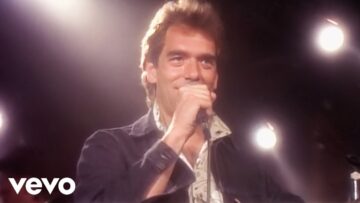

Dan Fogelberg – Same Old Lang Syne
He Was Sent Out for Whipping Cream on Christmas Eve 1975. He Met His High School Girlfriend in the Convenience Store Instead, Bought a Six-Pack, and Talked With Her in Her Car for Two Hours. Five Years Later He Turned the Conversation into the Song That Plays Every December.
Dan Fogelberg was visiting his parents in Peoria, Illinois, on Christmas Eve 1975. His father Lawrence — the bandleader who would, six years later, become the subject of Leader of the Band — was ill. Fogelberg’s mother needed whipping cream for Irish coffee. Every grocery store in Peoria had closed for the night. Fogelberg drove out to find the only place still open: the Convenient Food Mart at the top of Abington Hill, at the corner of Frye Avenue and Prospect Road. He was twenty-four years old. He was a Capitol Records artist with two gold albums to his name. He had no idea what was about to happen, and what was about to happen amounted to the entire creative spine of one of the most successful albums of his career. The woman who walked into the same store two minutes after he did was Jill Anderson, his high school girlfriend from Woodruff High School’s class of 1969. She was there because her mother had run out of eggnog. They had not seen each other in years.
What followed was the encounter that would, five years later, become Same Old Lang Syne. There were no bars open in Peoria that night. They bought a six-pack of beer from the same store and sat in Jill’s car for two hours, talking. Jill had married a physical education teacher and moved to Chicago. Fogelberg had moved to Colorado to pursue music. The conversation moved through the usual ground of two adults who had once mattered to each other and now did not — careers, marriages, the gap between what each of them had imagined at eighteen and what each of them had ended up with at twenty-four. The car windows fogged. The engine ran for warmth. They did not exchange numbers. When Jill drove away, the snow had turned to rain. Fogelberg drove home, finished the Christmas Eve his family had been waiting for him to bring whipping cream to, and remembered every detail of what had just happened.
It took him over a year to turn the encounter into a song. The writing began as a deliberate experiment — Fogelberg told interviewers later that he wanted to see if he could make a serious piece of music out of an event as ordinary as running into an old friend at a grocery store. He started at his piano, deliberately matching plodding lyrics to the mundane reality of the night: the groceries on the checkout stand, the clerk totalling the bag, the awkward standing-around. He borrowed the verse melody from the famous French horn theme of Tchaikovsky’s 1812 Overture, the orchestral grandeur giving the lyric a dramatic frame the conversational details would otherwise have lacked. The two-bridge structure provided the room for the song’s emotional pivots. By the time it was finished, the joke he had set out to write had become something else entirely — a six-and-a-half minute narrative ballad with the precision of a short story and the patience of a long take.
The Sax Solo and the Album That Wasn’t Ready
The recording was co-produced by Fogelberg and his longtime collaborator Marty Lewis. The closing soprano saxophone solo — improvised by Michael Brecker around the melody of the traditional Scottish song Auld Lang Syne, the source of the title’s wordplay — became one of the most-quoted instrumental endings in soft rock. Brecker, then thirty-one and at the peak of his session work, took two minutes of the recording to wind down what the lyric had set up. The single was released in November 1980, debuted on the Billboard Hot 100 at number thirty-seven the week of December 27 — perfectly timed between Christmas and New Year’s Eve — and climbed steadily through January, peaking at number nine in February 1981. It would spend eighteen weeks on the chart and reach number six on the Adult Contemporary list. Fogelberg’s record company, however, had a problem. There was no album for fans to rush out and buy.
Fogelberg had been intending to release a single album when he sat down on New Year’s Eve to sequence what he thought was finished material. By the end of the night, he had decided the project should be a double album — a song cycle moving from childhood through adulthood, with Same Old Lang Syne placed as the closing track of the first disc, the nostalgia song that would anchor the entire collection. He spent another six months writing additional material. His label was furious. The single peaked, sat at number nine, dropped out of the Top 20, and continued to receive radio play with no album release in sight. The Innocent Age finally arrived in August 1981, eight months after the single had topped its chart. The label’s frustration was eclipsed by the album’s commercial success: it sold over two million copies, certified double platinum, peaked at number six on the Billboard 200, and produced three additional Top 20 singles — Hard to Say at number seven, Leader of the Band at number nine, and Run for the Roses at number eighteen. Fogelberg’s instinct about the song cycle had been commercially correct. His method had simply been catastrophic for everyone trying to coordinate around him.
Jill, Twenty-Seven Years of Silence, and the Story That Came Out Six Days Late
Jill Anderson — by then Jill Anderson Greulich — heard Same Old Lang Syne on the radio in 1981 while driving to work. She recognised Dan’s voice immediately. She knew within the first verse that the song was about her. She did not say anything. She did not call him. She did not contact his publicist or write a letter to a magazine or correct any of the details that journalists were getting wrong about the song’s basis. She kept the secret for twenty-seven years. Fogelberg, for his part, refused to identify her in any interview he gave for the rest of his life, and was asked about it constantly. The reasons Greulich gave later for her silence were practical: Fogelberg was married, his marriage might not survive a public revelation, and the song was working in the world without her name attached to it. The song was the song. She was a Chicago physical education teacher’s wife. There was no reason to combine the two stories.
Dan Fogelberg died of prostate cancer on December 16, 2007, at his home in Deer Isle, Maine. He was fifty-six. Six days later, on December 22, 2007, Jill Anderson Greulich gave her first and only on-the-record interview about Same Old Lang Syne to the Peoria Journal Star. She confirmed the entire story — the convenience store, the six-pack, the two hours in the car. She corrected two details. Her eyes were green, not blue. Her husband had been a physical education teacher, not an architect. The line that had drawn the most fan questions over the years — “she would have liked to say she loved the man, but she didn’t like to lie” — Greulich would not elaborate on, except to note that she had divorced her husband by the time the song was released. In 2008, the City of Peoria gave the stretch of road where the encounter had happened the honorary designation of Fogelberg Parkway. The Convenient Food Mart eventually closed and the building was repurposed. A young fan named Grace Ferguson had once written to Fogelberg asking what the closing line — and as I turned to make my way back home, the snow turned into rain — meant metaphorically. Many people had read it as the warmth of the encounter melting the cold of his life. Fogelberg wrote back saying that the metaphor reading was wonderful, but the truth was simpler: as he had driven home that Christmas Eve in 1975, the snow had actually turned into rain. Some of the best metaphors are accurate weather reports. Michael Brecker, who had played the closing soprano saxophone solo, died of leukemia in January 2007, eleven months before Fogelberg’s death. Both men were the same age.
![Chaka Khan – Through the Fire (Official Music Video) [HD Remaster]](https://musicvideosclub.com/wp-content/uploads/2026/03/chaka-khan-through-the-fire-offi-360x203.jpg)