




The Monkees – I’m a Believer
Went Gold In Two Days With Over One Million Advance Orders
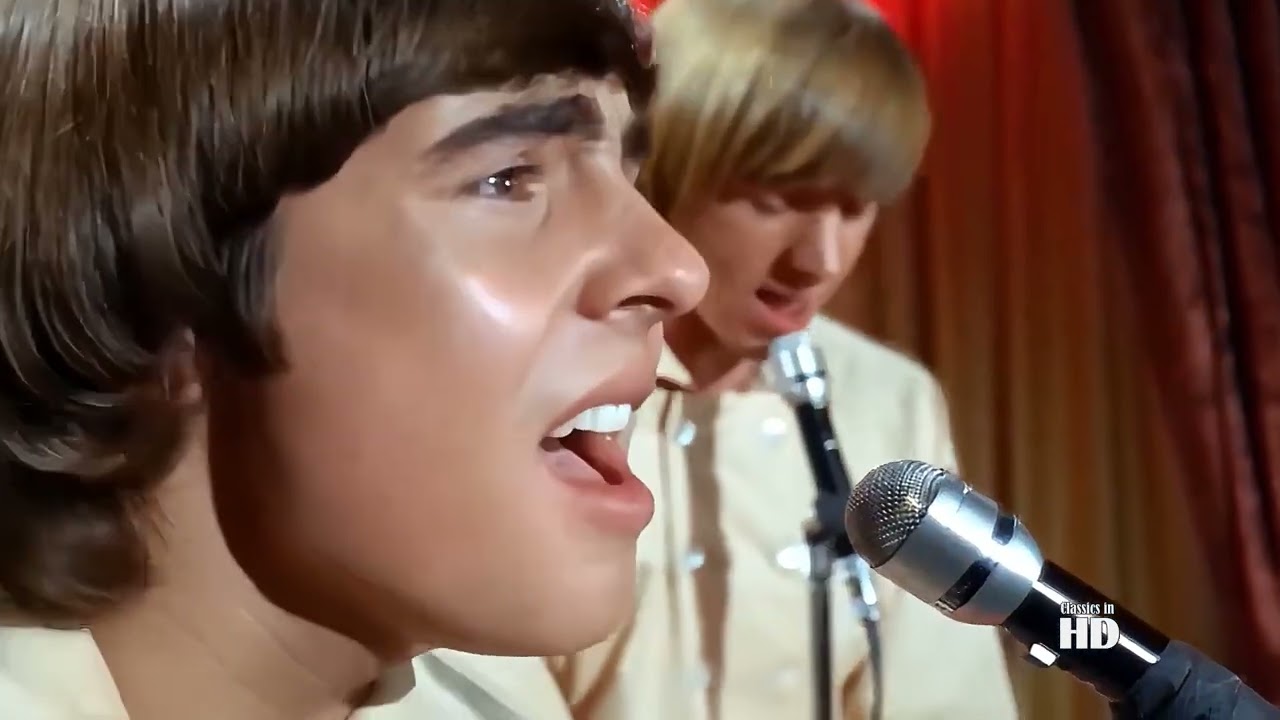
Released on November 12, 1966, “I’m a Believer” shot to number one on the Billboard Hot 100 on December 31, holding the top spot for seven consecutive weeks and becoming the last number one hit of 1966 and the biggest-selling single of 1967. The song received over 1,051,280 advance orders, achieving gold certification within just two days of release—one of the fastest certifications in music history. It sold over two million copies in the United States alone and became one of fewer than forty all-time singles to sell ten million physical copies worldwide. The track also topped the UK Singles Chart for four weeks in January and February 1967, reached number one in Canada, Australia, New Zealand, and Ireland, and charted in over 60 countries. Billboard ranked it the number five song of 1967 and eventually placed it at number 48 on their All Time Top 100. What nobody knew was that Neil Diamond had written and recorded the song first, but Don Kirshner convinced him not to release it as a single so The Monkees could have it exclusively.
While “I’m a Believer” dominated American charts from late 1966 through early 1967, it kept The Royal Guardsmen’s novelty hit “Snoopy vs. The Red Baron” stuck at number two for four consecutive weeks, preventing it from ever reaching the summit. In the UK, the song spent four weeks at number one and became one of the defining tracks of 1967 alongside The Doors’ “Light My Fire” and Procol Harum’s “A Whiter Shade of Pale.” The Monkees’ television series provided unprecedented promotional power—the song featured prominently in the October 17, 1966 episode “The Success Story,” where it played during a climactic dance sequence just weeks before the single’s official release. The exposure created instant demand, making it impossible for Colgems Records to press enough copies to meet pre-orders. Micky Dolenz later recalled painful memories of performing the song on tour, literally painful, because there were no monitors and the screaming was so overwhelming he couldn’t hear himself singing.
Neil Diamond wrote the song in 1966 after scoring his first major hit with “Cherry, Cherry,” which caught the attention of music supervisor Don Kirshner. Kirshner had been hired by Screen Gems to develop material for The Monkees, the made-for-television band whose NBC sitcom had debuted in September 1966 to massive ratings. Kirshner was sold on “I’m a Believer” immediately, recognizing its three-chord hook, infectious melody, and simple lyrics about instant love as perfect for the young group’s image. As part of the deal, Diamond was allowed to record his own version, which appeared on his 1967 album Just for You but was never released as a Diamond single during the initial run. Diamond later released his version as a single in 1971, where it peaked at number 51 on the Hot 100. Diamond drew inspiration from his own romantic experiences, crafting an upbeat melody about the moment someone skeptical about love suddenly believes in it completely after seeing the right person’s face.
Initial recording sessions took place on October 15, 1966, at RCA Victor Studio in New York City, with producer Jeff Barry overseeing the track. The Monkees themselves didn’t play instruments on the recording—a point of enormous controversy that would eventually lead to their rebellion against the system. Session guitarist Al Gorgoni, who’d previously worked on Diamond’s “Cherry, Cherry” and would later play on Simon & Garfunkel’s “The Sound of Silence” and Van Morrison’s “Brown Eyed Girl,” handled the memorable guitar riff that punctuates the chorus. Other personnel included Sal DiTroia on rhythm guitar, Diamond himself on acoustic guitar, Russ Savakus on bass, George Butcher on electric piano, Stan Free on the distinctive Vox Continental organ that opens the track, George Devens on tambourine, and Buddy Saltzman on drums. Some discographies credit legendary session bassist Carol Kaye on the track, though this remains disputed. Micky Dolenz provided the lead vocals, his enthusiastic delivery perfectly capturing the song’s buoyant energy, while Davy Jones, Michael Nesmith, and Peter Tork contributed backing vocals.
More of the Monkees, the group’s second album released in January 1967, featured “I’m a Believer” as the lead single despite being issued after the single had already conquered charts. The album reached number one on the Billboard 200, where it spent 18 weeks at the top and remained on the chart for 70 weeks total. Other tracks included “She,” “Mary, Mary,” and “The Day We Fall in Love.” The B-side “(I’m Not Your) Steppin’ Stone,” written by Tommy Boyce and Bobby Hart and originally recorded by Paul Revere and the Raiders, provided a gritty garage rock contrast to the sunny optimism of the A-side. That track peaked at number 20 on the Hot 100 in early 1967 after radio stations started flipping the single over. The Monkees’ massive commercial success in 1966-1967 made them bigger than The Beatles in terms of record sales during that specific period, though critics derided them as the Pre-Fab Four and questioned their musical legitimacy.
The controversy over The Monkees not playing their own instruments erupted during their 1967 UK tour, where music papers proclaimed them a disgrace to the pop world. However, George Harrison defended The Monkees’ musical attempts, and Peter Tork later played Paul McCartney’s five-string banjo on Harrison’s Wonderwall Music album. Michael Nesmith attended The Beatles’ recording session for “A Day in the Life” at Abbey Road Studios. By 1967, The Monkees fought for and won creative control over their music, with Nesmith becoming particularly vocal about playing their own instruments on future recordings. Their 1968 album Headquarters featured the band playing all instruments themselves, proving they were far more than manufactured television props. The group produced four chart-topping albums and three number one songs—“Last Train to Clarksville,” “I’m a Believer,” and “Daydream Believer”—before the television series was cancelled in 1968.
Smash Mouth’s cover for the 2001 film Shrek introduced the song to a new generation, peaking at number 25 on the Billboard Hot 100 and reaching number nine in Australia. The band had previously scored with “All Star,” also featured in Shrek, and the pairing turned the soundtrack into a multi-million seller. Eddie Murphy’s character Donkey also performed a rendition in the film. The Smash Mouth version accumulated over 300 million streams on Spotify by November 2025. Yugoslav rock band Elipse recorded a version in 1966 for Belgrade Television, filming at the Belgrade Zoo performing in front of a monkey cage. Robert Wyatt’s unlikely 1974 UK cover became a minor hit. The song appeared in the Coen brothers’ Blood Simple on home video before being replaced by Four Tops’ “It’s the Same Old Song” in the director’s cut. Dallas station KLUV ranked it number one on their Top 500 Memorial Day Countdown in 2008 as voted by listeners.
The Monkees’ legacy extends far beyond their status as a manufactured television band. They were inducted into the Rock and Roll Hall of Fame in 2022, finally receiving recognition for their musical contributions decades after critics dismissed them. Davy Jones died on February 29, 2012, at age 66. Peter Tork passed away on February 21, 2019, at age 77 after battling adenoid cystic carcinoma. Michael Nesmith died on December 10, 2021, at age 78. Micky Dolenz continues performing as the last surviving member, keeping the band’s legacy alive through tours and recordings. As Neil Diamond reflected years later, “I’m a Believer” captured something universal—that moment when cynicism dissolves and you realize love is real. The Monkees’ version transformed his demo into a generational touchstone, proving that sometimes the right combination of song, singers, and timing creates magic that transcends the circumstances of its creation. It remains one of the most recognizable pop songs ever recorded, a testament to the enduring power of a perfect three-minute pop confection.
![Led Zeppelin – In My Time of Dying (Live at Earls Court 1975) (Official Video) [HD]](https://musicvideosclub.com/wp-content/uploads/2026/03/led-zeppelin-in-my-time-of-dying-360x203.jpg)