

![The Who – Baba OReily — In [High Definition] HD! -1979 – The Kids Are Alright](https://musicvideosclub.com/wp-content/uploads/2025/06/the-who-baba-oreily-in-high-defi-360x203.jpg)

![Led Zeppelin – Dazed And Confused Live 1969 [HD]](https://musicvideosclub.com/wp-content/uploads/2025/08/led-zeppelin-dazed-and-confused-360x203.jpg)
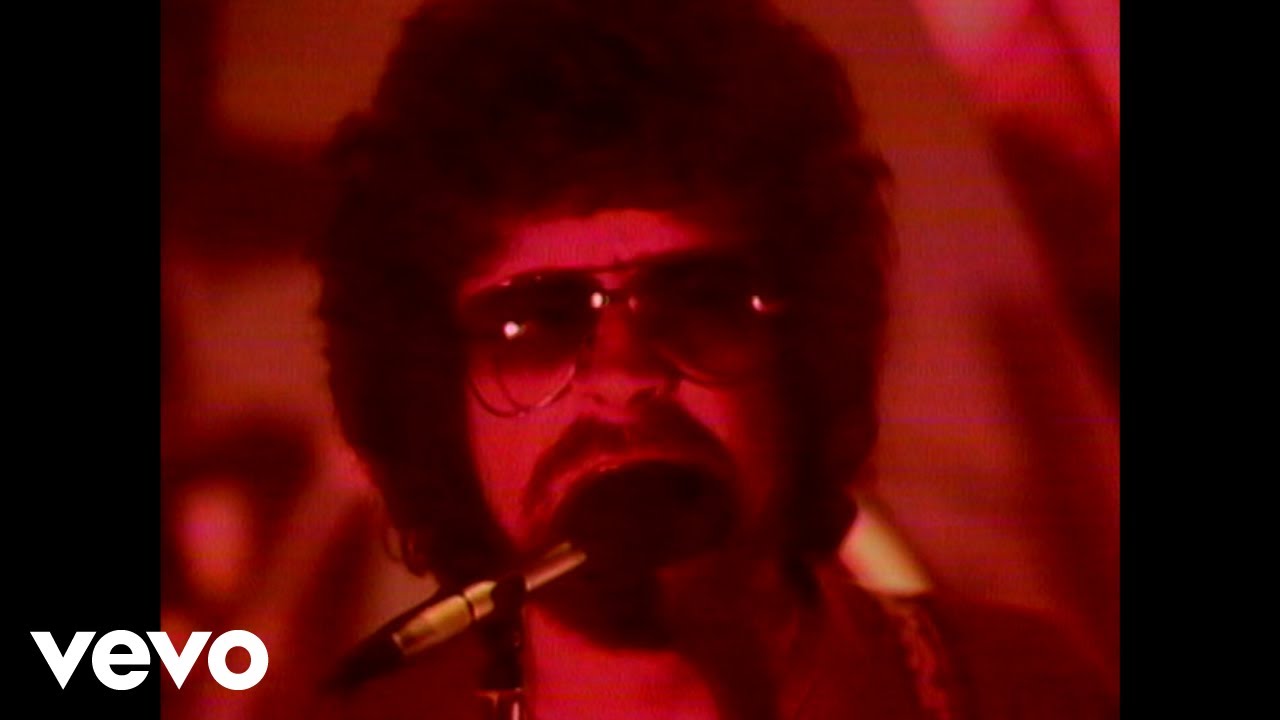
Electric Light Orchestra – Don’t Bring Me Down
The First ELO Song Without Strings That Became Their Biggest American Hit
Released in July 1979 as the third single from Discovery, “Don’t Bring Me Down” reached number four on the Billboard Hot 100 for two consecutive weeks in September, becoming Electric Light Orchestra’s highest-charting single in America and spending 17 weeks on the chart. The song peaked at number three in the UK for one week, making it their second-highest placement there behind “Xanadu” with Olivia Newton-John. It topped the Canadian RPM 100 chart for one week in October 1979 and reached number six in Australia. The track earned double platinum certification from the RIAA in 2020 for two million units and platinum status from the BPI in 2024 for 600,000 units in the UK, with global sales exceeding three million copies by 1980. In 2007, songwriter Jeff Lynne received a BMI Million-Air award for the song reaching two million radio airplays. What shocked critics and fans alike was that this massive hit marked the first ELO recording without any orchestral strings, the very element that had defined their sound since formation in 1970.
While “Don’t Bring Me Down” dominated charts throughout late summer and fall 1979, it peaked at number four behind The Knack’s “My Sharona,” which held the top spot for six consecutive weeks. The song propelled Discovery to number five on the Billboard 200 and number one in the UK, becoming ELO’s most successful album worldwide with over one million copies sold. The single debuted at number 41 on the Billboard Hot 100 on August 4, climbing faster than any previous ELO release. By November 1979, the song had earned gold certification for 500,000 units, later upgraded to platinum and eventually double platinum. Jet Records placed ads in trade magazines dedicating the single to NASA’s Skylab space station, which crashed to Earth on July 11, 1979, after six years in orbit. The publicity stunt worked brilliantly, tying the song to one of the summer’s biggest news stories. NASA returned the favor years later when the Space Shuttle Columbia crew used the song as their wake-up call on July 6, 1996, during an extended flight caused by bad weather.
Jeff Lynne wrote the song at the very last minute during sessions at Musicland Studios in Munich, Germany, in early 1979. He later explained he felt there weren’t enough loud ones on the album and wanted a big, galloping ball of distortion to close out Discovery. Engineer Reinhold Mack claims credit for the concept, saying he encouraged Lynne to just boogie out for a night after Lynne expressed uncertainty about what they should record next. The track emerged from an unusual process that showcased Lynne’s increasing frustration with the orchestral requirements that had defined ELO’s identity. Lynne selected a drum track from a song recorded earlier in the session, slowed it down, and looped it continuously to create a primitive form of sampling before electronic samplers existed. Using this looped beat as foundation, Lynne wrote the song on piano in the studio and immediately created the entire backing track by himself, playing guitar, piano, synthesizer, and additional instruments. The drum track was actually a tape loop, giving the song its relentless, mechanical pulse that became one of its most distinctive features.
Recording sessions at Musicland Studios brought together the core ELO lineup, though it remains unclear exactly who played what given Lynne’s habit of recording most instruments himself by this point. The credited musicians included Lynne on lead vocals, harmony vocals, electric lead guitar, 12-string acoustic guitar, additional guitars, piano, and synthesizer, with Bev Bevan on drums, Richard Tandy on keyboards, and Kelly Groucutt on bass and backing vocals. The absence of strings was revolutionary for ELO, whose mid-1970s hits like “Strange Magic” and “Mr. Blue Sky” had featured two cellists and a violinist. Lynne had grown fed up with the orchestra members, later telling Rolling Stone they were too much trouble and union rules prevented them from playing past the hour if a session ran long. The string section was fired after Discovery, reducing the band to four core members. Critics praised the stripped-down approach, with AllMusic noting it proved ELO could be just as interesting without strings and paved the way for later hits like “Hold On Tight” and “Calling America.”
Discovery, released on June 1, 1979, marked a radical shift toward disco and dance-pop influences while retaining ELO’s melodic sensibilities. The album featured eight tracks including the hit singles “Shine a Little Love,” which preceded “Don’t Bring Me Down” and reached number eight on the Hot 100, and “The Diary of Horace Wimp,” which performed better in the UK where it was released before “Don’t Bring Me Down.” Other tracks included “Confusion,” “Need Her Love,” “The Diary of Horace Wimp,” “Last Train to London,” “Midnight Blue,” and “On the Run.” The album’s futuristic cover artwork featured a spaceship hovering over Monument Valley, perfectly capturing the blend of classical arrangements and space-age production that defined ELO’s aesthetic. The B-side “Dreaming of 4000” came from the 1973 album On the Third Day, an unusual choice that suggested Jet Records was cross-pollinating catalog material to capitalize on the single’s success.
The mysterious vocal interjection that sounds like someone shouting an indecipherable word after each title line became legendary. Fans debated for decades whether Lynne was singing Bruce, a reference to the mechanical shark from Jaws, or some other word. Lynne finally clarified on VH1’s Storytellers that the word was grroosss, a made-up placeholder he improvised in the studio to fill a gap in the vocals. Engineer Reinhold Mack, who was German, asked Lynne how he knew the German word gruss, which means greetings. When Lynne learned the accidental German meaning, he decided to leave it in, creating one of rock’s most debated vocal hooks. The music video featured a bizarre cosmic hot dog floating through space, an image so memorable it reappeared during Jeff Lynne’s September 2014 Hyde Park concert on the computerized stage background. The video aired repeatedly on Top of the Pops, with the band performing live on September 6, 1979, followed by dance troupe Legs & Co. performing to the song on September 20.
In 2012, The Hives released “Go Right Ahead,” whose main riff was nearly identical to “Don’t Bring Me Down,” resulting in Jeff Lynne being credited as co-writer. Lynne re-recorded the song in his home studio for the 2012 compilation Mr. Blue Sky: The Very Best of Electric Light Orchestra, joining other re-recorded ELO classics. The track appeared in numerous films and television shows, becoming shorthand for 1970s rock energy. ELO disbanded in 1986 after recording Balance of Power, though Bev Bevan, Kelly Groucutt, and Mik Kaminski formed a spinoff called ELO Part II between 1991 and 1999. Lynne went on to produce albums for George Harrison, Paul McCartney, Roy Orbison, Ringo Starr, and Brian Wilson, produced the two new songs for The Beatles Anthology, and was a member of the Traveling Wilburys alongside Harrison, Bob Dylan, Tom Petty, and Orbison. Jeff Lynne’s ELO reformed in 2014 and continues touring, with Lynne performing the song to massive crowds including at VetsAid 2023.
Despite recording twenty Top 40 hits in America without ever reaching number one, ELO holds the record for the most Billboard Top 40 hits without a chart-topper, a testament to their consistent popularity throughout the 1970s and early 1980s. When analyzed by total chart points accumulated over weeks on the chart, “Telephone Line” emerges as ELO’s biggest American hit based on longevity and consistent positioning, though “Don’t Bring Me Down” achieved the highest peak. The song has amassed over 500 million plays on Spotify as of 2025, proving its enduring appeal across generations. As Jeff Lynne reflected decades later, the decision to abandon strings for this track felt liberating after years of orchestral requirements dictating the band’s sound. “Don’t Bring Me Down” proved that Electric Light Orchestra’s genius lay not in any single sonic element but in Lynne’s ability to craft irresistible melodies and production that transcended genre boundaries, whether backed by a full orchestra or just a looped drum beat and distorted guitars.
SONG INFORMATION
Chart Performance: No. 4 in US (2 weeks), No. 3 in UK (1 week), No. 1 in Canada (1 week), No. 6 in Australia; 2× Platinum in US (2020), Platinum in UK (2024)