


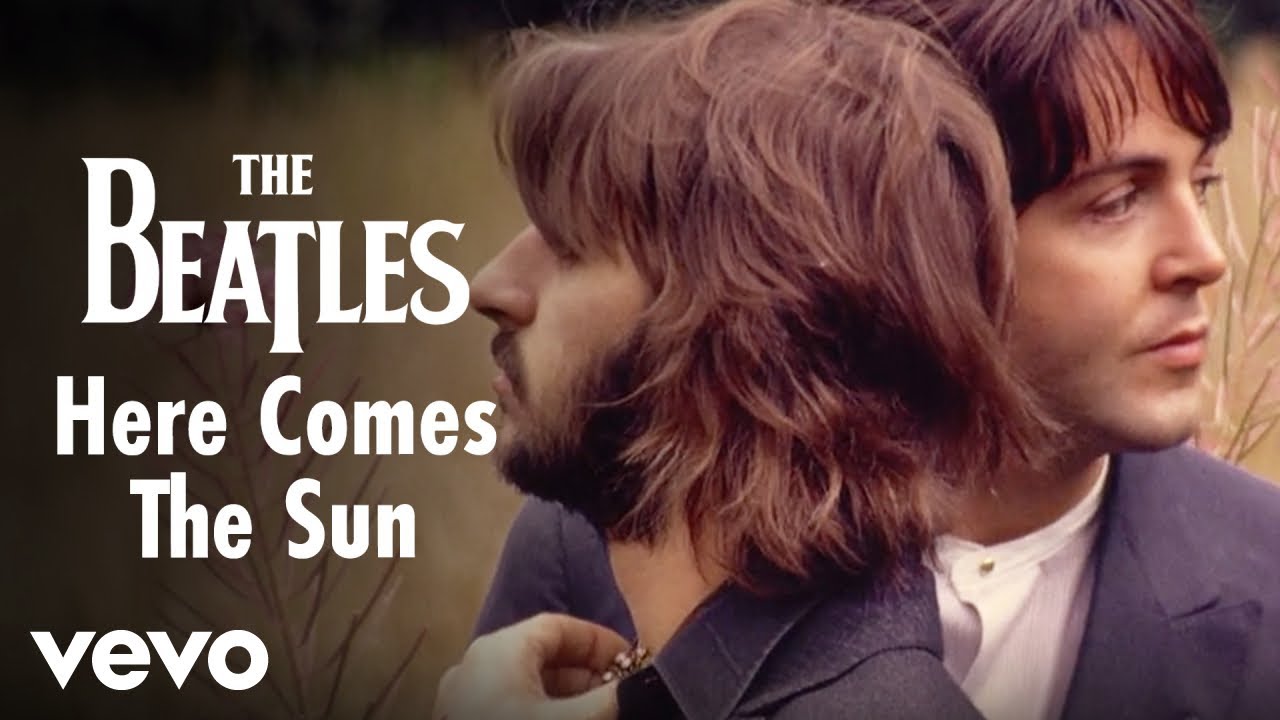
The Beatles – Here Comes The Sun
Playing Truant In Eric Clapton’s Garden During The Beatles’ Final Meltdown
Released on 26 September 1969 as part of Abbey Road, George Harrison’s “Here Comes The Sun” emerged from one of the darkest periods in Beatles history. Written in April 1969 while Harrison skipped yet another business meeting at Apple Corps, the song captured his relief at escaping the endless paperwork and arguments that followed manager Brian Epstein’s death. What nobody could have predicted was that this gentle acoustic track would become the first Beatles song to hit one billion streams on Spotify, a milestone achieved in May 2023, making it the first song from the 1960s to reach that digital landmark.
The song never charted as a single in the UK or US during its initial release, only appearing as the B-side to “Oh! Darling” in Japan in 1970. Yet its cultural impact proved immense. Radio station BMI reported over two million US airplay performances by 1994. When iTunes finally made the Beatles catalogue available in 2010, downloads pushed it to number 64 on the UK Singles Chart. By 2019, it hit number three on the Billboard Hot Rock Songs chart during the fiftieth anniversary reissue campaign. Today it averages over 630,000 daily streams on Spotify, generating an estimated four million dollars in revenue from that platform alone.
Harrison wrote the melody at Eric Clapton’s Hurtwood Edge estate in Ewhurst, Surrey, walking through the garden with an acoustic guitar on what was possibly the sunniest April morning since the 1960s began. The Greenwich meteorological station recorded 189 hours of sunshine that month, a record that stood until 1984. Clapton later marveled at Harrison’s spontaneity, noting he would never dream of taking his guitar outside to write. Harrison completed the lyrics two months later while holidaying in Sardinia, his handwritten notes revealing he abbreviated repeated phrases as “H.C.T.S.” and “L.D.” to speed up the process. The “long, cold, lonely winter” referenced in the lyrics wasn’t just poetic license. February and March 1969 were significantly colder than the decade’s average, making spring’s arrival feel especially redemptive after months of freezing business meetings.
Recording began on 7 July 1969 at Abbey Road Studios, Ringo Starr’s twenty-ninth birthday, without John Lennon, who was recovering from a car accident in Scotland that left him with seventeen facial stitches. Harrison, Paul McCartney, and Starr completed thirteen takes of the backing track, superstitiously labeling the final version “take twelve and a half” to avoid the number thirteen. Harrison used his Gibson J-200 with a capo on the seventh fret, creating the bright A major sound. Over the next six weeks they added intricate handclaps, Harrison’s double-tracked vocals with McCartney’s harmonies, a harmonium part that was later erased, and a nine-piece string arrangement. The final touch came on 19 August when Harrison overdubbed his recently acquired Moog synthesizer, one of the first owned by a British musician, its increasing brilliance mirroring the sun’s rising intensity. The mixing session the following day marked the last time all four Beatles were together in the studio.
“Here Comes The Sun” gave Harrison equal billing with Lennon and McCartney for the first time. Alongside “Something,” these two Abbey Road tracks established him as a composer of genuine weight. Many critics and fans argued it should have been released as a single instead of relegated to album status. The song appeared on The Beatles 1967-1970 compilation in 1973, giving Harrison half the quota representing Abbey Road. By September 2019, it had become the most streamed Beatles song in the UK with over fifty-three million plays, far ahead of “Let It Be” on twenty-six million.
The cover versions tell their own story. Richie Havens scored his highest-charting single ever when his version peaked at number sixteen on the Billboard Hot 100 in 1971. Steve Harley and Cockney Rebel took it to number ten in the UK during the unusually hot summer of 1976, their last top forty hit. Nina Simone, George Benson, and Paul Simon all recorded notable versions. Joe Brown performed it at the Concert for George tribute in 2002, nine years after Harrison’s 1991 Japanese tour with Clapton produced the definitive live version. The song appeared during the 2012 London Olympics closing ceremony, accompanied by sixteen dhol drummers, its themes of struggle and hope perfectly capturing the Olympic spirit.
Harrison rarely explained his songs in depth, preferring the music to speak for itself. But in 1969 he offered a simple truth about “Here Comes The Sun” to the BBC: he hadn’t touched his guitar in weeks because of business meetings, and when he finally picked it up at Clapton’s house, this was the first thing that emerged. It captured a fleeting moment of relief during The Beatles’ final year together, a brief pause before the storm. As Alan Light noted in 2021, Harrison has emerged as Generation Z’s favorite Beatle largely because of this song’s continued resonance. In our anxious times, its message of hope after darkness feels more relevant than ever.
SONG INFORMATION
Chart Performance: No.3 US Hot Rock Songs (2019), No.58 UK Singles Chart (2012), over 1 billion Spotify streams