






![Eric Clapton – I Shot The Sheriff [Crossroads 2010] (Official Live Video)](https://musicvideosclub.com/wp-content/uploads/2026/09/eric-clapton-i-shot-the-sheriff-360x203.jpg)
Pink Floyd – Another Brick In The Wall
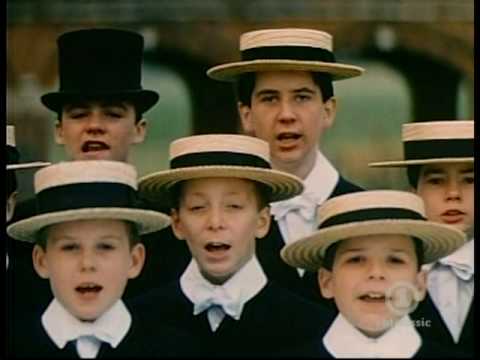
A music teacher walked two dozen pupils down the road to a recording studio without telling his headteacher what they were going to be singing
Alun Renshaw was head of music at Islington Green School in north London, and in 1979 he took a phone call from a recording studio a short walk away. They wanted children. Renshaw supplied them — around two dozen pupils, walked down the road and into a building most of them had never noticed. What he did not do was tell his headteacher what the words were. Margaret Maden found out afterward, like everyone else, when the record came out and the Inner London Education Authority began using the word scandalous in public statements. Speaking to the London Evening Standard decades later, she was still notably unamused about the sequence of events.
Keep watching: Pink Floyd – Money · Pink Floyd – Learning to Fly
Another Brick in the Wall is not one song. It is three, spread across The Wall, Pink Floyd’s eleventh album, and written entirely by Roger Waters. The parts function as a recurring motif rather than a suite — Part 1 runs three minutes and eleven seconds, Part 3 barely eighty seconds, and between them sits Part 2, the only one anybody outside the band’s audience has ever heard. Within the album’s story, each part marks another layer of the protagonist’s psychological barricade going up. Part 1 is a dead father. Part 2 is school.
Waters had been to that school, more or less. His account of English education in the 1950s runs through the album as something closer to prosecution than nostalgia, and Part 2 is where he puts the case most directly. Recording ran from April to November 1979, and what Waters brought to the sessions was skeletal — a verse, a chorus, a fragment of a longer idea. He did not conceive of it as a single. Pink Floyd had not released a UK single since 1968.
The producer who heard a hit
Bob Ezrin did. Ezrin, brought in to produce alongside Waters, Gilmour, and engineer James Guthrie, made two suggestions that the band variously resisted and later benefited from enormously. The first was to build the track on a disco rhythm — an idea that, in 1979, was closer to an insult than a production note when offered to a progressive rock band. The second was to put children on it. Engineer Nick Griffiths carried that one out, which is how Renshaw ended up walking his pupils down the road.
The choir is what makes the record work, and specifically the fact that the voices are untrained and local. The accents are north London. Nobody has smoothed them. A chorus about the failures of schooling delivered by professional session singers would be an argument; delivered by actual schoolchildren from an actual school, it becomes evidence. Waters reportedly disliked the idea until he heard the result, at which point the objection evaporated.
Released as a single in November 1979 with One of My Turns on the reverse, it went to number one in fourteen countries, sold more than four million copies, and finished the year as the UK Christmas number one. It remains the only Pink Floyd single to top the charts in both Britain and America. Margaret Thatcher, then eight months into her first term, is reported to have loathed it, which is roughly the reception Waters would have designed if he had been given a choice.
What the children got
Nothing, for a very long time. The pupils were not signed to anything, not credited individually, and not paid beyond what the school received. No official record of who actually sang on it was ever kept — a detail that only became a problem years later, when a royalties agent named Peter Rowan started trying to find them. A fund had been established in 1997 to compensate session musicians on historic recordings, and Rowan’s argument was straightforward: two dozen children had performed on one of the best-selling singles ever made, and the mechanism to pay them now existed.
Tracking them down took years and was ultimately made possible by Friends Reunited, the early social network that let people find former classmates. Rowan represented Peter Thorpe among others, and the claims succeeded. Former members of the Islington Green choir have received payments since. Renshaw, the teacher who started it, was reprimanded by his superiors and eventually emigrated to Australia. He has never expressed regret about any of it.