


![twenty one pilots: Stressed Out [OFFICIAL VIDEO]](https://musicvideosclub.com/wp-content/uploads/2024/09/twenty-one-pilots-stressed-out-o-360x203.jpg)




Atomic Rooster – The Devil’s Answer
The Hammond Organ, the Empty Stage, and the Darkest Hit Record of 1971
Vincent Crane formed Atomic Rooster with no guitarist because he couldn’t find one he trusted. The original lineup — Hammond organ, bass, drums — had made its live debut at the Lyceum in London in 1969 with Deep Purple as the supporting act, which tells you everything you need to know about where the band was positioned from the very beginning. By the time “Devil’s Answer” arrived in the summer of 1971, Crane had cycled through three lineup configurations, watched his original drummer leave to form Emerson, Lake & Palmer, and navigated the kind of internal turbulence that would have dissolved most bands before their second album. The result of all that upheaval was a Number 4 UK hit — the band’s commercial peak — built around a Hammond organ riff so heavy it sounds like the instrument is threatening you. For a record that dark to go that high in the charts in the summer of 1971 remains one of the more remarkable chart anomalies of the decade.
Released in June 1971 on B&C Records, “Devil’s Answer” entered the UK Singles Chart and climbed to Number 4, outperforming their previous hit “Tomorrow Night” — which had reached Number 11 in February of the same year — by a significant margin. The two hits arrived within months of each other, meaning Atomic Rooster placed two singles in the UK Top 15 in the same calendar year with a lineup that had never fully stabilized. That same year, the band performed at a benefit concert at The Oval cricket ground before 65,000 people, supporting the Faces and The Who. None of it looked remotely like the commercial landscape Atomic Rooster otherwise inhabited. They were the darkest band on the chart. They were also, briefly, one of the most successful.
The song was written by Vincent Crane and John Du Cann — the guitarist whose recruitment had fundamentally reshaped the band’s sound, adding a hard rock muscularity to Crane’s organ-driven compositions that the earlier bass-and-organ lineups had lacked. Du Cann handled guitar and lead vocals on the recording. Crane’s compositional instinct ran consistently toward the minor and the menacing: he had grown up studying classical piano and carried the influence of that training into every chord sequence he wrote, giving Atomic Rooster a harmonic sophistication that most of their hard rock contemporaries never came close to. “Devil’s Answer” uses that sophistication to build a sense of dread that accumulates over the course of the track rather than arriving all at once — the dynamic swells and recedes, the organ grinds and retreats, and the lyric sits deliberately in the space between accusation and confession without resolving cleanly into either.
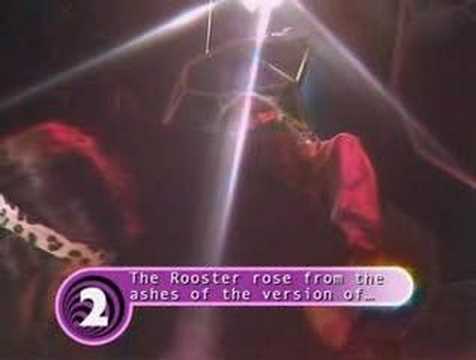
The TOTP2 performance — filmed for the BBC’s Top of the Pops during the single’s chart run in July 1971 — captures a band mid-transformation. Carl Palmer had departed the previous year for Emerson, Lake & Palmer after the band’s debut album, with Ric Parnell filling in temporarily before Paul Hammond was recruited from Farm on drums. The lineup that appeared on Top of the Pops was Crane on Hammond, Du Cann on guitar and vocals, and Hammond behind the kit — a configuration that would itself dissolve within months when Du Cann and Hammond departed over creative disagreements with Crane about the band’s increasingly blues-inflected direction. The TOTP performance exists, therefore, as a document of a lineup that was already ending. Crane, as ever, was the only constant. He was always the only constant.
In Hearing of Atomic Rooster, the 1971 album that contained “Devil’s Answer,” reached Number 18 on the UK Albums Chart — a solid result for a band that had been largely ignored on their first two releases. What happened next to the album’s vocals is one of the stranger footnotes in early 1970s rock history: when Du Cann left after recording, his replacement Pete French re-recorded all of Du Cann’s lead vocal parts and overdubbed them onto the existing tracks. The version released in the United States therefore features French’s vocals throughout, including on “Devil’s Answer” — a decision that Crane authorized and that many listeners consider an artistic error, since Du Cann’s original delivery on the UK version had an edge that the replacement smoothed over. The US pressing is a different record. It sounds like it.
Vincent Crane was the only member who appeared on every Atomic Rooster recording across every configuration of the band from 1969 to 1983. He worked with Arthur Brown, contributed to Dexys Midnight Runners’ Searching for the Young Soul Rebels in 1980, and collaborated with Rory Gallagher and Peter Green in the years between Atomic Rooster’s two active periods. He was hospitalised regularly for bipolar disorder throughout his adult life. He died on February 14, 1989, aged forty-five — Valentine’s Day — from an overdose of paracetamol. John Du Cann died of a heart attack on September 21, 2011. Paul Hammond, the drummer on this performance, died in 1992. Three of the four people in that Top of the Pops studio are gone. The Hammond organ riff that opens “Devil’s Answer” sounds, if anything, heavier now than it did in 1971.
The reformed Atomic Rooster, reconstituted in 2016 with the blessing of Crane’s widow Jeannie and led by guitarist Steve Bolton from the band’s 1970s incarnation, released a reworked version of “Devil’s Answer” in 2020 as a signal of both continuity and intent. The song has earned that kind of permanence. It is the best thing the original band recorded, a record that sits at the exact intersection of progressive ambition and hard rock physicality that the early 1970s British scene occasionally produced and never quite knew what to do with. In 1971, it went to Number 4. The rest of the chart that week presumably had no idea what it was sharing space with.