





![Eric Clapton – I Shot The Sheriff [Crossroads 2010] (Official Live Video)](https://musicvideosclub.com/wp-content/uploads/2026/09/eric-clapton-i-shot-the-sheriff-360x203.jpg)
Village People – YMCA
The Band Didn’t Know The Dance Until American Bandstand
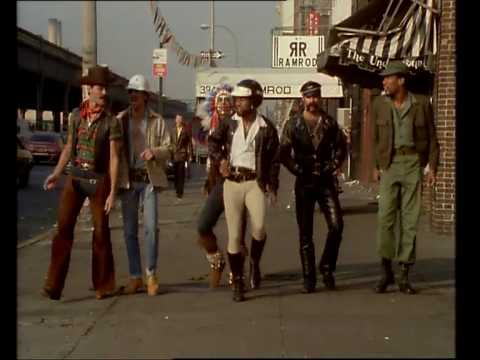
Released in October 1978 from their third studio album Cruisin’, Village People’s “Y.M.C.A.” peaked at number two on the Billboard Hot 100 in early 1979 for three consecutive weeks, topped the UK Singles Chart for three weeks starting January sixth, and sold over twelve million copies worldwide to become one of history’s best-selling singles. The track spent twenty-six weeks on the American chart and became the group’s signature song, later inducted into both the Grammy Hall of Fame and the Library of Congress National Recording Registry. What most fans don’t know is that the iconic hand-gesture dance didn’t come from the group themselves but from the American Bandstand studio audience on January sixth, 1979. The band had choreographed the song with arms thrown in the air during the chorus, but cheerleaders in the crowd interpreted it as “give me a Y” and formed all four letters. When host Dick Clark replayed the song to show them what the audience had done, Victor Willis immediately recognized they’d have to incorporate it into their routine. The other band members stared at him with puzzled looks.
The single entered the Billboard Hot 100 on October fifteenth, 1978, and climbed steadily through autumn and winter. By late January 1979, it reached number two where it remained blocked for three consecutive weeks, first by Chic’s “Le Freak” for one week, then by Rod Stewart’s “Da Ya Think I’m Sexy?” for two more. Despite never reaching number one in America, it spent half a year on the chart and dominated dance floors. In the UK, it hit number one the same day their American Bandstand episode aired and held the summit for three weeks. The song topped charts in Canada, Australia, and throughout Europe. Cash Box praised its layered horn work and strings with bright, soaring chorus, while Record World noted Willis’ commanding lead vocals. The track sold over ten million physical copies worldwide by the nineties and experienced multiple revivals, spending six weeks at number one on the Billboard Dance Electronic Digital Song Sales chart in 2024, forty-six years after release. The song’s enduring popularity at sporting events, weddings, and parties transformed it from disco hit into cultural institution.
Victor Willis recalled that while in the studio, producer Jacques Morali asked him what exactly the YMCA was. After Willis explained it, he saw the expression on Morali’s face and said don’t tell me Jacques, you want to write a song about it. They quickly wrote the track for the Cruisin’ album. Willis maintained he wrote it about his youth hanging out in urban neighborhoods, explaining that hanging out with all the boys was nineteen-seventies Black slang for guys playing basketball together. He insisted he didn’t write it as a gay anthem because of the simple fact he wasn’t gay himself. However, Morali was gay, and the group was initially assembled in 1977 specifically to attract disco’s large gay audience by featuring popular gay fantasy personas. The song’s double meanings weren’t accidental—Willis has acknowledged his fondness for double entendre. Upon release, the YMCA threatened trademark infringement lawsuits but ultimately settled out of court and later expressed pride that the song honored their organization. In 2015, Willis won a legal case confirming he and Morali wrote Village People songs together without executive producer Henri Belolo’s involvement, despite Belolo receiving original credits.
The group recorded the track during 1978 with Jacques Morali producing at various studios. The production began with six bars of a suspended chord over bare disco drums before the brass riff kicked in, backed by the constant pulse that typified disco. Multiple instruments created an overall orchestral feel, though brass dominated the arrangement. Willis handled lead vocals while professional background singers provided harmonies. The song’s structure played in G-flat major at a moderate tempo designed for dance floors. French producers Morali and Henri Belolo had assembled Village People in 1977 after placing trade ads reading “Macho Types Wanted: Must Dance and Have a Mustache.” The six costumed members—police officer, construction worker, cowboy, soldier, Native American chief, and leather-clad biker—represented gay fantasy archetypes. The group made their debut on February twenty-eighth, 1978, at Brooklyn’s Odyssey nightclub from Saturday Night Fever. The crowd of men in white polyester John Travolta suits initially seemed skeptical before the twelve animated performers won them over.
Cruisin’ followed their 1977 eponymous debut and 1978’s Macho Man, which had given them their first modest hit. The success of this track transformed Village People from niche disco act into international phenomenon. The album showcased their evolution from targeting exclusively gay audiences toward mainstream appeal, though the double meanings remained for those who understood them. Beyond this track, Cruisin’ featured “The Women,” a B-side celebrating camp heroines of screen and disc. Billboard called the album another example of their droll humor, playing off gayness with hard hat themes. Robert Christgau admitted in his 1981 guide that he’d never been capable of resisting music this silly, noting the gay stereotyping was so cartoonish nobody could take it seriously. As for all the straights who thought it was about playing basketball, well, that was pretty funny too. Their next album spawned “In the Navy,” which reached number three, and by 1980’s Can’t Stop the Music film soundtrack, they’d become arena-filling sensations before disco’s collapse ended their reign.
The American Bandstand appearance created the dance sensation that ensured the song’s immortality beyond disco’s death. Willis learned the movements on camera, incorporating them immediately while other members looked confused. The band began teaching audiences proper form—the M is made by touching fingernail tops in front of the chest, and the C should point left so onlookers can read it correctly. The dance became ubiquitous at sporting events, particularly baseball games where it’s played between innings. For years, the Yankee Stadium grounds crew led the crowd in the dance during fifth-inning breaks before replacing it with other songs. The song appeared in countless films and commercials, endured multiple remixes and reissues, and became Donald Trump’s rally anthem despite its gay origins creating controversy. The group performed at sporting events worldwide, with the dance transcending language barriers. In 2020, the Library of Congress called it an American phenomenon, noting disco has never truly died as long as this song keeps playing.
“Y.M.C.A.” stands as disco’s most enduring legacy and proof that great hooks transcend their origins to become something bigger than their creators intended. Willis’s quote about seeing Morali’s expression and knowing immediately what was coming captures the spontaneous creativity that defined disco’s best moments. The fact that the signature dance came from cheerleaders rather than choreographers demonstrates how audiences sometimes understand songs better than artists do, recognizing instinctively what the music demands. What began as a coded message to gay men about cruising spots became a wedding staple beloved by everyone, with most participants blissfully unaware of its double meanings. Five decades later, those four letters formed by raised arms still fill dance floors worldwide, testament to how the right song at the right moment can unite everyone regardless of who they’re hanging out with or why. The irony that straight audiences embraced it so completely without getting the joke proves Christgau was right—that is pretty funny too.
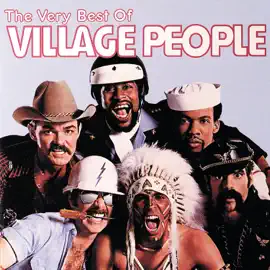
“Y.M.C.A.” – Single by Village People from the album Cruisin’
B-side: “The Women”
Released: October 17, 1978
Recorded: 1978
Studio: Sigma Sound, New York City
Label: Casablanca
Songwriters: Jacques Morali, Victor Willis, Henri Belolo
Producer: Jacques Morali
Charted No.2 in US and No.1 in UK
Related videos
 Watch LaterAdded
04:48
Watch LaterAdded
04:48  Watch LaterAdded
05:28
Watch LaterAdded
05:28  Watch LaterAdded
02:46
Watch LaterAdded
02:46