




![Eagles – One of These Nights (Live 1977) (Official Video) [4K]](https://musicvideosclub.com/wp-content/uploads/2025/07/eagles-one-of-these-nights-live-360x203.jpg)
![OneRepublic – Give Me Something (for Arknights Endfield) [Official Music Video]](https://musicvideosclub.com/wp-content/uploads/2025/12/onerepublic-give-me-something-fo-360x203.jpg)
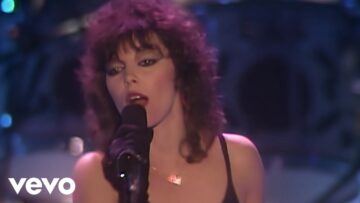

Ratt – Lovin’ You’s a Dirty Job
The Sunset Strip’s Last Stand — Brought to You by the Man Who Wrote “Livin’ on a Prayer”
By the summer of 1990, the ground under the Sunset Strip had been shifting for two years and almost nobody in the Ratt camp was acknowledging it publicly. Grunge was assembling itself in Seattle. Nirvana’s debut was already a year old. The machinery of hair metal — the production budgets, the MTV rotation slots, the arena tour infrastructure — was still running, but the cultural current underneath it had changed direction. Into this environment, Ratt released “Lovin’ You’s a Dirty Job” as the lead single from Detonator in August 1990, and the choice it represented was unambiguous: rather than harden back to the raw Sunset Strip sound of Out of the Cellar, they had brought in Desmond Child — the songwriter behind “Livin’ on a Prayer,” “I Was Made for Lovin’ You,” and “Dude (Looks Like a Lady)” — co-written ten of the album’s eleven tracks with him, and made the most commercially structured record of their career. It was an attempt to stay relevant by hiring the most relevant hitmaker available. It reached Number 18 on the Mainstream Rock chart. The album went Gold. Every previous Ratt album had gone Platinum or better. The math told the whole story.
“Lovin’ You’s a Dirty Job” — its full title, “Loving You’s a Dirty Job but Somebody’s Gotta Do It,” shortened for the single pressing — was co-written by Stephen Pearcy, Warren DeMartini, Juan Croucier, and Child, and produced by Child alongside engineer Arthur Payson. It reached Number 18 on the Billboard Mainstream Rock Tracks chart, spending several weeks on the listing but falling well short of the crossover Hot 100 presence the label had hoped for. Detonator itself debuted at Number 64 on the Billboard 200 and peaked at Number 23, going Gold — a result that, against the backdrop of three consecutive Platinum albums, was processed by the industry as a commercial failure regardless of its absolute numbers. The power ballad “Givin’ Yourself Away,” co-written with Diane Warren, reached Number 39 on the Mainstream Rock chart as the follow-up single. Jon Bon Jovi appeared as a background vocalist on album track “Heads I Win, Tails You Lose.” Michael Schenker contributed guitar. None of it moved the needle the way Atlantic needed it to.
Child’s involvement was the defining fact of the record’s creative identity — something both celebrated and resented, depending on which member of the band was speaking and in what year. Pearcy told Songfacts that stepping outside their own writing was a deliberate decision: “Piecing together these songs that aren’t really hard-rock/metal/Hollywood/Sunset Strip trips from the ’80s, we step outside the box. With Desmond, we got some great songs. There’s a lot of Desmond in there lyrically.” What that Desmond-ness provided was structural — the kind of melodic architecture and chorus construction that Child had been deploying since the early 1980s, the trademark harmonic layering that had turned Bon Jovi and Aerosmith and Kiss records into radio events. For a band whose self-produced records had been driven by DeMartini’s guitar intuition and Pearcy’s Sunset Strip persona, the collaboration was a genuine stretch. The result sat in an unusual commercial space — too polished for the band’s hardcore following, too rock for the pop crossover audience Child usually delivered.
Recording took place at Lion Share Recording Studios and Music Grinder Studios in Los Angeles during late 1989 and early 1990. The album credit lists the classic Ratt lineup — Pearcy, DeMartini, Robbin Crosby, Juan Croucier, and Bobby Blotzer — but the sessions themselves told a different story. Crosby’s heroin addiction, which had been quietly worsening since the mid-1980s, had by this point severely limited his participation in the recordings. His rhythm guitar and backing vocal contributions were present but reduced — the man whose writing partnership with Pearcy had launched the band’s original identity now operating at the margins of sessions he could barely sustain. Nobody announced this publicly. The album presented the full lineup in its credits and on its cover as if everything was normal. Pearcy later said it plainly: “As far as I’m concerned, the band didn’t exist without Robbin.” In August 1990, the public-facing version of the band had Robbin. The sessions had told a different story for months.
Detonator was the last album the original Ratt lineup would ever make together. The Detonator tour began promisingly and then unraveled in Japan in February 1991, where Crosby’s deteriorating condition made seven shows an exercise in managed crisis. His guitar technician made a tuning change during a Japanese performance; Crosby failed to switch instruments, played two songs out of tune with the rest of the band, and the gap between the functioning musician on the record and the man on the stage became impossible to ignore privately. His last show with Ratt was in Osaka. When the band returned to the United States, Crosby checked into rehab and Michael Schenker stepped in for the American dates. Pearcy left in February 1992. The classic lineup was over.
Robbin Crosby was diagnosed HIV-positive in 1994. He died on June 6, 2002, of a heroin overdose, aged forty-two. His last television interview was on VH1’s Behind the Music, where he told the camera: “Don’t feel sorry for me. Don’t cry for me at my funeral. I’ve lived the life of ten men. I’ve been very lucky.” The music video for “Lovin’ You’s a Dirty Job” — women in gas masks, the band performing around a mannequin, the full visual language of a genre beginning to feel like a parody of itself — captured the moment with an unintentional accuracy that the people making it could not have appreciated at the time. This was the last frame of the original story. Everything after it was revision.
![Dead Or Alive – You Spin Me Round (Like a Record) [Live In Japan]](https://musicvideosclub.com/wp-content/uploads/2025/10/dead-or-alive-you-spin-me-round-360x203.jpg)