


![Paul & Linda McCartney – Uncle Albert / Admiral Halsey [High Quality]](https://musicvideosclub.com/wp-content/uploads/2025/09/paul-linda-mccartney-uncle-alber-360x203.jpg)
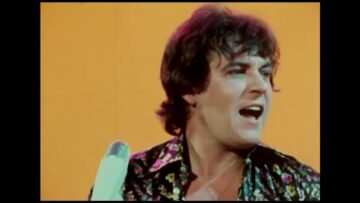
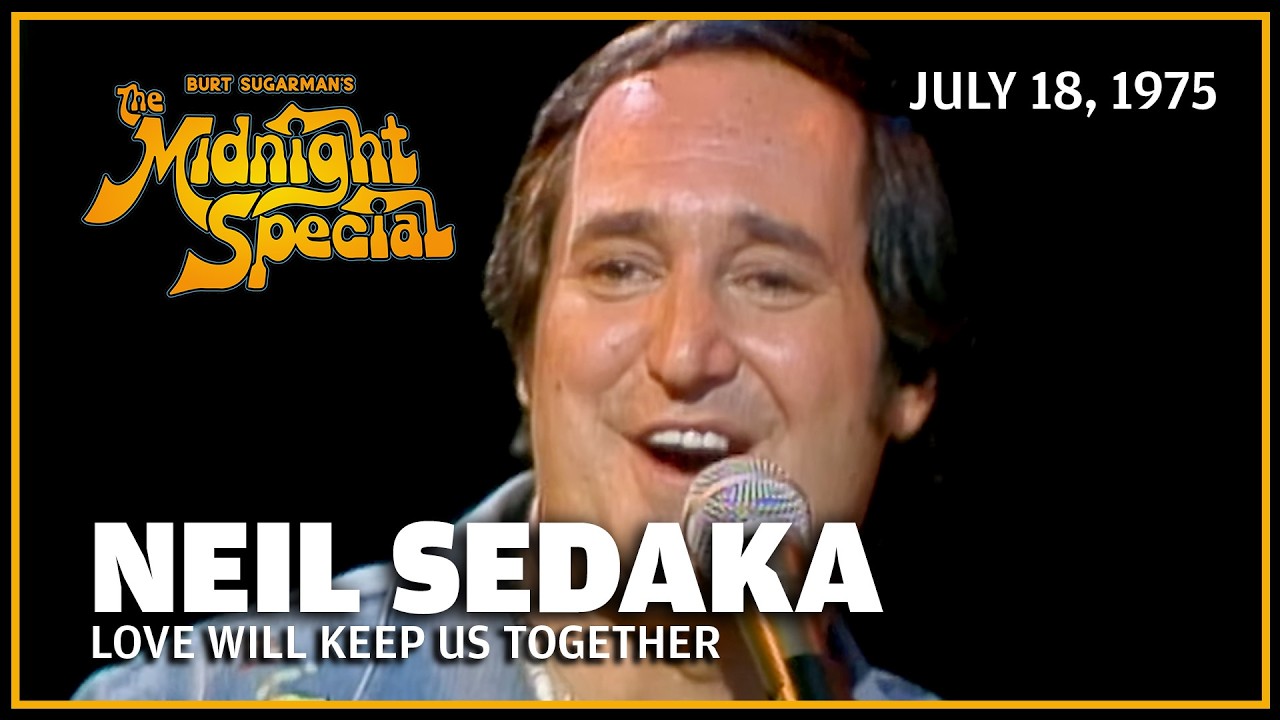
Neil Sedaka – Love Will Keep Us Together
The Night Sedaka Stood on Stage Next to the People Who’d Stolen His Own Hit
By the time Neil Sedaka walked onto the set of The Midnight Special on July 18, 1975, “Love Will Keep Us Together” had already spent four weeks at number one on the Billboard Hot 100 — and it wasn’t his record. Captain & Tennille owned that chart position. But Sedaka was there that night not merely as a guest, not merely as a songwriter collecting his royalties, but as co-performer — joining Toni Tennille on the song he and Howard Greenfield had written two years earlier in circumstances that suggested nobody would ever hear it. To watch the performance is to witness one of the stranger, warmer handshakes in pop music history: the man who wrote the hit sharing a stage with the duo who’d turned it into the defining single of an entire year.
The Midnight Special was the right room for this moment. NBC’s late-night music series — airing in the small hours of Saturday morning after The Tonight Show — had become the essential TV stage for acts who were either breaking fast or reinventing themselves. Helen Reddy had just taken over as the show’s regular host at the start of that month, and the July 18 episode placed Sedaka in the role of guest host, giving him a platform that matched the scale of what was happening to his career in real time. The song was number one. His name was being spoken in the same breath as the era’s biggest pop acts. For a man who had gone nearly twelve years without a US Top 40 hit, the setting was almost surreally appropriate.
The performance itself is a document of shared generosity. Sedaka and Tennille trade lines, overlap on the chorus, and — in the song’s famous outro — Tennille reprises the ad lib she had improvised in the recording studio: “Sedaka is back.” The phrase had first appeared on the Captain & Tennille record as a spontaneous tribute, something Tennille threw into her backing vocal session without prompting. Hearing it sung live, in Sedaka’s own presence, by the woman whose recording had made it a slogan, carries a charge that a purely studio experience cannot replicate. They also performed “The Hungry Years” together that evening — a duet that Tennille later called the favourite she ever sang with him.
The backstory of the song deepens the performance. Sedaka wrote the melody with Diana Ross in mind, though it never reached her. He and Greenfield built the chord structure partly on a progression lifted from “Do It Again” by The Beach Boys — Daryl Dragon, The Captain, had of course spent years as The Beach Boys’ keyboardist — and layered in augmented chords drawn from Al Green. Greenfield wrote the lyric as one of the very last things he and Sedaka would create together; they had reluctantly agreed to end their partnership because their songs were no longer selling. The result was a song written at the supposed close of a collaboration, which then became one of the most performed compositions in American pop history. The melody written for one artist, the chord sequence borrowed from another, and the lyric composed in an act of artistic farewell — and yet what emerged was irresistibly, unforgettably alive.
By July 18, 1975, Sedaka’s return from the commercial wilderness was already staggering in its completeness. He had moved his family to England during the lean years, found a UK audience still willing to listen, and eventually caught the attention of Elton John — who signed him to Rocket Records. Sedaka’s Back, the 1974 compilation that first introduced his new material to American ears, had delivered “Laughter in the Rain” to number one in February 1975. The Captain & Tennille’s recording of “Love Will Keep Us Together” hit number one in June. He would return to the top again in October with “Bad Blood,” which featured an uncredited Elton John on harmonies. In the space of nine months, Sedaka occupied the top position on the Billboard Hot 100 three times — twice as a performer, once as composer. No one in Nashville or New York had seen a comeback quite like it.
The Midnight Special appearance crystallized something that the record alone couldn’t fully communicate: that the “Sedaka is back” celebration was not merely promotional goodwill. Toni Tennille didn’t invent that phrase in the studio out of obligation. She meant it — and she was right. The Grammy for Record of the Year that Captain & Tennille collected in February 1976 came with a Song of the Year nomination for Sedaka and Greenfield, recognising that a great song and a great recording are different achievements and that both deserved acknowledgement. The performance on July 18 stood at the exact intersection of those two truths: the writers who had constructed something extraordinary, and the artists who had known what to do with it.
Neil Sedaka died on February 27, 2026, at the age of 86 — a songwriter who had placed his name on over 500 songs across more than six decades and lived to see most of them outlast every trend that had once threatened to make them obsolete. “Love Will Keep Us Together” remains the song most people think of first. But the July 18, 1975 Midnight Special performance is where you see what it actually meant to him in the moment it was happening — a man at the piano, sharing a stage with the duo that had taken his song to the top of the world, singing his own lyrics back to himself in front of a country that had finally decided to pay attention again.