







![Madonna – Open Your Heart (Official Video) [HD]](https://musicvideosclub.com/wp-content/uploads/2026/01/madonna-open-your-heart-official-360x203.jpg)

Cutting Crew – (I Just) Died In Your Arms
Nick Van Eede Said the Phrase Out Loud During a One-Night Reunion with His Ex. He Wrote It Down Immediately. Three Days Later It Was a Demo. Twelve Months After That, It Was Number One in America.
The first US number one of Virgin Records’ history came out of a single sentence said in the wrong bed. In late 1985, the English songwriter Nick Van Eede had spent a year apart from his ex-girlfriend — the mother of his daughter — and the two had reunited for one night that neither of them quite knew what to do with. There were, as he later put it, fireworks, but the entire night was tinged with the feeling of should I really be doing this? At some point during it, he uttered the phrase that would title and define the rest of his working life. Awake the next morning, he wrote it in a notebook before he had even finished thinking about what it meant. Within an hour he had the basic lyrics. Within three days he had a four-track demo. Twelve months after that, on May 2, 1987 — exactly thirty-nine years ago this week — (I Just) Died in Your Arms sat at number one on the Billboard Hot 100, where it stayed for two weeks and gave Richard Branson’s Virgin Records its first American chart-topper after fifteen years of trying.
The lyric carries the song’s whole moral architecture in its second line. I should have walked away: the explicit acknowledgment that the night the song describes was a mistake, written into the song itself by the man it was a mistake for. The title trades on a piece of literary code older than rock and roll — la petite mort, the French euphemism for orgasm as a kind of small dying — but the verses around it are not really about sex. They are about the moment when a person realizes the relationship they walked back into is the same relationship they walked out of, and that they are about to do the leaving over again. It is a power ballad pretending to be a celebration of intimacy, and is in fact a song about ambivalence. That contradiction is most of what makes it work.
From a Sussex Notebook to George Martin’s Studio
Van Eede had spent most of the previous decade trying to make a living from music without quite managing it. He had been discovered as a teenager by Chas Chandler, the former Animals bassist who had managed Jimi Hendrix and Slade, while playing a pub gig in East Grinstead. He had toured Poland at eighteen as a Slade support act. He had released five solo singles on Barn Records between 1978 and 1980, none of which charted. He had spent the early eighties fronting a band called the Drivers, which had moderate Canadian success but never broke. By 1985 he was twenty-seven, back in England, and forming a new band with Canadian guitarist Kevin MacMichael, whom he had met on tour. They named themselves Cutting Crew after a phrase in the British music magazine Sounds describing Queen as a band that had stopped touring and was only cutting records in the studio. The other two members — bassist Colin Farley, drummer Martin “Frosty” Beedle — joined in 1986. They recruited a bassist, a drummer, and a recording contract from Virgin’s Siren imprint within months of forming. The song that won them the deal was already written.
The album sessions for Broadcast began at MediaSound in New York at Virgin’s request, with Terry Brown producing. The vocal for (I Just) Died in Your Arms was recorded at Sir George Martin’s AIR Studios in London, with Martin himself sitting in the control room watching. Van Eede has said since that even with the Beatles’ producer in the room, he was still “predisposed to failure” — the conditioning of seven years of near-misses had made him assume the worst until something physical happened to contradict it. The mixing was done at Utopia Studios in London by Tim Palmer. MacMichael’s guitar work on the song became one of his most quietly admired arrangements: a series of overdubbed layers that, in his own description, gave the track a “lush cacophony,” with Van Eede laying down approximately eight tracks of guitar himself before MacMichael went in to remove the unsuitable layer that was throwing off the mix. The backing vocals were sung in a single five-minute take by Pete Birch, Van Eede’s former landlord. On the final day of mixing, Van Eede deliberately slowed the tempo down to make the record feel more like rock and less like pop. The decision turned out to define the recording.
The Slow-Burner That Became Virgin’s First American Number One
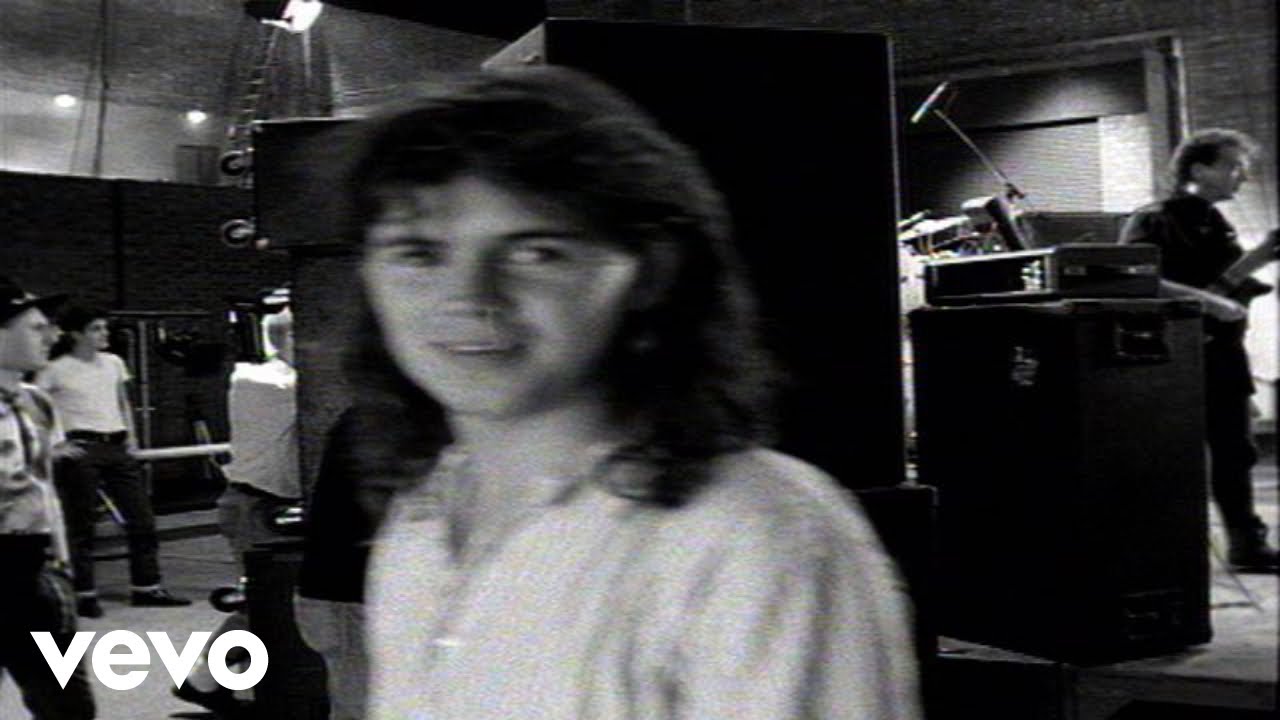
Released in the UK on July 25, 1986, the single first appeared at number 96 in the British charts, then climbed steadily through the summer to peak at number four in early September. The American release came on January 1, 1987 — by which point Cutting Crew had already been flown to Australia by Virgin to shoot a music video, and the band had performed the song on Wogan in Britain and Top of the Pops in front of camera crews who were not yet sure who they were. The American chart climb was slower than the British one. The song made its Hot 100 debut in early March, climbed for two months, and reached number one the week of May 2, 1987, where it stayed for two weeks. It hit number one in Canada and in nineteen countries worldwide. It also reached number four on the Mainstream Rock chart, number 24 on Adult Contemporary, and — in an extended remix — number 37 on the Hot Dance/Club Play chart. No song had ever crossed all four formats so cleanly that year. Cutting Crew were nominated for the Grammy Award for Best New Artist of 1987 and lost to Jody Watley. Their second American single, I’ve Been in Love Before, reached number nine on the Hot 100 later that fall.
Kevin MacMichael — the Canadian guitarist whose arrangement work made the song what it was — would die of lung cancer in Halifax, Nova Scotia, on December 31, 2002, at the age of fifty-one. He had spent the years after the band’s 1993 dissolution playing on Robert Plant’s 1993 solo album Fate of Nations. Van Eede has continued to perform under the Cutting Crew name with rotating lineups, has released several further studio albums, and produced the original demo of Cher’s Believe. He auditioned to replace Phil Collins as the lead singer of Genesis in 1996, losing out to Ray Wilson. By 2021, BMI had certified (I Just) Died in Your Arms as having received over six million plays on American radio. It has appeared in Never Been Kissed, Hot Tub Time Machine, The Lego Batman Movie, and Stranger Things. It will, almost certainly, outlive everyone who worked on it. Van Eede said in 2024 that he has long since accepted he will be known for one song forever. He said it in the tone of a man who has made his peace with the math.