


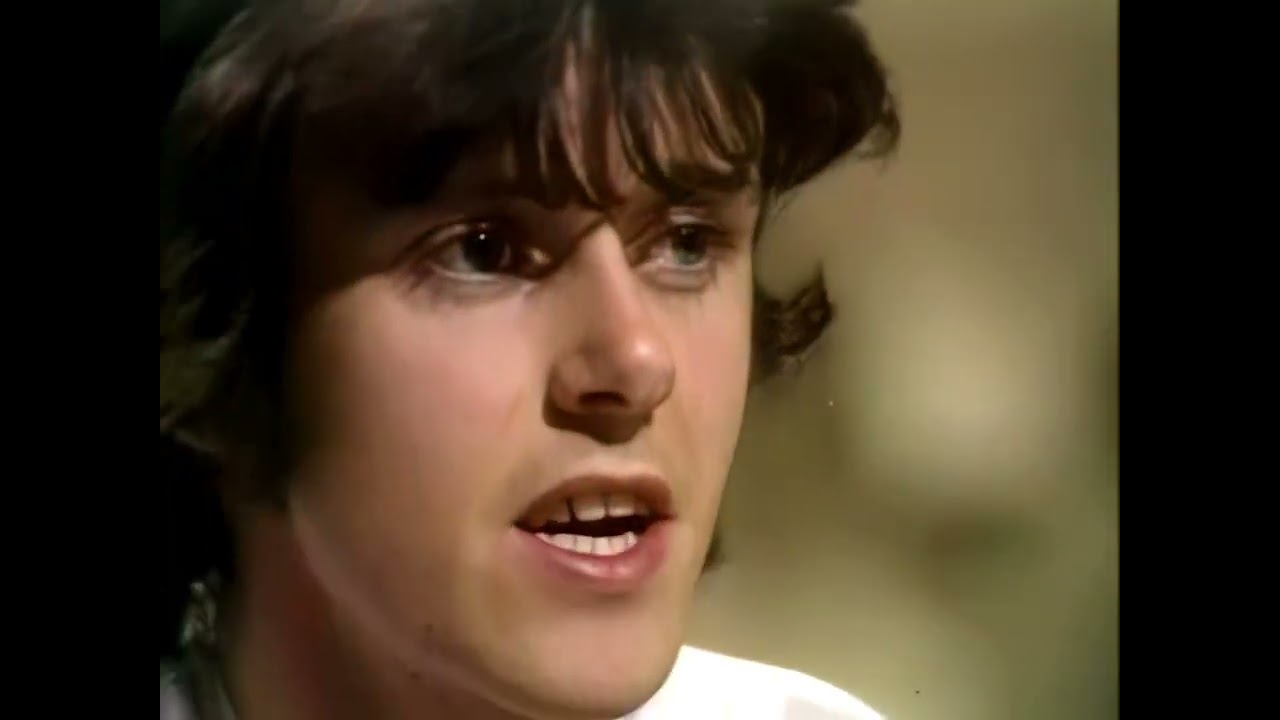
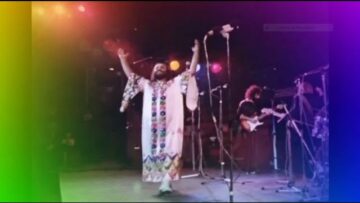
Donovan – Hurdy Gurdy Man
He Wrote It in Rishikesh on a Tambura George Harrison Had Given Him. He Originally Wanted to Give the Song to His Old Guitar Mentor. Then He Wanted to Give It to Jimi Hendrix. Mickie Most Flipped Out and Insisted Donovan Record It Himself. Whether Jimmy Page Played Guitar on It Is the Argument That Has Outlasted Half a Century.
Donovan was in Rishikesh, India, in February 1968, sitting in the ashram of Maharishi Mahesh Yogi, when he started writing Hurdy Gurdy Man. He had travelled to the retreat with the Beatles, Mike Love of the Beach Boys, Mia Farrow, and Mia’s sister Prudence Farrow — the small cohort of Western artists who had committed to studying Transcendental Meditation in person. George Harrison had brought Indian instruments to the ashram. Among them was a tambura — the four-stringed Indian drone instrument used to sustain the harmonic foundation of classical raga performance — which Harrison gave to Donovan as a gift. The two musicians spent time discussing the sitar scales Harrison had been studying with Ravi Shankar. Donovan, working out a song on the new instrument, found the drone unlocked something. “With the drone of the tambura on the song,” he later said, “I had created Celtic rock.” The song he wrote in Rishikesh was about a figure he could not entirely explain — the hurdy gurdy man of the title, a wandering musician arriving in the narrator’s dreams, accompanied by a “roly poly man,” singing songs of love into “histories of ages past” and the “crying of humanity through all eternity.” George Harrison contributed an additional verse: “When the truth gets buried deep, beneath a thousand years asleep, time demands a turnaround, and once again the truth is found.” That verse was never used on the released single. Donovan would perform it live for years afterwards in extended concert versions of the song.
Donovan had not, originally, intended to record the song himself. He had written it for his old friend and guitar mentor Mac MacLeod, the Scottish folk guitarist who had taught Donovan the finger-picking techniques that defined his early career. MacLeod had formed a power trio in Denmark called Hurdy Gurdy. Donovan thought the song would suit them. He sent MacLeod the demo. MacLeod’s band recorded a version. The version came back heavy-rock. Donovan had wanted the song light and acoustic. He listened to MacLeod’s recording, decided it was not what he had heard in his head, and pulled the song back. His next instinct was to give it to Jimi Hendrix. He had seen Hendrix play at London’s Bag O’Nails club at the Jimi Hendrix Experience’s debut performance the previous October. Donovan had been transfixed. He wanted Hendrix to record the song. He suggested it to producer Mickie Most. Most, by Donovan’s later account, “flipped out” when he heard the demo. He told Donovan that the song was the next single. There would be no Hendrix recording. Donovan was going to do it himself. The session was booked for April 3, 1968, at CBS Studios in London.
The Session, the Personnel, and Half a Century of Argument
The producer was Mickie Most, the Yorkshire-born British impresario who had produced the Animals’ House of the Rising Sun, Lulu’s To Sir, with Love, and the entirety of Donovan’s commercial breakthrough catalogue including Sunshine Superman and Mellow Yellow. The engineer was Eddie Kramer, the South African-born studio engineer who would within months be working on Hendrix’s Electric Ladyland and would later engineer for Led Zeppelin and the Rolling Stones. The arranger and musical director was John Paul Jones — the future Led Zeppelin bassist and one of London’s most-booked session players. Jones also booked the session musicians. The lineup of those musicians, however, has been the subject of one of the most-contested arguments in 1960s rock history.
Donovan has said, in interviews stretching across five decades and most recently in an October 2025 conversation with the British press, that the session featured Jimmy Page on lead electric guitar — and that the recording effectively anticipated heavy metal. “John Paul Jones and Jimmy Page were very strong session guys for me,” Donovan told The Telegraph. “At that period when ‘Hurdy Gurdy Man’ was released, that’s when those two guys put the band together. Is it possible that this anticipated heavy metal? After that came Black Sabbath, and after that came Deep Purple.” He has also said over the years that John Bonham played drums and that Allan Holdsworth contributed additional guitar — a claim that, when scrutinised by music historians, has fallen apart. Bonham did not meet John Paul Jones until two years after the session. Holdsworth was sixteen years old in 1968, an unknown amateur not yet recording professionally. Jimmy Page has himself denied involvement: “I know it’s rumored that I played on that. But I didn’t. I heard about this story actually when I was in USA, it was about the time we were talking about the deal with Led Zeppelin.” John Paul Jones, who as the session’s musical director and bass player would have personally seen everyone present, made what is widely treated as the definitive statement in 2005: “I would like to confirm that the musicians on the record were as follows: Donovan, acoustic guitar; John Paul Jones, arrangement, musical director, and bass guitar; Alan Parker, lead electric guitar; Clem Cattini, drums. No other musicians were involved in this session.” Engineer Eddie Kramer has variously confirmed Page’s presence in some sessions while specifying that Cattini, not Bonham, played drums. Jeff Beck, by Page’s own account, recorded a guitar take that was wiped before the final mix. The most likely truth, sifting fifty-eight years of overlapping testimony, is that Alan Parker played the electric guitar on the released single — with Donovan’s autobiographical insistence on Page being a piece of biographical wishful thinking that Donovan himself may believe.
The Recording and What It Did
What was on the tape was, regardless of which guitarist played it, a recording with a sound nothing like the rest of Donovan’s catalogue. The opening Indian-drone tambura had been Donovan’s idea. The fuzzed-out distorted electric guitars layered over it were the late-1960s heavy rock instrumentation that Sunshine Superman and Mellow Yellow had not used. The bass was prominent in the mix, walking under the guitar parts in the kind of melodic-bass register Jones would soon be defining for Led Zeppelin. The drumming was thunderous. Donovan’s vocal — multi-tracked, treated with reverb, sung in a measured intoning style — sat front and centre, the storyteller of the dream-vision delivering a lyric that was either Celtic mysticism, drug-influenced reverie, or both at once. The recording opens on the tambura drone, climbs into the guitar riff, builds across two verses and choruses, and closes on layered vocal echo. It runs three minutes and twenty-three seconds.
The single was released by Pye Records in the United Kingdom in May 1968 and by Epic Records in the United States in June. It reached number four on the UK Singles Chart and number five on the Billboard Hot 100. The album of the same name followed in October — released in the United States but, unusually for Donovan, not in the United Kingdom. Both Donovan’s earlier hits Jennifer Juniper and the title track were on the LP. The album peaked at number twenty on the Billboard 200. Hurdy Gurdy Man was certified Gold by the RIAA. It became one of Donovan’s most-recognised recordings — and, by a margin that has only widened over the decades, the song most associated with him in popular memory.
The song’s afterlife has been substantial. The Beastie Boys sampled the drum break in What Comes Around on their 1989 album Paul’s Boutique and referenced the song’s title in their track Car Thief on the same record — a connection sealed by family: Donovan’s daughter Ione Skye was married to Beastie Boy Adam Horovitz from 1992 to 2000. The Butthole Surfers’ 1990 cover became one of the song’s most-covered alternative-rock readings and was used in the 1994 film Dumb and Dumber. Donovan’s original recording opens David Fincher’s 2007 film Zodiac, where its eerie warmth becomes the film’s signature mood. It also appears in Children of Men. Donovan remains, as of 2026, the only artist of his generation to claim — without irony — that he may have inadvertently invented heavy metal in a London recording studio one day in April 1968. Whether or not Jimmy Page was actually in the room, the song was the bridge between Donovan’s late-folk catalogue and the rock direction British music was about to take. The hurdy gurdy man arrived in dreams singing songs of love. The session he was conjured for, by the most charitable possible reading, conjured something else into existence on the way out.
![Andrea Bocelli – Je Vis Pour Elle (feat. Kendji Girac) [Official Music Video]](https://musicvideosclub.com/wp-content/uploads/2025/09/andrea-bocelli-je-vis-pour-elle-360x203.jpg)