


![Stevie Nicks – Stop Draggin My Heart Around (Official Video) [HD Remaster]](https://musicvideosclub.com/wp-content/uploads/2025/09/stevie-nicks-stop-draggin-my-hea-360x203.jpg)
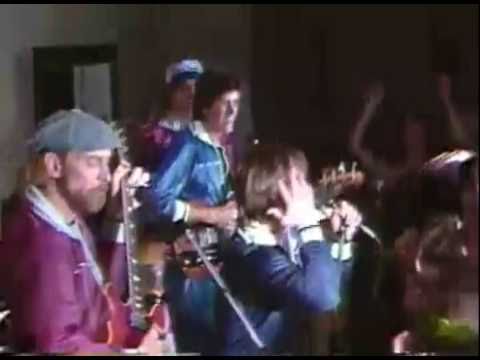
Louie Louie – The Kingsmen at The Delta House – 1983
Recorded For Fifty Bucks After A Ninety-Minute Marathon
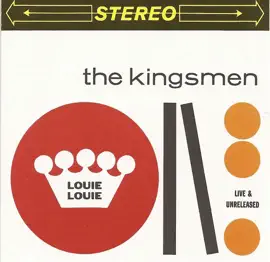
Released in May 1963 on the tiny Jerden Records label, “Louie Louie” became one of rock and roll’s most enduring classics, peaking at number two on the Billboard Hot 100 for six non-consecutive weeks beginning December 14, 1963 and spending sixteen weeks on the chart total. The single also hit number one on the Cash Box and Music Vendor charts, number one on the Cash Box R&B chart, and topped the Canadian charts for three weeks starting December 30. What audiences trying desperately to decipher Jack Ely’s slurred vocals didn’t realize was that the Portland, Oregon garage band had recorded the track in a one-hour session on April 6, 1963 at Northwestern Inc. studio for somewhere between thirty-six and fifty dollars, and only the day before had played a ninety-minute Louie Louie marathon at a local gig. The entire recording was originally intended as a demo tape for a summer cruise ship audition, not a national hit.
The song entered the Hot 100 at number eighty-three on November 2, 1963 and climbed steadily through November and December before peaking at number two, kept from the summit only by The Singing Nun’s “Dominique” and Bobby Vinton’s “There! I’ve Said It Again.” Some sources claim it far outsold both records but was denied Billboard’s top spot due to lack of proper decorum, a reference to the obscenity controversy that engulfed the single. By April 1964, the track had sold over one million copies in the United States alone. The record was then reissued and promoted by larger label Wand Records, helping it compete against the British Invasion that was sweeping America. The Kingsmen were suddenly appearing alongside the Rolling Stones, Kinks, Beatles, and other British acts while charting thirteen singles between 1963 and 1968, with their follow-up “The Jolly Green Giant” reaching number four in 1964.
The song itself was written by R&B singer Richard Berry in 1955 and recorded with his group The Pharaohs in 1957, based on the tune “El Loco Cha Cha” popularized by bandleader René Touzet. Berry’s original told the first-person story of a lovesick sailor’s lament to a bartender about wanting to get back home to his girl after sailing to Jamaica. The Kingsmen lifted their arrangement from The Wailers, a Seattle band featuring Rockin’ Robin Roberts who had recorded a popular version in 1961 that became a regional hit in the Pacific Northwest. Ken Chase, a local radio personality at KISN in Portland, booked the Kingsmen for that hour-long April 6 session after seeing them perform the song live. They recorded “Jamaica Farewell,” one partial and one full take of “Louie Louie,” and “Haunted Castle” during that abbreviated session, with vocalist Ely forced to lean back and sing to a microphone suspended from the ceiling because the three-microphone setup wasn’t designed for a full band with vocals.
It was more yelling than singing, Ely explained, because I was trying to be heard over all the instruments. Adding to the vocal challenges, he was wearing braces at the time of the performance, further compounding his infamously slurred words. Guitarist Mike Mitchell delivered what would become one of the most famous guitar solos of all time, with Guitar Player magazine calling it raw, lightning-fast, and loud, noting its unbridled energy helped set the template for garage rock and later hard rock guitar. The sloppy, urgent quality captured during that rushed session became the track’s greatest asset rather than a liability. Engineer Robert Lindahl worked with producer Ken Chase to capture the performance on the studio’s basic equipment, recording at Northwestern Inc.’s facility at 411 SW 13th Avenue in Portland. The total cost was split among band members, making it one of the cheapest recordings to ever top the charts. An audible profanity when drummer Lynn Easton dropped a stick mid-performance somehow escaped the FBI’s thirty-month investigation into allegedly obscene lyrics.
The single was released on Jerden Records, a small local label, with “Haunted Castle” as the B-side, though later pressings changed the B-side to “Little Green Thing.” Wand Records picked up distribution rights and reissued it nationally, with the track appearing on the band’s debut album The Kingsmen in Person, a live recording from November 15 and 16, 1963 at The Chase nightclub in Milwaukee, Oregon that cost less than eight hundred dollars to produce. However, singer Jack Ely and bassist Bob Nordby had quit the group before those live recordings, creating the bizarre situation where the album’s liner notes presented an abridged history with no mention of Ely or Nordby, instead showcasing drummer Lynn Easton as the group’s sole founder. A settlement in 1964 gave Easton the rights to the Kingsmen name but required all future pressings of the original “Louie Louie” to display “Lead vocal by Jack Ely” on the label. Two rival editions of the Kingsmen, one featuring Ely and another with Easton, competed for live audiences across the country throughout the sixties.
The obscenity controversy began when an unidentified college student made up obscene verses for the song and sold them to fellow students, sparking rumors that spread nationally. Radio stations in Indiana and other states banned the record, which of course stimulated even more interest and sales. The FBI launched a thirty-month investigation, following the band across the country and attempting to decipher the unintelligible lyrics by slowing down the recording from forty-five RPM to thirty-three RPM. The bureau’s final conclusion was simply unintelligible at any speed, unable to determine whether obscenity existed. A particularly ironic detail emerged decades later when fans pointed out the clearly audible profanity from the dropped drumstick that investigators somehow missed. The controversy cemented the song’s legendary status and helped drive sales far beyond what a simple garage rock track might have achieved on musical merit alone.
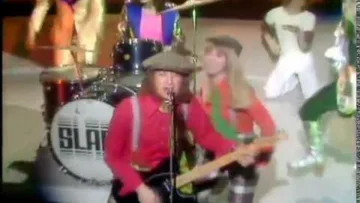
“Louie Louie” became indelibly linked with the 1978 film National Lampoon’s Animal House, even though the movie is set in 1962 and the Kingsmen’s version wasn’t released until 1963. The film featured the track during a memorable hazing scene where John Belushi’s Bluto Blutarsky and the Delta House brothers sing along boozily while initiating new pledges. That exposure introduced the song to an entirely new generation and helped spark what became known as the Louie Louie revival. In 1983, two decades after the original recording, the Kingsmen created a special music video shot at a Delta House set as a tribute to the Animal House phenomenon that had partially revived their career. The video featured lead singer Freddie Dennis, who was with the band from 1972 to 1984, performing in a fraternity house setting with all the beer-soaked, toga-wearing chaos that the film had immortalized, creating a full-circle moment where the band paid homage to the movie that had reintroduced their signature song to millions of viewers.
The song has been covered an estimated 1,500 to 2,000 times since Richard Berry’s original, making it one of the most recorded songs in history. Paul Revere and the Raiders recorded a cleaner version at the same Portland studio shortly after the Kingsmen, with their take going to number one in the West and Hawaii but only reaching number 103 on Billboard’s Bubbling Under chart. Hundreds of garage bands throughout the sixties covered it, while later versions ranged from punk interpretations to marching band arrangements. The state of Washington declared April 12, 1985 as Louie Louie Day, with a crowd of four thousand gathering at the state capitol for performances by the Wailers, the Kingsmen, and Paul Revere and the Raiders, with composer Richard Berry premiering a new Washington-centric version. The Rock and Roll Hall of Fame inducted the song into a singles category in 2018 alongside “The Twist,” “Rocket 88,” “Rumble,” “A Whiter Shade of Pale,” and “Born to Be Wild,” all performed by artists who weren’t themselves in the Hall.
The financial aftermath proved messy for everyone involved. Richard Berry sold his publishing rights in 1959 for just seven hundred fifty dollars, watching others profit from his composition for decades until an attorney discovered he’d been deprived of publishing royalties during the investigation of the Kingsmen’s own royalty dispute. Berry eventually received two million dollars of his fair share and his music career was resuscitated, reuniting with The Pharaohs for the remainder of his life. The Kingsmen signed a contract in 1968 to receive nine percent of royalty profits but were never paid a cent for thirty years as various record companies changed hands. They finally won their court case in 1998 but instead of recouping lost royalties, made a deal for future use of the song. Looking back, the fifty-dollar recording made after a ninety-minute marathon the night before stands as the Platonic ideal of garage rock: raw, urgent, sloppy, unintelligible, and absolutely undeniable. The FBI spent thirty months trying to decode it, radio stations banned it, and yet the simple three-chord riff that every garage band in America learned to play became practically an American folk song, proving that sometimes the roughest takes capture the most enduring magic.
SONG INFORMATION