



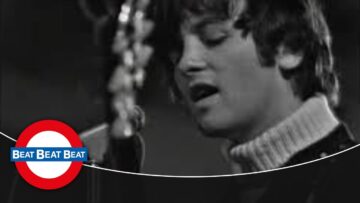
The Animals – House Of The Rising Sun
One Take, Four Minutes, And A Royalty Dispute That Destroyed The Band
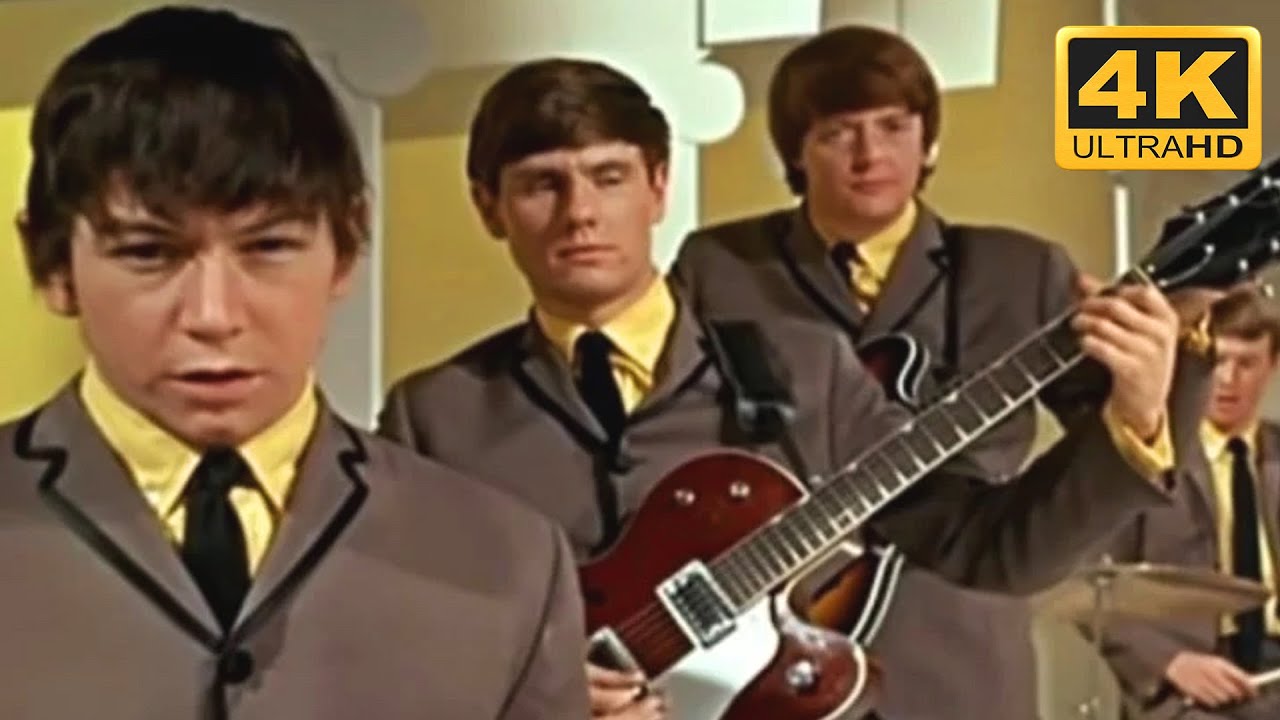
“The House of the Rising Sun” was released in the UK on June 19, 1964, hitting No.1 on the UK Singles Chart in July, then topping the US Billboard Hot 100 on September 5, 1964, where it stayed for three weeks. The song became the first British Invasion No.1 hit unconnected to the Beatles, and many cite it as the first true folk-rock song ever recorded. What most fans don’t know: the entire track was captured in a single take on May 18, 1964 at De Lane Lea Studios in London, with no overdubs and no second chances—and the credit dispute over who arranged it would ultimately tear the band apart and leave keyboardist Alan Price as the only member collecting royalties for their biggest hit.
The chart performance was extraordinary for a song that defied every commercial radio rule of its era. At four minutes and 29 seconds, “House of the Rising Sun” was considered far too long for a pop single—most hits clocked in around two and a half minutes. Producer Mickie Most initially didn’t even want to record the song, but after hearing the one take playback, he declared it a single at full length, saying “We’re in a microgroove world now, we will release it.” The gamble paid off spectacularly. Beyond its three weeks atop the American charts, the song also hit No.1 in Canada and Ireland, reached No.2 in Australia, and peaked at No.4 in New Zealand. It was re-released in the UK in 1972, climbing to No.25, then again in 1982, when it reached No.11. The song eventually sold close to five million copies within its first year of release alone.
Eric Burdon first heard the song performed by British folk artist Johnny Handle at a Newcastle club, though the arrangement the Animals created drew heavily from Bob Dylan’s 1962 version on his debut album—which Dylan himself had learned from Greenwich Village folk singer Dave Van Ronk. Van Ronk had developed a distinctive arrangement featuring descending bass lines in half steps, an unusual progression for folk music but common in jazz. The Animals transformed the traditional female protagonist into a male gambler to make it more radio-friendly, changing lyrics like “my mother was a tailor” instead of the original versions about fallen women and brothels in New Orleans. The band discovered the song’s commercial potential while touring England with Chuck Berry in May 1964. They began closing their sets with it specifically because every other act was trying to out-rock Berry, which was impossible. “We wanted to do something moodier and slower,” guitarist Hilton Valentine told Uncut. Night after night, audiences left theaters singing it, and the band could hear them through the dressing room windows.
The recording session was almost an afterthought. Producer Mickie Most had booked studio time between tour stops primarily to record a cover of Ray Charles’ “Talkin’ ‘Bout You” for Britain’s Ready Steady Go! television show. The Animals insisted on cutting “House of the Rising Sun” instead, and Most reluctantly agreed, assuming it was just a live showpiece that would never be released. The band set up for balance, played a few bars for the engineer to check levels—it was mono with no overdubs—and then recorded one complete take. Hilton Valentine’s now-famous arpeggiated A minor chord guitar opening came from him simply taking Dylan’s chord sequence and playing it as an arpeggio. Alan Price’s pulsating Vox Continental organ solo was inspired by jazz organist Jimmy Smith’s hit “Walk on the Wild Side.” Drummer John Steel created a drum pattern specifically referencing Smith’s jazz feel. The Animals also changed the time signature from the traditional 4/4 meter to a more urgent 6/8, giving the song its distinctive waltz-like pulse. The performance took off with Burdon’s lead vocal, which critics variously described as “howling,” “soulful,” and “deep and gravelly as the north-east English coal town of Newcastle that spawned him.” Most listened to the playback and immediately said, “That’s it, it’s a single.” The engineer protested it was too long, but Most refused to cut anything.
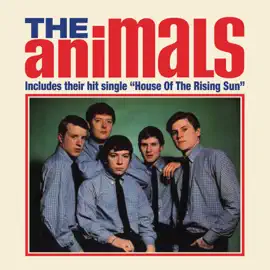
“House of the Rising Sun” appeared on the Animals’ 1964 self-titled debut album in both the UK and US, though the American release on MGM Records initially featured an edited 2:58 version as the single. The full 4:29 version was later included on their best-selling 1966 greatest hits compilation The Best of the Animals. The single’s B-side in the UK was “Gonna Send You Back to Walker,” while the US release paired it with different tracks. The song earned the Animals appearances on The Ed Sullivan Show, Ready Steady Go!, Hullabaloo, and Top of the Pops. Their American performance debut came on September 4, 1964 at the Paramount Theater in Brooklyn, New York, while the song was in its first week at No.1. The album showcased the band’s blues and R&B influences, setting them apart from the more pop-oriented British Invasion acts like Herman’s Hermits.
The song’s legacy extends far beyond its commercial success. Bob Dylan later told Animals drummer John Steel that when he first heard their version on his car radio, he stopped to listen, jumped out of his car, and banged on the hood—the experience reportedly inspiring him to go electric at the 1965 Newport Folk Festival. Dave Marsh described the Animals’ take as “the first folk-rock hit,” sounding “as if they’d connected the ancient tune to a live wire.” The song has been covered over 300 times, with charting versions by Frijid Pink (No.4 UK, No.7 US in 1970), Santa Esmeralda (No.78 US in 1978), and Dolly Parton (No.77 US, No.14 Country in 1981). Five Finger Death Punch’s 2013 heavy metal version became another hit. In 1998, Rolling Stone ranked it No.122 on their list of the 500 Greatest Songs of All Time, and it later received a Grammy Hall of Fame Award.
But the song’s success came with a devastating price. Arranging credit went only to Alan Price—supposedly because there was insufficient room to name all five band members on the 45 RPM record label, and “Alan” came first alphabetically. The band was told by manager Mike Jeffery in a London rehearsal studio that the wording “Traditional. Arranged by” with all their names was too long to fit on the record, and that the royalty division would be sorted out later. “Can you believe that we were so naive? Well—we were,” Burdon later admitted. Price alone received all songwriter’s royalties from the hit, a fact that caused immediate bitterness among the other members. In a 2009 interview, John Steel, Hilton Valentine, and Eric Burdon all described how the entire band contributed to the arrangement: Valentine developed the characteristic guitar arpeggio, Burdon rewrote the female protagonist as a male gambler, Steel adopted his drum pattern from Jimmy Smith’s jazz work, and bassist Chas Chandler created the bass lines from scratch since the song had never been played with a rhythm section before. When the band reunited in 1983, they collectively asked Price if he was ready to start sharing future royalties. When he refused, Burdon said, “that was the last time I ever spoke to him.” Chas Chandler reportedly quipped after Price abruptly quit the band in 1965: “He must’ve got his first royalty check.” The Animals would never recover from the fracture, and by 1967, the classic lineup had completely dissolved.
SONG INFORMATION