



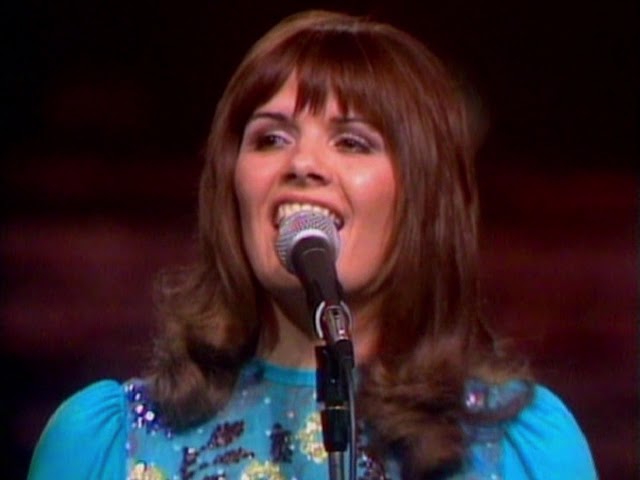







The New Seekers – I’d Like To Teach The World To Sing
Born from a Coca-Cola jingle and nearly too commercial to survive its own origin story, **“I’d Like to Teach the World to Sing (In Perfect Harmony)”** became one of the rare pop hits that turned advertising into shared memory instead of disposable noise.
What makes “I’d Like to Teach the World to Sing (In Perfect Harmony)” so durable is that it should, in theory, have been much easier to dismiss. Its roots in advertising are not incidental or hidden; they are the whole starting point. The song emerged from the now-famous Coca-Cola campaign built around the line “I’d like to buy the world a Coke,” which means its first public life was tied to marketing rather than to the usual mythology of pop creation. That ought to have limited it. Instead, it did almost the opposite. Once the commercial caught hold, the melody and central sentiment proved strong enough to survive the removal of the brand name and turn into a hit on its own. That is a difficult transformation. Most jingles are useful for a moment and then evaporate. This one crossed over because there was already a real song waiting underneath the sales pitch.
That song had a more winding beginning than its eventual image of universal harmony might suggest. Roger Cook and Roger Greenaway had already been working with material connected to the melody before the Coca-Cola rewrite brought in Bill Backer and Billy Davis. By the time The New Seekers recorded the full pop version in late 1971, the track had become something both simple and unusually strategic: a song that preserved the uplifting shape of the ad while giving it a broader human frame. The group were exactly right for that task. The New Seekers had the kind of clean, approachable vocal blend that could carry optimism without making it sound too solemn or preachy. They sounded communal in a way that made the record’s message feel natural rather than imposed.
The ad gave it reach, but the group gave it a life
That distinction matters, because the success of “I’d Like to Teach the World to Sing” is not just a triumph of marketing. Plenty of heavily promoted songs disappear the moment the campaign behind them fades. The New Seekers version did not. It reached No. 1 in the UK and broke into the Top 10 in the United States, which tells you that listeners were responding to more than brand recognition. They were responding to tone. The record has a kind of bright restraint that was especially effective in the early seventies, when pop was capable of being idealistic without sounding entirely naïve. The arrangement is light, but not flimsy. The harmony is warm, but not syrupy. And the melody has that rare quality of sounding instantly familiar even the first time through, which is one reason so many people remember it decades later even if they have forgotten the precise chart details.
There is also something revealing about the timing. In the early seventies, the line between pop culture and mass marketing was becoming harder to separate cleanly, but it had not yet hardened into the fully self-aware corporate logic that later generations would treat as normal. “I’d Like to Teach the World to Sing” arrived right in that transitional space. It carried the idealism of its era while also showing how readily idealism could be packaged and sold. That tension could have made the record feel cynical in retrospect. Instead, it has tended to make it more interesting. The song works because it is sincere enough to overcome its own suspicious origin. Listeners may know it came from an ad, but the performance itself still gives them something emotionally usable: the sound of togetherness presented with just enough polish to feel hopeful instead of manipulative.
Why the song outlasted the slogan
The afterlife of the song tells the story even more clearly. The commercial remains famous, of course, but the pop version has had a separate endurance that no campaign can fully manufacture. It has been revived in retrospectives, referenced in television and film, and treated as a shorthand for a certain kind of early-seventies optimism. That endurance belongs partly to the writing, partly to the historical accident of the “Hilltop” campaign, and partly to The New Seekers themselves. Their version is not flashy, and that is one of the reasons it lasts. It does not oversell the idea. It simply presents it with enough clarity and melodic confidence that the sentiment can do its own work. In an odd way, the song’s restraint is what gives it its persuasive power.
Seen now, “I’d Like to Teach the World to Sing (In Perfect Harmony)” stands as more than a curiosity from the overlap of pop and advertising. It is one of those records that reveals how messy the route to permanence can be. A slogan became a jingle, a jingle became a song, and a song became part of the wider cultural memory. The path sounds almost too neat when reduced to a summary, but the record itself still explains why it happened. Underneath the commercial origin is a melody people wanted to keep, a vocal performance built for collective singalong rather than individual showmanship, and a message broad enough to travel well beyond the product that first carried it. That is why the song still holds. It did not merely escape its origin. It absorbed it and came out larger.