









The Beatles – Love Me Do
A song a 15-year-old Paul McCartney wrote while skipping school, recorded three different times in three months with three different drummers, peaked at #17 on the UK chart and went almost unnoticed — until sixty-one years later, when the very same recording finally went to number one.
The official line at EMI was that The Beatles’ debut single was not really that good. George Martin, the Parlophone producer Brian Epstein had eventually talked into auditioning them, thought their original material was thin. He much preferred a tune by a London songwriter named Mitch Murray called How Do You Do It?, which he wanted the four Liverpudlians to record instead. The Beatles refused. They had a song of their own that Paul McCartney had written sometime in 1958 or 1959, when he was either fifteen or sixteen years old, on an afternoon he had taken off school to sit at home with his guitar. The argument lasted weeks. Martin eventually relented. The decision changed the next forty years of popular music.
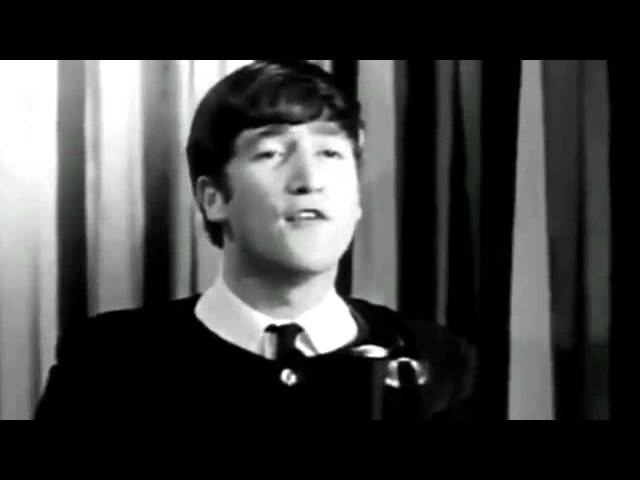
Love Me Do is a strange artefact to listen back to in 2026. The arrangement is almost pre-rock — just acoustic guitars, bass, a drum kit, a harmonica John Lennon claimed to have shoplifted on a 1960 trip to the Netherlands, and a chorus on which Lennon and McCartney trade the vocal hand-off on the title phrase. It is built like a country song with the country sanded off. Martin had wanted Lennon on the lead vocal but realised at the last possible moment that the harmonica part Lennon was supposed to play crossed the same notes as the words he was supposed to sing. McCartney was given the “love me do” line on the spot, which became — accidentally, in the studio, that afternoon — Paul McCartney’s first lead vocal on a Beatles record.
The session itself became one of the most famous tangles in pop history. The Beatles cut the song three times. The first version, recorded on June 6, 1962, had Pete Best on drums; that was their EMI audition tape, and the take that convinced Martin to sign them in the first place. Best was sacked the following month. The second version, recorded on September 4, 1962, had Ringo Starr — the new drummer — on the kit, and took fifteen takes. The third version, recorded a week later on September 11, had a session drummer named Andy White on drums and Ringo, humiliated, on tambourine. Martin had decided after the September 4 session that he wanted a more experienced player. Ringo never quite forgave him.
Two pressings, two drummers, sixty years of confusion
The single was released on October 5, 1962, on Parlophone, with a B-side called P.S. I Love You. The first pressing of the 45 used the September 4 Ringo take; later pressings used the September 11 Andy White take. The full UK album Please Please Me, released in March 1963, used the Andy White version too. EMI then wiped the original Ringo master tape in a routine clearout — standard Abbey Road procedure once a mix-down master had been made — and for the next two decades the only surviving copies of Ringo’s version were the original 1962 red-label Parlophone 45s sitting in collectors’ homes around the country. The Beatles’ first ever single was, by accident, partly lost.
The single charted modestly. Love Me Do reached #17 on the Record Retailer chart — the chart that became the official UK Singles Chart — the week of December 27, 1962, and spent eighteen weeks on the chart in all. It went to #1 in Liverpool’s local Mersey Beat chart, an early sign that something was happening at home, but everywhere else the single was a respectable debut for a small Liverpool band and not much more. Persistent rumours that Brian Epstein bought ten thousand copies himself to push the chart position have followed the song around for sixty years; Epstein denied it for the rest of his life, and the chart computation methods of the era make it unlikely that a single buyer could have moved the needle that far, but the rumour persists. America did not get the single until April 1964, by which point Beatlemania was already running — Capitol declined to release it, Tollie Records picked it up, and it went to #1 on the Billboard Hot 100 the week of May 30, 1964, the band’s fourth consecutive American chart-topper that spring. The American pressings used the Andy White version.
The story then sat where it was for almost forty years. The Pete Best audition take stayed unreleased until Anthology 1 in 1995. The Ringo September 4 take re-entered the catalogue on the 1982 twentieth-anniversary reissue, sourced from an original 1962 pressing because the master tape had been gone since the 1960s. The Andy White version remained the canonical recording, the one on every greatest-hits package, the one most people meant when they said they had heard Love Me Do. Until 2023.
Sixty-one years late
What happened in 2023 was the kind of technological intervention nobody could have imagined in 1962. Peter Jackson’s WingNut Films, while working on the Get Back documentary, had developed an artificial-intelligence audio tool called MAL that could de-mix old recordings — pulling apart a single bonded audio track into its component parts and isolating individual instruments and voices that had been recorded onto the same channel. The technology was first used to extract John Lennon’s vocal from a 1977 home piano demo of an unfinished song called Now and Then. McCartney, Starr, and the estate of George Harrison built a finished Beatles record around Lennon’s isolated voice. It came out on November 2, 2023, billed as the last Beatles song. The B-side they paired it with — to bookend the band’s career between its first single and its last — was a new true-stereo mix of Love Me Do, made from the September 4, 1962 Ringo take by Giles Martin (George Martin’s son) using the same WingNut de-mixing technology to recover the recording from the 1962 mono original. The double A-side reached number one on the UK Singles Chart the week of November 10, 2023. The take Ringo had recorded sixty-one years earlier, the one his father-figure producer had quietly buried under an Andy White overdub a week later, was finally — by some technicality, alongside the band’s last record — a number one single. Ringo was eighty-three when it happened.
Love Me Do is not in itself a great Beatles record. The band would write better songs within months — Please Please Me went to #1 in January 1963 and broke them properly. But it remains the most consequential modest hit in pop history: the song that proved the band could write their own material, the song that justified George Martin’s signing them, the song that opened the door to everything that followed. McCartney wrote it while skipping school, four years before anybody knew his name. Six decades later, it became the only Beatles single that needed three separate drummers and one AI audio engine to finally be heard the way it had originally been recorded. Watch the video.