



Barbra Streisand – Memory
T.S. Eliot Called the Character Too Sad for Children and Left Her Out. His Widow Gave the Scrap of Paper to Lloyd Webber. Judi Dench Tore Her Achilles Four Days Before Opening Night. Then Streisand Flew In From Her Yentl Preproduction and Sang It Live With a Full Orchestra.
T.S. Eliot Called the Character Too Sad for Children and Left Her Out. His Widow Gave the Scrap of Paper to Lloyd Webber. Judi Dench Tore Her Achilles Four Days Before Opening Night. Then Streisand Flew In From Her Yentl Preproduction and Sang It Live With a Full Orchestra.
The character of Grizabella — the once-glamorous cat, now ruined and seeking readmission — was cut by T.S. Eliot himself from Old Possum’s Book of Practical Cats, the 1939 collection on which the musical Cats was based. His reason was simple: she was too sad for children. For decades the fragment of verse about her sat in an archive. Then in 1980, when Eliot’s widow Valerie attended a concert featuring Andrew Lloyd Webber’s settings of the Old Possum poems, she gave him a paper containing that fragment. Lloyd Webber took it. Two weeks before Cats was due to open at the New London Theatre in May 1981 — an extraordinarily late moment in any production’s development — he composed the melody for what would become the musical’s centrepiece. His former collaborators Tim Rice and Don Black each submitted a lyric for consideration. Trevor Nunn, the musical’s director, assembled his own, drawing on Eliot’s “Rhapsody on a Windy Night” and “Preludes.” Nunn’s version was chosen. Elaine Paige, who had been rehearsing the role of Grizabella, was given a different lyric to sing to the tune every night during the preview run while the final text was settled.
Paige was there because Judi Dench, originally cast as Grizabella, had torn her Achilles tendon in rehearsal four days before the opening night. Paige stepped in at short notice — her own account is that the opportunity to sing the song was the principal reason she agreed. She later recalled hearing a Gary Moore instrumental version of the melody on the car radio before Cats opened and being so arrested by it that she pulled over, wanting to record it on her home cassette. She had intended to contact Lloyd Webber to ask about it. He rang her the following morning to offer her the role. Paige’s recording of “Memory” reached number five in the UK in July 1981, at the height of Cats’ first triumphant London summer. Then Barbra Streisand came to see the show.
What Lloyd Webber Found at Olympic Studios
Streisand was in London in the late summer of 1981 for preproduction work on Yentl, the film she was developing to direct, produce, and star in — a project that had consumed years of her creative energy and would not reach cinemas until 1983. She attended a performance of Cats, was introduced to Lloyd Webber, and a recording session was arranged. On September 15, 1981, she arrived at Olympic Studios, London, Studio One — a room with an exceptional track record, the place where the Rolling Stones had cut Beggars Banquet, where Led Zeppelin had recorded parts of Physical Graffiti, where the Who had worked and Traffic and Donovan — and Lloyd Webber produced the session himself. The orchestra was conducted by Harry Rabinowitz. What Lloyd Webber had arranged was not a standard pop production setup: Streisand would sing with the live orchestra in the room, no overdubbing, no technical safety net, no layer-by-layer construction. He recalled afterward that he thought it unlikely she had sung live with a full orchestra in a long time. She was nervous. But her phrasing, he said, was unerring, and her musicality was uncanny. It showed him, he concluded, that Barbra Streisand was fundamentally a theater animal. The take went onto the tape. There was no going back over it to fix things. There was nothing to fix.
The song carries three key changes within its structure — from B-flat major to G-flat major as Grizabella collapses, then to D-flat major for the emotional climax — and the engineering of those shifts was designed to keep the melody within comfortable chest-voice range while still producing the impression of ascent. The same modulations that work on a stage with theatrical lighting work on record because the architecture is in the music, not the production. Lloyd Webber had built something that a voice could inhabit without props. The album Memories, a Columbia compilation drawing together seven previously released Streisand tracks plus a handful of new recordings, was released in November 1981. “Memory” was released as a single in February 1982, with “Evergreen (Love Theme from A Star Is Born)” on the B-side. It reached number fifty-two on the Billboard Hot 100, spending seven weeks on the chart, and number nine on the Adult Contemporary chart — a position that tells the truer story of where the record actually lived in American radio. In the United Kingdom, where the song had the most cultural context thanks to Cats still running nightly at the New London Theatre, it reached number thirty-four.
Six Hundred Recordings and the Most Successful Song From a Musical
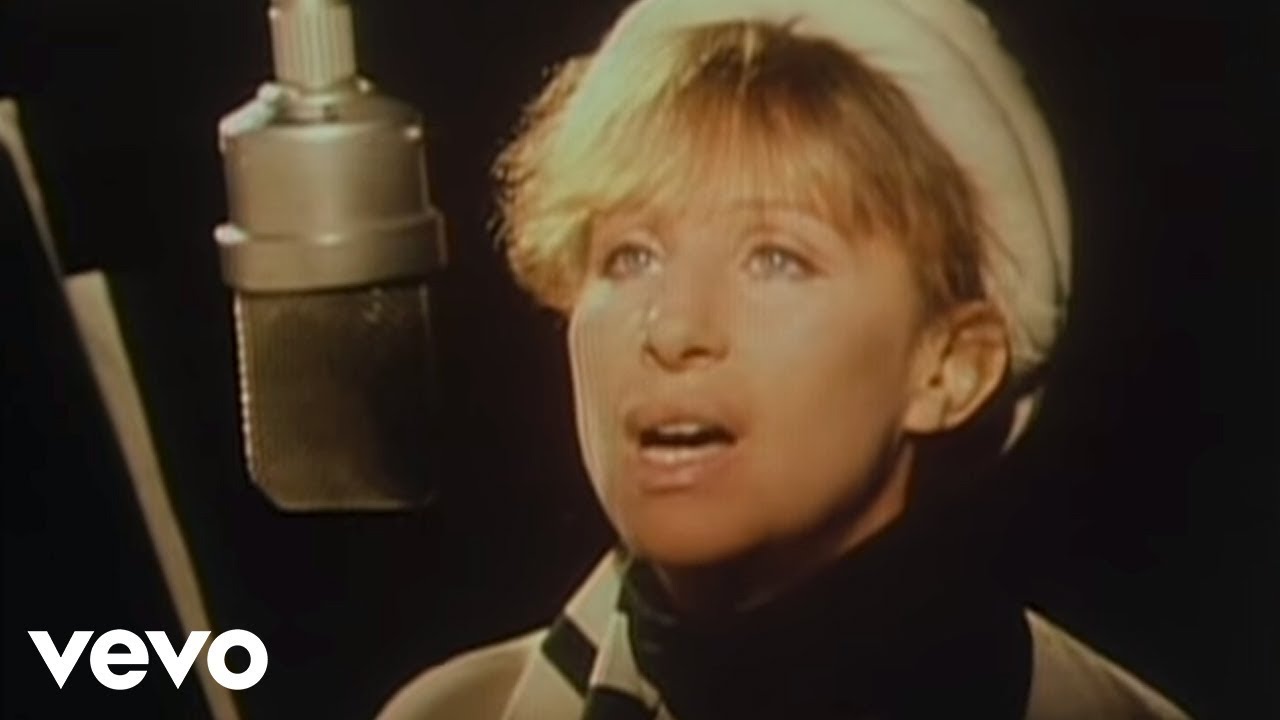
Musicologist Jessica Sternfeld, writing in 2006, described “Memory” as — by some estimations — the most successful song ever to come from a musical. The range of artists who have recorded it across the decades that followed gives some evidence for that claim: more than six hundred versions, in languages across the world, by performers as far apart as Barry Manilow, Johnny Mathis, Liberace, Susan Boyle, Jennifer Hudson, Nicole Scherzinger, and Leonora Lewis — each trying in their own way to locate what the song offers, which is a particular form of grief that is dignified rather than collapsed, that looks backward without collapsing into the past, that asks for readmission into warmth and community without losing the earned weight of everything that came before. Cats ran for 8,949 performances in the West End before closing on its own twenty-first birthday in May 2002 — it had been the longest-running musical in London until Les Misérables overtook it in 2006. On Broadway, at the Winter Garden Theater, it ran for 7,485 performances. The song outlasted both runs. Streisand’s music video — filmed in London that autumn of 1981, the only version released, Streisand lip-synching to the recording in front of a microphone — aired only in the United Kingdom. The recording she made in Studio One at Olympic is not the most commercially successful version of “Memory.” It may be the most beautiful.