



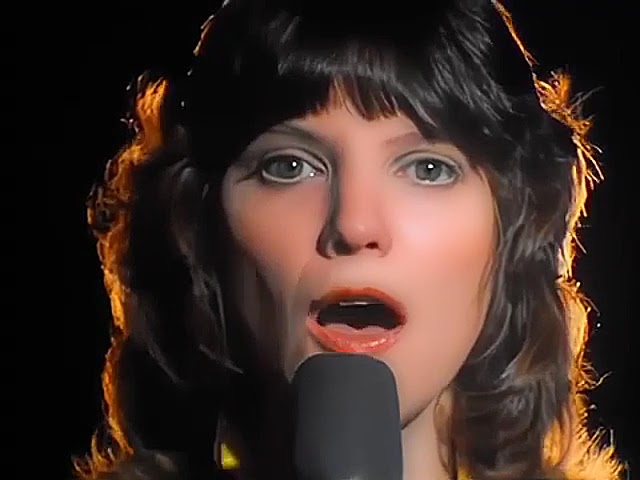




Mary MacGregor – Torn Between Two Lovers
Peter Yarrow Wrote It Originally for a Man to Sing. He Couldn’t Remember Why He Had Written It in the First Place. The Backup Singer From His Solo Tour Took It to Number One on the Hot 100, the Adult Contemporary, and the Country Charts — and Spent the Rest of Her Life Saying She Hated It.
Peter Yarrow could not remember, when interviewed years later by the chart historian Fred Bronson, exactly why he had written Torn Between Two Lovers. He thought the song might have emerged from a conversation he had been having with his wife about David Lean’s 1965 film Doctor Zhivago — the love-triangle film in which a Russian doctor is unable to choose between his wife Tonya and his lover Lara, and the situation resolves itself only because the historical machinery of the Russian Revolution makes the choice for him. Yarrow had co-written the song with Phillip Jarrell, an Alabama songwriter whose name has otherwise barely surfaced in the historical record. He had originally written the song for a man to sing. By 1976, Yarrow’s career had been on a difficult trajectory for six years. Peter, Paul and Mary had broken up in 1970 — the same year Yarrow was convicted of taking “improper liberties” with a fourteen-year-old fan who had come to his hotel room for an autograph. He had served a brief sentence, returned to a solo career, produced children’s television specials based on Puff the Magic Dragon, remained a public liberal-political figure, and would receive a presidential pardon from Jimmy Carter in 1981. The song, in this period, was sitting in his catalogue without a singer.
Mary MacGregor was twenty-eight years old. She had been born in St. Paul, Minnesota, on May 6, 1948, had studied classical piano from age six, had graduated from Saint Joseph’s Academy in 1966 and briefly attended the University of Minnesota, and had spent the early 1970s touring as a backing vocalist for various acts including Peter Yarrow’s solo tour. She had sung backing vocals on Yarrow’s Love Songs album. She was, by any reasonable measure, a session-circuit singer with no profile of her own. When Yarrow signed her to a development deal with Ariola America Records and gave her his unrecorded song, the decision to let a woman sing material originally written for a male voice did not seem strategically inspired. The recording session was scheduled at Muscle Shoals Sound Studio in Sheffield, Alabama — the same studio room where Aretha Franklin had cut Respect and the Rolling Stones had recorded Brown Sugar. Yarrow co-produced the date with Barry Beckett, the Muscle Shoals Rhythm Section keyboardist whose work as a producer would over the following decade become one of the foundational signatures of late-twentieth-century soft rock. The Muscle Shoals players themselves provided the backing.
Number One on Three Different Charts in the Same Month
The single was released by Ariola in late 1976. It entered the Billboard Hot 100 in early November and climbed steadily through Christmas, into January, and into the first week of February 1977. It reached number one on the Hot 100 the week of February 5, 1977, and stayed at number one for two consecutive weeks, displacing Stevie Wonder’s I Wish. It also reached number one on the Billboard Adult Contemporary chart, where it stayed for nine weeks. It climbed to number three on the Billboard Hot Country Songs chart — making it one of the few records of the era to genuinely chart in three formats simultaneously without remixing or rerecording. It reached number four on the UK Singles Chart in March, number one in Canada and South Africa, and the top ten in Australia and New Zealand. The album Torn Between Two Lovers reached number 17 on the Billboard 200. The single was certified Gold by the RIAA. Mary MacGregor, who six months earlier had been singing backup vocals for other people, was suddenly the artist with the biggest record in America.
The song’s content explained the chart placement and complicated everything else. The lyric, sung in first person, is a wife’s confession to her husband that she has fallen in love with another man — not a request for divorce, not an announcement of departure, but a plea that the husband accept the situation as ongoing, that he understand her continuing love for him is real, and that he allow her to maintain both relationships indefinitely. “I couldn’t really blame you if you turned and walked away,” the closing verse acknowledges, “but with everything I feel inside, I’m asking you to stay.” It was a song about cheating that did not present cheating as a problem to be resolved. The 1970s pop chart had room for songs about marital betrayal — the Manhattans’ Kiss and Say Goodbye had hit number one the previous summer, and Billy Paul’s Me and Mrs. Jones had topped the chart in 1972. But Torn Between Two Lovers was unusual even by those standards. The song’s narrator was not asking for forgiveness. She was asking for permission.
The Singer Who Hated Her Own Number One
Mary MacGregor told Fred Bronson, for The Billboard Book of Number One Hits, that she had little sympathy for the narrator of her own breakthrough record. She thought the woman in the lyric was, by any straightforward moral reading, asking her husband to accept an arrangement no reasonable spouse should be expected to accept, and she found the request difficult to inhabit as a performer. Her vocal on the recording — warm, precise, with the unforced clarity that would later draw Karen Carpenter comparisons — sells the song’s surface emotional content without ever quite endorsing what the narrator is asking for. The performance carries an audible discomfort that some listeners hear as part of the recording’s appeal and others have read as the singer protecting herself from her own material.
The BBC Top of the Pops performance from February 24, 1977 — recorded as the song was at its commercial peak in both the United States and the United Kingdom — was the appearance that brought the record to British television audiences. MacGregor mimed to the studio recording in front of the standard Top of the Pops audience, the lighting flat, the staging minimal, the entire production delivered in three minutes and forty seconds. The footage is the song’s primary visual document for British viewers and one of the few existing video performances from the period of the record’s chart peak. Two further singles from the Torn Between Two Lovers album — This Girl (Has Turned into a Woman) and For a While — were released through 1977 and into 1978. Both charted but were overwhelmed by the success of the title track. MacGregor recorded a follow-up album, …In Your Eyes, in 1978. It produced no major hits. She would never again have a Top 30 single in the United States. She became, in the chart-tracking shorthand the music industry uses for artists whose career narratives end this way, a one-hit wonder. The song that had given her a number-one record on three Billboard charts in the same month was the only one most listeners would ever know her for. She continued to perform it on the oldies and PBS-pledge-drive circuits through the following decades, the relationship between the singer and the song settling, by her own account, into a stable but unenthusiastic professional arrangement. The record remained, in the end, what it had been from the start: a song its writer could not remember writing, given to a singer who did not believe in its premise, performed at Muscle Shoals by session players she had never met, and carried to number one on the strength of a chart audience that found in its central question — what does it mean to love two people at once and ask both of them to accept it — something the country in February 1977 was prepared to listen to twice in a row.
![The Doobie Brothers – What A Fool Believes (Official Music Video) [HD]](https://musicvideosclub.com/wp-content/uploads/2025/10/the-doobie-brothers-what-a-fool-360x203.jpg)
