





![Eric Clapton – I Shot The Sheriff [Crossroads 2010] (Official Live Video)](https://musicvideosclub.com/wp-content/uploads/2026/09/eric-clapton-i-shot-the-sheriff-360x203.jpg)
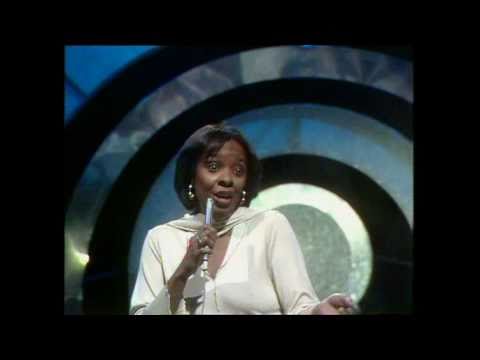
Thelma Houston – Don’t Leave Me This Way
Motown Had Originally Earmarked the Song for Diana Ross as the Follow-Up to “Love Hangover.” Producer Hal Davis Took the Tape to Thelma Houston Instead — and Watched the Song Climb the Hot 100 for Four Months Until It Hit Number One.
Hal Davis had not planned to give the song to Thelma Houston. Motown’s senior West Coast producer was, in early 1976, riding the success of Love Hangover — the Diana Ross hit he had built around an aqueous, slow-building intro that opened up into disco mid-track, a structural innovation that had taken Ross to number one on the Billboard Hot 100 in May 1976. The label was looking for the follow-up. Davis had heard a song the Philadelphia soul writers Kenneth Gamble, Leon Huff, and Cary Gilbert had given to Harold Melvin & the Blue Notes the year before — a warm, string-led mid-tempo soul number with Teddy Pendergrass on lead vocals, a track called Don’t Leave Me This Way that had appeared on the Blue Notes’ 1975 album Wake Up Everybody. The Blue Notes’ version had been beautiful but contained — a gentle plea, never raised to a demand. Davis heard something else in the song. He heard what it could become if you applied the same aqueous-intro-into-disco-explosion structure he had used on Love Hangover, and gave the vocal to a singer with the gospel-trained range to push it past pleading and into desperation. Diana Ross was the obvious choice. Hal Davis took the song to Thelma Houston instead.
Houston was thirty-two years old. She had been on Motown since 1971 and had not had a hit. She had been born in Leland, Mississippi, in 1946 and raised in Long Beach, California; had been singing in church choirs since childhood; had been married, divorced, and was raising two children before she even attempted a music career. Jimmy Webb had produced her stunning 1969 debut album Sunshower. It had not sold. Her early Motown singles had flopped. She had sung in nightclubs to pay bills. She had appeared on The Marty Feldman Comedy Machine. In 1975, she had recorded the original version of Do You Know Where You’re Going To at the same Motown sessions that produced her work for the period — and Berry Gordy had taken the song away from her and given it to Diana Ross, who would record it as the theme to her film Mahogany. By the time Hal Davis brought her Don’t Leave Me This Way in 1976, Houston had every reason to assume Motown would, again, eventually give the better songs to someone else. “These have been tough years, full of disappointment,” she told the Los Angeles Times. “You release a record and you say, ‘This is it.’ But it’s not. You release another one and go through the same thing.”
The Aqueous Intro and the Vocal Performance That Required Almost No Takes
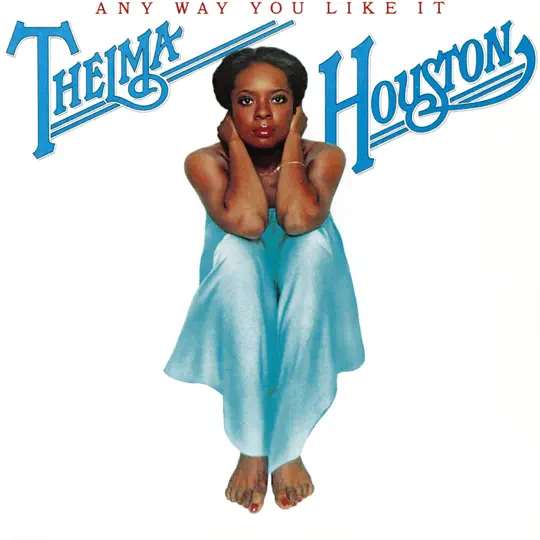
The recording was made at Motown Studios in Los Angeles in 1976 during the sessions for what would become Houston’s fourth studio album, Any Way You Like It. Hal Davis produced. The arrangement opened with twenty seconds of suspended-string atmosphere and synthesised swell — the now-signature Davis introduction — before the drums entered and the song began climbing. It did not stop climbing for the next six minutes. Houston’s vocal performance required minimal takes. She sang the song as if she had been waiting for years to be given a song that would let her do this — which, in the strictest factual sense, she had been. The gospel power that had been audible on her unsold 1969 debut found, in the ecstatic demand of the Gamble-Huff-Gilbert lyric, the vehicle it had been waiting for. What had been a gentle plea in the Blue Notes’ version became, in Houston’s, a song that could not be talked down from its own urgency.
The single was released by Tamla in November 1976. It debuted on the Billboard Hot 100 on December 18, 1976, at the lower end of the chart, and climbed slowly through Christmas and into the new year. It did not announce itself. It worked. By February 1977 it was on every American disco’s playlist. A Boston DJ record pool reported unanimous positive crowd response. The single was certified Gold for one million American sales. It reached number one on the Billboard R&B chart in February 1977 and held the position for five weeks. It topped the Billboard Disco chart for weeks. It crossed steadily through the spring on the Hot 100 — a song that took four full months to reach number one, where it landed the week of April 23, 1977. It would also hit number thirteen on the UK Singles Chart, where Houston performed it on the BBC’s Top of the Pops during the same chart run that Mary MacGregor’s Torn Between Two Lovers was working through. It was the seventh-biggest single on the 1977 Billboard year-end chart. It would win the 1978 Grammy Award for Best Female R&B Vocal Performance — the first major Grammy for any disco recording.
Forty-Eight Years and Counting, the Song That Would Not Stay Where It Was Put
The song’s cultural reach over the following five decades has been disproportionate to almost any other 1977 number-one record. It appeared on the soundtrack to Richard Brooks’ 1977 film Looking for Mr. Goodbar, putting it in front of millions of moviegoers in its second wave of exposure. Throughout the 1980s and 1990s, particularly in gay male communities throughout the AIDS epidemic, it became an unofficial elegy and rallying anthem — a 1994 art exhibition at the National Gallery of Australia took its title, Don’t Leave Me This Way: Art in the Age of AIDS, directly from the song. In 1986, the British synth-pop duo The Communards, with Sarah Jane Morris on lead vocals alongside Jimmy Somerville’s falsetto, recorded a hi-NRG cover that hit number one in the UK for four weeks and became the biggest-selling single of 1986 in Britain. Houston’s original version received a 1995 remix campaign that returned it to the dance charts. Rolling Stone has ranked it number eight on its Best Disco Songs of All Time list and number 355 on its 500 Greatest Songs of All Time. Billboard ranked it number nineteen on its 2025 list of the 100 Greatest LGBTQ+ Anthems of All Time.
What it could not do was launch a sustained pop career for Thelma Houston. The follow-up singles from Any Way You Like It charted modestly. The starmaking machinery of late-1970s Motown, which had been stretched between Los Angeles and Detroit by the time Houston broke, did not have the same focused commercial resources to turn a one-hit triumph into a string of hits the way it had once turned the Supremes’ first hit into a decade of subsequent ones. Houston released several more albums into the 1980s. None of them found the audience Don’t Leave Me This Way had reached. She continued to perform and tour. She returned to Motown briefly. She moved through the supper-club and corporate-event circuits that absorb most artists in her position. In 2024, at age seventy-eight, she competed on the eleventh season of The Masked Singer as the character Clock and made it to the semifinals, finishing third. As her encore performance, she sang Don’t Leave Me This Way — forty-seven years after she had first recorded it. The song that Hal Davis had nearly given to Diana Ross, that had taken four months to climb to number one, that became one of the foundational records of 1970s disco and an anthem of three subsequent decades of cultural moment, remained — and remains — the recording on which the rest of her career was built. Sometimes everything clicks exactly once. Once, Thelma Houston has demonstrated for almost fifty years, can be enough.
SONG INFORMATION
Related videos
 Watch LaterAdded
04:48
Watch LaterAdded
04:48  Watch LaterAdded
05:28
Watch LaterAdded
05:28  Watch LaterAdded
02:46
Watch LaterAdded
02:46