








Bad Company – Can’t Get Enough
Mick Ralphs Wrote It for Mott the Hoople — Ian Hunter Said He Couldn’t Sing It. Ralphs Took It to Headley Grange, Taught Paul Rodgers the Harmony Guitar Solo, and Made It the First Single on Led Zeppelin’s Label.
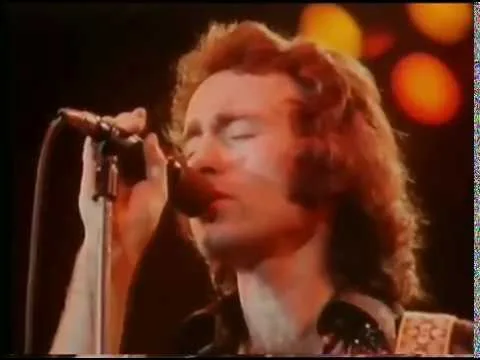
The song existed before the band did. Mick Ralphs had written “Can’t Get Enough” while he was still with Mott the Hoople, played it for the group, and heard Ian Hunter’s honest assessment: it was a great song, but Hunter didn’t feel he could sing it the way it needed to be sung. Ralphs filed it away. When he left Mott in the summer of 1973 and began jamming with Paul Rodgers — who had walked away from a reformed Free out of creative frustration — the song came back out. Rodgers heard it at their first serious sessions together and recognised it immediately. The rousing stomp of the riff, the directness of the lyric, the way the melody sat in exactly the range where his voice was most powerful — it was, as he later put it, instantly a hit. The band they were assembling around the two of them — Free drummer Simon Kirke, who had been calling Rodgers about musical possibilities, and Boz Burrell, the versatile former vocalist and bassist of King Crimson — signed to Peter Grant’s management and then to Swan Song Records, the imprint that Led Zeppelin had just launched with the explicit intention of giving artists freedom from label interference. Bad Company was the first act signed. “Can’t Get Enough” was the first single.
The recording took place at Headley Grange, the rambling, slightly dilapidated Georgian manor house in East Hampshire that had already hosted Led Zeppelin III, IV, Houses of the Holy, and would later host sessions for Physical Graffiti. Zeppelin had been there when John Paul Jones contracted flu; they took a short break, and Bad Company moved in. Jimmy Page’s guitars were still in the room. Rodgers admitted, with some delight, to picking several of them up and playing them. The album was recorded using Ronnie Lane’s Mobile Studio — the same truck that had been deployed on Faces sessions and numerous other recordings of the period — with Ron Nevison engineering. The band self-produced, working with the instinct of four experienced musicians who knew exactly what they wanted and had no interest in being told otherwise. “That meant we played the way we planned to play onstage,” Rodgers said, “and Ron was understanding.” The recording took ten days. Not all of the songs were fully arranged when they arrived; Rodgers taught the band “Rock Steady” during the sessions. The atmosphere of the old mansion, he later reflected, gave the recordings a dimension that a conventional studio could not have provided — something in the air of the place, the opposite of sterile.
Open C Tuning and a Harmony Solo Taught Between Takes
On “Can’t Get Enough,” both Ralphs and Rodgers played guitar — Ralphs tuned to Open C, the resonant, open-string voicing that gives the riff its particular weight and swagger, Rodgers on a standard-tuned guitar alongside him. The harmony guitar solo — the twin-lead section that drives the song’s instrumental passage — was something Ralphs had worked out and then taught to Rodgers during the session. The result is a guitar arrangement that sounds like two players who have been playing together for years, the lines complementary and interlocked rather than duplicated. Boz Burrell’s bass underpins the whole thing with the kind of melodic intelligence he had developed through his years with King Crimson — a player who thought like a vocalist even when he was laying down the low end. Simon Kirke, who had learned his craft behind Free during some of the most powerfully recorded British rock of the early 1970s, anchored it all with the unhurried authority that has always been his signature.
The single was released in August 1974 and reached number five on the Billboard Hot 100 — a debut single result that established the band’s American commercial reach immediately. The album, released on Swan Song in the US in late June and on Island Records in the UK in May, entered the Billboard 200 at number one, where it remained for a week before settling into a long run on the chart. In the UK it reached number three. Rolling Stone, reviewing the album on release, singled out “Can’t Get Enough” as an irresistible opener, driven by what the reviewer described as Ralphs’ chunky, aggressive riffing and Rodgers’ soulful vocal delivery. The combination of raw blues-rock directness and melodic precision was exactly what it sounded like: four musicians who had come from three different significant bands and who had found, in ten days at Headley Grange, something that each of those previous bands had been missing.
The First Act on Swan Song — and the Rock and Roll Hall of Fame
The decision to sign with Swan Song had been facilitated by Clive Coulson, a road manager who had worked with Rodgers in Free and subsequently with Led Zeppelin, and who telephoned Rodgers to say that Peter Grant was very interested in what he was doing. Grant’s pitch to the band was straightforward: Swan Song existed because Led Zeppelin had experienced what they felt was creative interference from their own label, and they wanted to build something where artists could fulfil themselves without that pressure. Bad Company released six albums on Swan Song between 1974 and 1982, and the label, for most of that run, kept exactly that promise. The debut album has been described since its release as a definition of what classic rock sounds like — not as a genre label but as a description of recorded music that achieves its intentions so completely that the recording itself becomes the standard. “Can’t Get Enough” is the opening argument for that verdict: a song rejected by one great singer because he knew he couldn’t do it justice, given to another who could, recorded in an English mansion with borrowed studio equipment, and placed at number one on the label that Jimmy Page built. Bad Company were inducted into the Rock and Roll Hall of Fame in 2025, half a century after the song first hit radio. It was, by any measure, overdue.
SONG INFORMATION


![Led Zeppelin – In My Time of Dying (Live at Earls Court 1975) (Official Video) [HD]](https://musicvideosclub.com/wp-content/uploads/2026/03/led-zeppelin-in-my-time-of-dying-360x203.jpg)