


![Led Zeppelin – In My Time of Dying (Live at Earls Court 1975) (Official Video) [HD]](https://musicvideosclub.com/wp-content/uploads/2026/03/led-zeppelin-in-my-time-of-dying-360x203.jpg)
![The Who – Baba OReily — In [High Definition] HD! -1979 – The Kids Are Alright](https://musicvideosclub.com/wp-content/uploads/2025/06/the-who-baba-oreily-in-high-defi-360x203.jpg)
![George Benson – Give Me The Night (Official Music Video) [HD Remaster]](https://musicvideosclub.com/wp-content/uploads/2026/02/george-benson-give-me-the-night-360x203.jpg)
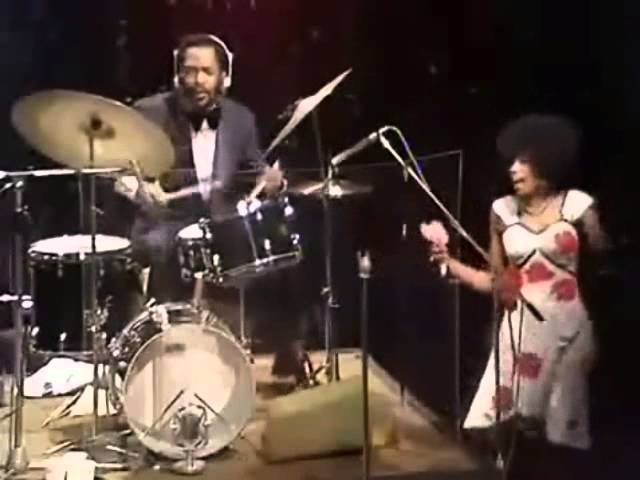
The Pointer Sisters – Yes We Can Can (live)
Four Sisters From Oakland, a Song From New Orleans, and the Groove That Took 45 Seconds Before Anyone Started Singing
Allen Toussaint had written “Yes We Can Can” as a piece of barely disguised civic optimism — a New Orleans call to collective action dressed up as a funk groove so seductive that the original Lee Dorsey recording lets the rhythm run for the better part of a minute before a single word appears. Dorsey had taken the song to a modest chart position in 1970 and moved on. Three years later, producer David Rubinson played the track to four sisters from Oakland who dressed like 1940s big band singers, sang around a single microphone with a precision that recalled Billie Holiday more than Diana Ross, and had just signed to Blue Thumb Records after a string of Atlantic singles that had gone nowhere. What happened when those four voices found that groove was one of the most distinctive debut singles in the history of American R&B — and the moment that announced the Pointer Sisters as something the music industry genuinely had no category for.
Released in March 1973 on Blue Thumb Records, “Yes We Can Can” reached Number 11 on the Billboard Hot 100 and Number 12 on the R&B chart — peaks that accurately reflect the song’s peculiar commercial position, simultaneously too funky for pop radio and too retro-minded for the soul mainstream. The single arrived from the Pointer Sisters’ self-titled debut album, which Rubinson had produced with engineer Fred Catero at Pacific Recording Studio in San Francisco. Neither chart position quite captured what the record actually was, which was the introduction of one of the most unusual and talented vocal groups in the country — and the beginning of a recording relationship with Allen Toussaint’s catalog that would continue throughout the decade.
Toussaint had written the song in New Orleans — his permanent subject, his permanent address, the city that ran through every composition he ever made whether it was directly named or not. The lyric builds carefully from individual gesture toward collective possibility: make this land a better land, the pre-chorus asks, and then the chorus arrives with its famous tumbling incantation — the words stacking on top of each other in a way that, on the page, resembles Gertrude Stein writing an inspirational poster, but in the mouths of four singers who grew up in Pentecostal churches in West Oakland become something entirely different. Rubinson had heard the Dorsey original and knew immediately what the Pointer Sisters could do with it. “I could really hear them doing that one,” he said later. “And in that case, my instinct was right.” The extra “Can” added to the title for their version was a small alteration that carried enormous weight: the song was now demonstrably theirs.
The sessions captured a band lineup that has since become central to Bay Area funk history: Willie Fulton on guitar, Dexter Plates on bass, and Gaylord Birch on drums — the same Birch who would deliver a full call-and-response drum solo during their 1974 BBC Television performance of the song, a moment that encapsulated the looseness and confidence the group brought to every live setting. The Pointer Sisters had spent the years before their Blue Thumb deal as some of the most in-demand background vocalists in San Francisco, singing on sessions for Grace Slick, Elvin Bishop, Boz Scaggs, and Sylvester of the Cockettes. They knew every trick in the studio. What was new was being the reason anyone had come.
The debut album that contained “Yes We Can Can” also included the Pointer Sisters’ arrangement of Willie Dixon’s “Wang Dang Doodle” and their own composition “Jada,” written partly in honor of Anita’s daughter of the same name. It arrived in March 1973 to immediate critical enthusiasm. Within a year the group had performed at the Grand Ole Opry — the first Black female vocal group to do so — and won a Grammy Award for Best Country Vocal Performance by a Duo or Group for their song “Fairytale,” a record that landed them on country radio and baffled the format’s gatekeepers in equal measure. Their range was not a gimmick. It was the whole point. A group that had grown up singing gospel, heard jazz through their father’s church connections, absorbed R&B from Oakland’s clubs, and studied the recordings of the Boswell Sisters and the Mills Brothers was always going to resist being filed in a single drawer.
The legacy of “Yes We Can Can” traveled in two directions simultaneously. In one direction: the broader Pointer Sisters commercial arc, which saw Bonnie depart in 1977, producer Richard Perry modernize the remaining trio’s sound, and a run of pop crossover hits beginning with a Bruce Springsteen cover of “Fire” in 1979 that produced one of the most commercially successful second acts in group history — “He’s So Shy,” “Slow Hand,” “Jump (For My Love),” “I’m So Excited,” “Automatic,” and “Neutron Dance” all following over the next six years. In the other direction: the Toussaint original itself, which Prince performed live at Paisley Park in 2015, and which one writer proposed replacing the Star-Spangled Banner with on the day Toussaint died. Both responses point to the same truth. Toussaint wrote it in New Orleans. Rubinson heard it in San Francisco. Four sisters from Oakland made it immortal.
Allen Toussaint died on November 10, 2015, aged seventy-seven, of a heart attack in Madrid following a concert. His obituaries, almost without exception, opened with “Yes We Can Can” — not the version he had written and produced himself, but the one four women in vintage dresses had recorded around a single microphone in a Bay Area studio because a producer had a hunch that they were the right voices for it. He had described his own compositional philosophy with characteristic New Orleans understatement: “I try to write a song that means something.” This one, it turned out, meant quite a lot.
SONG INFORMATION
![Van Halen – Eruption (Live at the Tokyo Dome 2013) [PROSHOT]](https://musicvideosclub.com/wp-content/uploads/2026/01/van-halen-eruption-live-at-the-t-360x203.jpg)