






Alannah Myles – Black Velvet
Written On A Bus To Graceland—Atlantic Released It To Two Artists Simultaneously
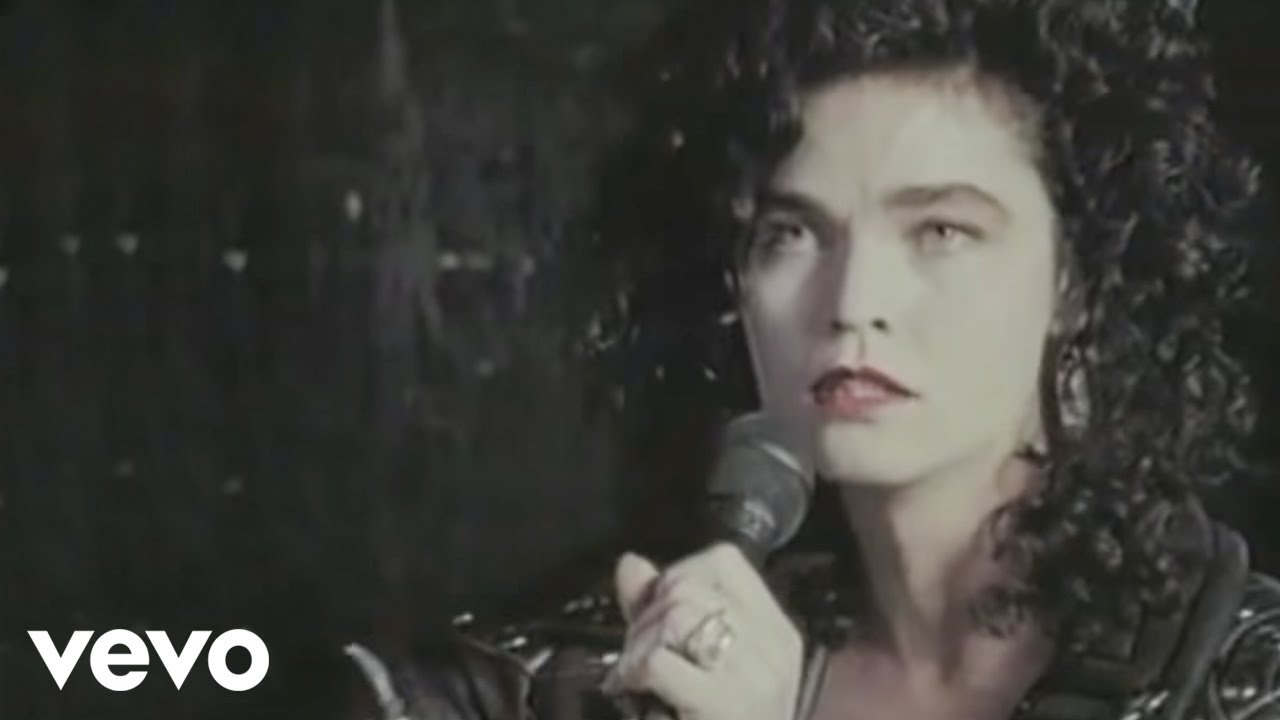
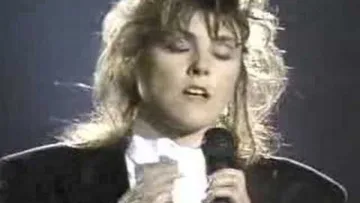
Released in July 1989 in Canada and December 1989 in the United States, “Black Velvet” reached number one on the Billboard Hot 100 on March 24, 1990, holding the top spot for two consecutive weeks and becoming the first song by a Canadian female solo artist to top the American chart since 1974. The song also reached number one in Canada, number two in the UK and Australia, number three in New Zealand, and charted across Europe. It won the Grammy Award for Best Female Rock Vocal Performance in 1991, earned four Juno Awards including Single of the Year, and was certified platinum by the RIAA. The track helped Myles’ self-titled debut album sell over six million copies worldwide, making it the first debut album by a Canadian artist to be certified Diamond for selling over one million units in Canada. What nobody watching Myles’ sultry performance in the music video knew was that songwriter Christopher Ward had written it on a 1987 bus trip to Graceland for the 10th anniversary of Elvis Presley’s death, and that Atlantic Records had simultaneously released the song to both Myles for pop radio and country artist Robin Lee for country stations, essentially competing against itself.
While “Black Velvet” dominated charts worldwide, Robin Lee’s country version reached number 12 on Billboard’s Hot Country Songs chart in early 1990, proving the song worked across genres but that Myles’ rock-blues interpretation had far greater commercial impact. The success made Myles the most prominent Canadian female rock artist since Joni Mitchell, though she struggled with being labeled a one-hit wonder despite releasing multiple albums throughout the 1990s and 2000s. Her follow-up singles “Love Is” peaked at number 36 on the Hot 100, while “Lover of Mine” reached number two in Canada but failed to chart in America. The debut album spent 142 weeks on the Billboard 200, eventually peaking at number seven. VH1 ranked “Black Velvet” at number 43 on their 100 Greatest One-Hit Wonders of the 1980s, though technically it peaked in 1990. The song became a karaoke favorite and wedding reception staple, with Myles’ distinctive raspy vocals proving difficult for most singers to replicate.
Christopher Ward wrote “Black Velvet” in August 1987 during a fan bus trip from Toronto to Memphis for the 10th anniversary of Elvis Presley’s death on August 16, 1977. Ward was a music journalist and television host who’d written songs for various Canadian artists. During the long bus ride, he started thinking about Elvis’s cultural impact and began scribbling lyrics that evoked both the singer’s smooth voice and the kitschy black velvet paintings depicting him that hung in bars and roadside diners across North America. The title captured multiple meanings—Elvis’s vocal texture, his stage presence, the tacky artwork, and the cultural moment he represented. Ward collaborated with producer David Tyson to complete the song, creating a bluesy rock track with a sultry groove and metaphorical lyrics that never mentioned Elvis by name but made references unmistakable with lines about Mississippi in the middle of a dry spell, catching lightning in a bottle, and a new religion bringing you to your knees.
Ward and Tyson initially pitched the song to various artists without success before Atlantic Records showed interest. In an unusual move, Atlantic decided to release the song to two different artists simultaneously—Alannah Myles for pop and rock radio, and Robin Lee for country stations. This dual strategy allowed Atlantic to maximize the song’s commercial potential across formats while hedging their bets on which version would break through. Myles, born Alannah Byles on December 25, 1958, in Toronto, had been performing in the Toronto club scene throughout the 1980s. Her mother was a jazz singer, and Myles grew up immersed in music, developing her distinctive raspy contralto that became her signature. Ward and Tyson recognized that Myles’ voice—powerful, sensual, with just the right amount of grit—perfectly suited the song’s sultry, bluesy atmosphere. They’d met Myles through Toronto’s tight-knit music community and knew she could deliver the vocal performance the song required.
Recording sessions took place in Toronto in 1988, with producer David Tyson crafting an arrangement that emphasized blues-rock authenticity over polished pop production. The track opened with that distinctive guitar riff before settling into a mid-tempo groove driven by drums, bass, and atmospheric keyboards. Myles’ vocal delivery balanced power with restraint, building from almost-whispered verses into the more forceful chorus without ever oversinging. The production featured layers of guitar, subtle harmonica, and backing vocals that created a smoky, late-night atmosphere perfectly matching the song’s themes of desire and nostalgia. Engineers captured Myles’ voice with clarity while adding reverb and effects that gave it an almost otherworldly quality. The final mix ran just over four and a half minutes, longer than typical radio singles but justified by the song’s slow-burning intensity that made every moment essential. Critics praised how the production avoided the bombastic excess typical of late-1980s rock, instead embracing subtlety and space.
The self-titled debut album Alannah Myles, released in March 1989 via Atlantic Records in Canada and later in the US, showcased Myles’ blues-rock sound across ten tracks written by various collaborators. Beyond “Black Velvet,” standout tracks included “Love Is,” “Still Got This Thing for You,” and “Lover of Mine.” The album reached platinum status in Canada within months and eventually sold over six million copies worldwide, becoming one of the biggest-selling Canadian debut albums ever. Critics compared Myles to Pat Benatar and Melissa Etheridge, though Myles possessed a deeper, more sultry voice than either comparison. The album’s success in America validated Atlantic’s strategy of positioning Myles as a rock artist while simultaneously promoting Robin Lee’s country version to Nashville stations. Reviews praised Myles’ vocal power and the album’s production quality, though some critics noted the material beyond “Black Velvet” lacked the same commercial appeal.
The music video, directed by Doug Freel and shot by cinematographer Kurt Schefter, became iconic for its stark black-and-white cinematography and sensual imagery. The clip was filmed on Myles’ family ranch in Buckhorn, Ontario, featuring Myles in leather pants and a black tank top, surrounded by imagery evoking both motorcycles and horses—masculine symbols filtered through a feminine perspective. The video emphasized Myles’ physical presence and sex appeal without objectifying her, positioning her as powerful rather than passive. Scenes alternated between Myles performing alone and images suggesting Elvis’s legacy—young men dancing, cultural touchstones of 1950s Americana, and the sense that something vital had been lost. MTV played the video constantly throughout 1990, helping drive the song’s chart success and establishing Myles’ image as a rock-blues singer who could channel both strength and vulnerability. The video won the 1990 Grammy Award for Best Video from a Female Artist and remains one of the most-viewed music videos of the era.
Despite the massive success of “Black Velvet,” Myles struggled to maintain commercial momentum. Her 1992 follow-up album Rockinghorse reached only number 67 in Canada and failed to chart in America despite spawning the Canadian Top 10 hit “Song Instead of a Kiss.” Subsequent albums A-Lan-Nah in 1995, A Rival in 1997, and 85 BPM in 2014 received critical praise but minimal commercial success. Myles later revealed she didn’t receive her first royalty check from Atlantic Records until 2008, nearly two decades after “Black Velvet” became a hit, due to what she described as a terrible contract that left her financially struggling despite selling millions of records. She told interviewers that Atlantic recouped expenses including promotion, videos, and tour support before paying artist royalties, leaving her with nothing despite the album’s massive sales. The experience embittered Myles toward the music industry, though she continued recording and performing for dedicated fans.
Robin Lee’s country version of “Black Velvet” took a more traditional country-rock approach with steel guitar and fiddle replacing some of the blues elements in Myles’ version. Released simultaneously to country radio, Lee’s interpretation peaked at number 12 on the Hot Country Songs chart and number 89 on the Hot 100, demonstrating the song’s crossover potential while ultimately losing the commercial battle to Myles. Lee, who’d previously sung backup for artists including Tanya Tucker, never achieved another major hit and largely disappeared from the music industry by the mid-1990s. The dual-release strategy, while innovative, created confusion among listeners and split promotional resources between two versions competing for radio airplay. In retrospect, Atlantic’s decision validated the song’s quality—it worked in multiple genres—but may have diluted its impact by dividing focus between two artists.
Christopher Ward went on to become a successful songwriter, television producer, and author. His memoir Is This Live?: Inside the Wild Early Years of MuchMusic, the Nation’s Music Station detailed his time as a VJ on Canada’s equivalent of MTV. David Tyson continued producing Canadian artists and scoring films. Alannah Myles remains active, touring regularly in Canada and Europe where she maintains a devoted following. In 2019, she released 85 BPM, her first album in 22 years, returning to the blues-rock sound that made her famous. She performs “Black Velvet” at every show, acknowledging it as both her greatest achievement and the albatross that defined her career. As Myles reflected in a 2014 interview, she’s grateful for the song’s success but wishes people understood she’s far more than just “Black Velvet.” The song remains a testament to perfect convergence—the right song, the right voice, the right moment—proving that sometimes a bus trip to Graceland yields more than pilgrimage; it yields art that outlasts the journey itself.
SONG INFORMATION
Related videos
 Watch LaterAdded
03:07
Watch LaterAdded
03:07  Watch LaterAdded
03:07
Watch LaterAdded
03:07  Watch LaterAdded